

TL;DR:
- Authentic dining experiences focus on local food culture, not just ratings or social media hype. Travelers should combine digital research with local insights, such as asking locals and observing neighborhood patterns. Prioritizing recent reviews and new restaurants ensures access to genuine, high-quality culinary options.
Top dining experiences are defined by authenticity, culinary focus, and a genuine connection to local food culture. They go far beyond Michelin stars or viral social media posts. For food enthusiasts and travelers, knowing how to find top dining experiences separates a forgettable meal from one that defines an entire trip. The right table can reveal a city’s character more clearly than any museum. This guide combines targeted digital research, on-the-ground observation, and smart planning to help you eat exceptionally well, anywhere in the world.
How to find top dining experiences using digital tools
Digital research is the fastest way to build a shortlist of genuine best dining spots before you arrive. The key is knowing which signals to trust and which to ignore.
Most travelers default to sorting by “most reviewed,” but that method rewards marketing budgets, not kitchen quality. Sort review platforms by newest reviews instead to find restaurants still working hard to earn their reputation. A place with 40 recent five-star reviews mentioning specific dishes tells you far more than one with 4,000 reviews accumulated over a decade.
Social media is equally powerful when used with precision. Creators with 2,000–20,000 followers produce more genuine culinary recommendations than large influencers tied to brand partnerships. A food creator with a modest audience has no incentive to promote a mediocre restaurant. Search by neighborhood hashtags or city-specific food tags and filter for accounts in that follower range.
Beyond mainstream platforms, local food blogs and Reddit threads surface authentic neighborhood gems that mainstream review sites consistently overlook. Neighborhood-specific subreddits are particularly useful. Post a question naming your exact neighborhood and the cuisine you want, and locals will respond with places they actually eat at weekly.
- Search review platforms by “newest” rather than “most reviewed”
- Follow local food creators with 2,000–20,000 followers on Instagram or TikTok
- Browse city-specific subreddits and ask for neighborhood recommendations
- Read local food blogs written by residents, not travel writers passing through
- Look for detailed recent reviews that name specific dishes and describe current quality
Pro Tip: Search Instagram for a restaurant’s name and then check who tagged it. If local chefs or food journalists appear in the results, that is a stronger quality signal than any star rating.
What local insights reveal about finding great local food
Digital tools give you a starting list. Local knowledge refines it into something genuinely worth your time. The people who live and work in a city eat out of habit, not curiosity, which makes their choices far more reliable.
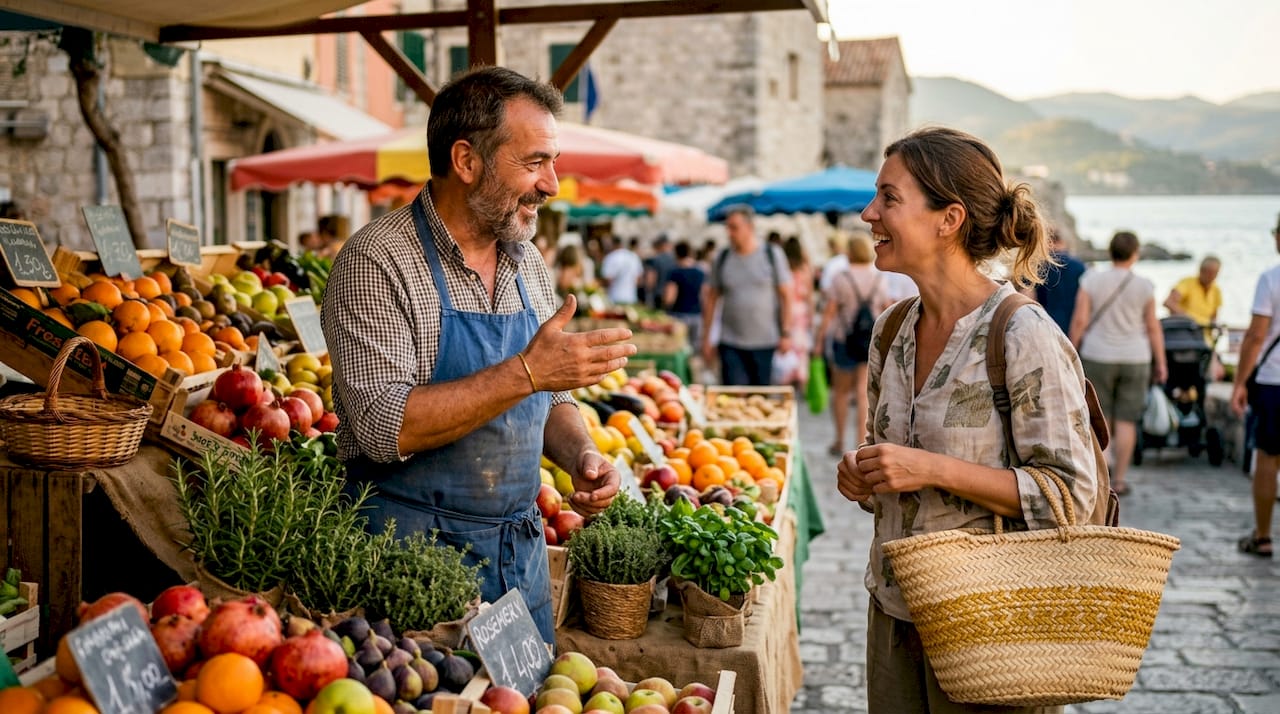
Hotel concierges are a starting point, but the most candid recommendations come from bartenders, shopkeepers, and rideshare drivers. Rideshare drivers hear genuine passenger conversations daily and often know exactly where locals eat after a long shift. Ask them where they go on their day off, not where they send tourists.
On-the-ground observation adds another layer of confidence. Local dining spots form part of daily routines, which means a restaurant busy at noon on a Tuesday with quick table turnover is almost always the real thing. A place packed only on Friday nights near a tourist district tells a different story.
Menu design is one of the most underrated quality signals. Menus with fewer, well-chosen dishes indicate a kitchen focused on fresh ingredients and mastered recipes. A laminated menu with 80 options is built for volume. A handwritten card with 12 dishes is built for quality.
- Ask bartenders and hotel staff where they personally eat, not where they send guests
- Talk to rideshare drivers about their favorite spots after a long shift
- Walk through residential neighborhoods at lunch and observe where working locals fill tables
- Check the menu before entering. Fewer focused options signal culinary expertise
- Look for restaurants tagged by local chefs or food journalists on social media
- Gauge the room. Happy, engaged diners in a casual setting are a reliable quality indicator
Pro Tip: Ask your question in the local language when possible, even just a phrase or two. Locals respond more openly when they sense genuine curiosity rather than tourist expectation.
A step-by-step plan for discovering popular dining experiences
A structured approach prevents wasted evenings and expensive disappointments. Combine your digital research with local intelligence before you arrive, then stay flexible once you are on the ground.
Before you travel
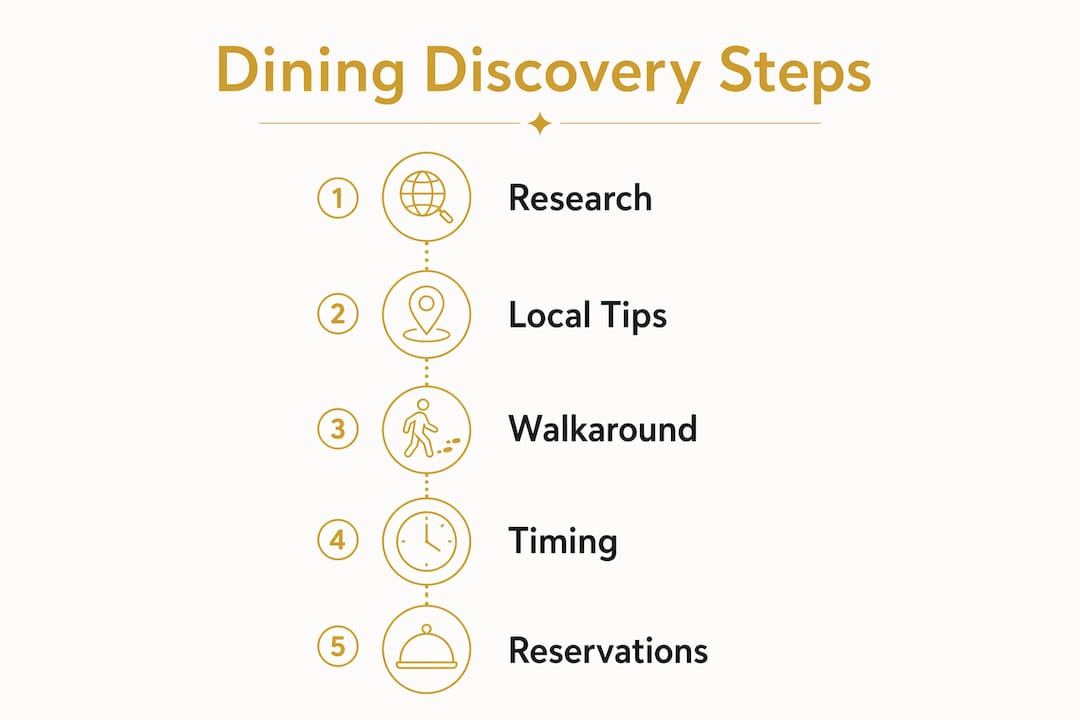
Research starts at least one week before departure. Identify two or three cuisine types you want to prioritize and map them to specific neighborhoods. This narrows your search and prevents the paralysis of too many options. Booking directly with hotels or lodging providers often grants access to curated insider dining lists unavailable on common travel platforms. Professional hosts maintain seasonal and local specialty recommendations specifically to help guests avoid tourist traps.
On arrival
Spend your first hour walking the neighborhood around your accommodation. Note any restaurants with handwritten menus, local clientele, or a line forming before opening. These are worth investigating further. Ask your host or the front desk one direct question: “Where do you eat on your day off?” That answer is almost always more useful than any printed recommendation card.
Timing and reservations
Meal timing varies significantly by destination. Eating at local hours rather than tourist hours puts you in rooms full of regulars, which improves both the food quality and the experience. For reservations, prioritize places under three months old. Very new restaurants under 90 days old often deliver the most attentive service and experimental cooking as they work to build their reputation. You also benefit from the energy of a kitchen still proving itself.
| Step | Action | Timing |
|---|---|---|
| Digital shortlist | Sort reviews by newest; follow local food creators | 1 week before travel |
| Local intel | Ask hosts, bartenders, and rideshare drivers | Day of arrival |
| Neighborhood walk | Spot menus, observe clientele, note queue patterns | First afternoon |
| Reservation strategy | Prioritize restaurants under 3 months old | 2–3 days before dining |
| On-site adjustment | Adapt based on local meal hours and seasonal specials | Day of reservation |
For culinary and cultural immersion, seek out newly established venues that specialize in regional ingredients. These places tend to reflect current culinary trends more accurately than long-established institutions coasting on past reputation.
Common mistakes when searching for the best dining spots
Most dining disappointments trace back to a small set of repeatable errors. Recognizing them in advance saves both money and appetite.
- Over-relying on aggregate star ratings. Total review count is not a quality metric. A restaurant with 10,000 reviews and a 4.1-star average may have been excellent five years ago and mediocre today. Detailed, recent reviews mentioning specific dishes are the only reliable signal of current quality.
- Ignoring newer establishments. Travelers consistently skip restaurants with fewer than 100 reviews. Those are often the most exciting kitchens in the city.
- Falling for tourist-area popularity. A restaurant with a large marketing budget and a prime location near a landmark is not the same as a restaurant with a great kitchen. Foot traffic and culinary quality are unrelated metrics.
- Skipping local advice entirely. Reviews provide a baseline but must be augmented with local knowledge and observational skills to find authentic dining gems. Relying on digital platforms alone produces safe, predictable, and often mediocre results.
- Booking through intermediaries for dining recommendations. Third-party booking platforms optimize for commission, not curation. Direct contact with your hotel or a local guide produces far more personalized and accurate suggestions.
“The best tasting experiences come from focusing on what the place does best, respecting local food traditions and seasonality. A restaurant that has mastered one regional dish will always outperform one that attempts to please everyone.”
For a deeper look at how local guides shape authentic access to dining and culture, the connection between expert guidance and exceptional meals becomes clear quickly.
Key Takeaways
The most reliable path to top dining experiences combines targeted digital research, direct local engagement, and confident on-the-ground observation.
| Point | Details |
|---|---|
| Sort by newest reviews | Filter review platforms by recency, not volume, to find restaurants still earning their reputation. |
| Follow modest-audience creators | Social media creators with 2,000–20,000 followers deliver more genuine recommendations than large influencers. |
| Ask locals directly | Bartenders, rideshare drivers, and hotel staff reveal where residents actually eat, not where tourists go. |
| Prioritize focused menus | Fewer dishes signal a kitchen built on fresh ingredients and mastered technique. |
| Target new restaurants | Establishments under 90 days old often deliver attentive service and ambitious cooking. |
What I have learned about finding exceptional meals while traveling
By Sandon
Most travelers treat dining research as a box to check. They open a review app, pick the top result, and call it done. I have done that too, and I have eaten some forgettable meals as a result.
The shift for me came when I stopped treating restaurant selection as a research problem and started treating it as an observation exercise. The best meal I had in Lisbon was not on any list. I found it by watching where a group of construction workers ate lunch three days in a row. The place had six tables, a menu written on a chalkboard, and the most honest grilled fish I have ever eaten.
Data and intuition work best together. I still research before I travel. I read local food blogs, I follow neighborhood creators, and I ask my hotel contacts for their personal picks. But I hold those recommendations loosely. Once I arrive, I let what I see on the street either confirm or override what I read online.
The detail most articles miss is this: the quality of your dining experience is directly tied to the quality of your questions. “What is the best restaurant nearby?” produces a tourist answer. “Where do you eat when you want to feel at home?” produces something worth booking. That single shift in how you ask changes everything you find.
For travelers who want dining recommendations built into their itinerary from the start, having an expert in your corner before you land makes the difference between a good trip and an unforgettable one.
— Sandon
Grandglobetrotting’s approach to curated dining on your travels
Knowing where to eat is one thing. Having someone who has already done the research, built the relationships, and secured the reservation is another experience entirely.

Grandglobetrotting builds personalized travel itineraries that include curated dining recommendations sourced through direct industry connections and local expertise. Every suggestion reflects the destination’s current culinary scene, not last year’s viral list. Through exclusive hotel partnerships, Grandglobetrotting clients gain access to insider dining lists and concierge introductions that are simply not available through standard booking channels. If exceptional food is central to how you travel, a consultation with Grandglobetrotting is the most efficient first step you can take.
FAQ
What makes a dining experience truly top-tier?
A top dining experience combines culinary focus, fresh local ingredients, and attentive service. The best meals reflect the food traditions and seasonality of the destination rather than attempting to appeal to every palate.
How do I find authentic restaurants in an unfamiliar city?
Ask bartenders, rideshare drivers, and hotel staff where they personally eat. Walk residential neighborhoods at lunch and observe where locals fill tables on weekdays.
Are online reviews reliable for finding the best dining spots?
Reviews provide a useful baseline but require local knowledge to be truly effective. Sort by newest reviews and look for detailed mentions of specific dishes rather than relying on total review count or aggregate star ratings.
Should I try new restaurants or established ones?
Restaurants under 90 days old often deliver the most attentive service and ambitious cooking as they work to build their reputation. Established restaurants can be excellent, but newer ones frequently offer a more energized dining experience.
How does booking directly with a hotel help with dining recommendations?
Booking directly with hotels or lodging providers often grants access to curated insider dining lists that are not available on standard travel platforms. Professional hosts maintain seasonal and local specialty recommendations specifically to help guests eat well.
Recommended
At Grand Globetrotting, we don't just plan vacations; we craft extraordinary adventures that leave you with cherished memories. Let us bring your dream vacation to life, perfectly tailored to your style, and immerse yourself in a world of luxury, exploration, and unforgettable moments. Your journey begins with us.
Itinerary planning services require a separate charge outside of cost to book travel accommodations. Depending upon the complexity of the itinerary and the level of effort required to acquire unique experiences, cost may vary. Speak with our team to learn more.
Book your consultation