

TL;DR:
- Premium transportation offers reliable, personalized, and high-quality travel experiences from pickup to drop-off.
- Choosing providers who meet strict standards, such as fleet condition and driver credentials, ensures top service.
Premium transportation is defined as any travel solution that delivers verified reliability, personalized service, and a consistently elevated passenger experience from pickup to drop-off. Knowing how to select premium transportation separates a forgettable trip from one that feels effortless at every turn. The difference lies not in the vehicle’s badge, but in the provider’s standards, credentials, and commitment to your comfort. This guide walks you through the exact criteria, pricing realities, and selection strategies that affluent travelers use to make confident, well-informed choices every time.
What prerequisites must you consider before selecting premium transportation?
Every sound transportation decision starts with a clear picture of your own requirements. Skipping this step leads to overpaying for services you don’t need or underestimating what a trip actually demands.
Work through these questions before contacting a single provider:
- Trip purpose. A corporate roadshow requires discretion and punctuality above all else. A honeymoon calls for comfort, ambiance, and flexibility. A family vacation demands space and child-friendly amenities. Each purpose points to a different vehicle class and service style.
- Group size and luggage. A sedan fits two passengers with carry-on bags. An SUV handles four passengers with full luggage. Groups of eight or more need a sprinter van or a luxury coach. Miscalculating here creates real problems on arrival.
- Distance and timing. Short city transfers favor ground transport. Cross-country or international legs favor private air travel. Knowing your distances upfront narrows the category of transport before you price anything.
- Budget scope. Ground transport runs $85–$270 per hour, while private air options start at $3,000 per hour. Setting a realistic ceiling prevents wasted time on quotes that will never fit.
- Privacy and exclusivity needs. High-profile travelers, executives, and honeymooners often require vehicles with tinted windows, non-disclosure agreements, and drivers trained in discretion. State this requirement upfront.
Answering these five points gives you a clear brief. A clear brief gets you accurate quotes and prevents mismatched expectations on the day of travel.
Which evaluation criteria ensure the highest quality in premium transportation providers?
Quality in premium transportation is measurable. 84% of travel professionals rank safety, reliability, and risk management above base cost when selecting a provider. That priority order reflects hard experience, not preference.
Use this numbered checklist when vetting any provider:
- On-time performance. A 95% on-time arrival rate is the accepted industry benchmark for professional chauffeur services. Ask providers for documented performance data, not verbal assurances.
- Fleet age and condition. Vehicles should be no older than three to five years and maintained on a documented service schedule. Request the maintenance log if you are booking for an extended engagement.
- Driver credentials. Professional chauffeurs undergo background checks and driving audits alongside training in professional etiquette. Ask specifically whether drivers are employees or independent contractors, since that distinction affects accountability.
- Commercial insurance. Standard liability coverage is often inadequate for high-profile travel. Demand proof of comprehensive commercial insurance and verify that it covers your specific trip type.
- Technology features. Flight and traffic telemetry systems allow chauffeurs to track your arrival in real time and adjust pickup timing accordingly. Real-time GPS and flight monitoring are now standard expectations, not premium add-ons.
Pro Tip: Ask each provider directly: “Do you own your fleet, or do you broker to affiliates?” Providers who own their fleet maintain direct control over vehicle quality and driver standards, which translates to more consistent service on the day.
The customer service standards that define great hospitality apply equally to premium transport. A driver who greets you by name, handles your luggage without being asked, and anticipates your preferences is delivering hospitality, not just a ride.
How do pricing structures and transparency impact your premium transportation choice?
Pricing in premium transportation follows several models, and understanding each one protects your budget. The four most common structures are hourly, fixed-route, distance-based, and hybrid. Hourly billing suits city tours and multi-stop itineraries. Fixed-route pricing works best for airport transfers where the route never changes.
Total cost transparency requires accounting for every line item, not just the base rate. Common extras that inflate final invoices include:
- Gratuity. Typically 15%–20% of the base fare, sometimes pre-added to the invoice.
- Wait time charges. Billed in 15-minute increments after a grace period, usually 30 minutes for airport pickups.
- Fuel surcharges. Applied on long-distance ground transfers or during periods of elevated fuel costs.
- After-hours fees. Pickups between 10:00 PM and 6:00 AM often carry a premium of 10%–25%.
- Cancellation penalties. Short-notice cancellations within 24–48 hours frequently result in full or partial charges.
| Pricing model | Best suited for | Key watch-out |
|---|---|---|
| Hourly | City tours, multi-stop days | Minimum hour requirements add cost |
| Fixed-route | Airport transfers | Surcharges for delays or reroutes |
| Distance-based | Long ground transfers | Fuel surcharges vary by provider |
| Hybrid | Mixed itineraries | Complexity makes comparison harder |
Pro Tip: Always request a fully itemized quote in writing before confirming. A quote that lists only a base rate is incomplete. Reputable providers will itemize every fee without hesitation.
Comparing quotes effectively means aligning them to identical trip parameters. Provide every provider with the same pickup time, destination, vehicle class, and passenger count. Any provider who cannot match those parameters exactly should be removed from consideration.
What strategies and best practices maximize success when booking premium transportation?
Selecting elite transportation is a partnership decision, not a simple purchase. Structured vendor evaluations using weighted scorecards save an average of 23% on costs and increase rider satisfaction by 31%. That gap between structured and unstructured selection is significant enough to change the outcome of a trip.
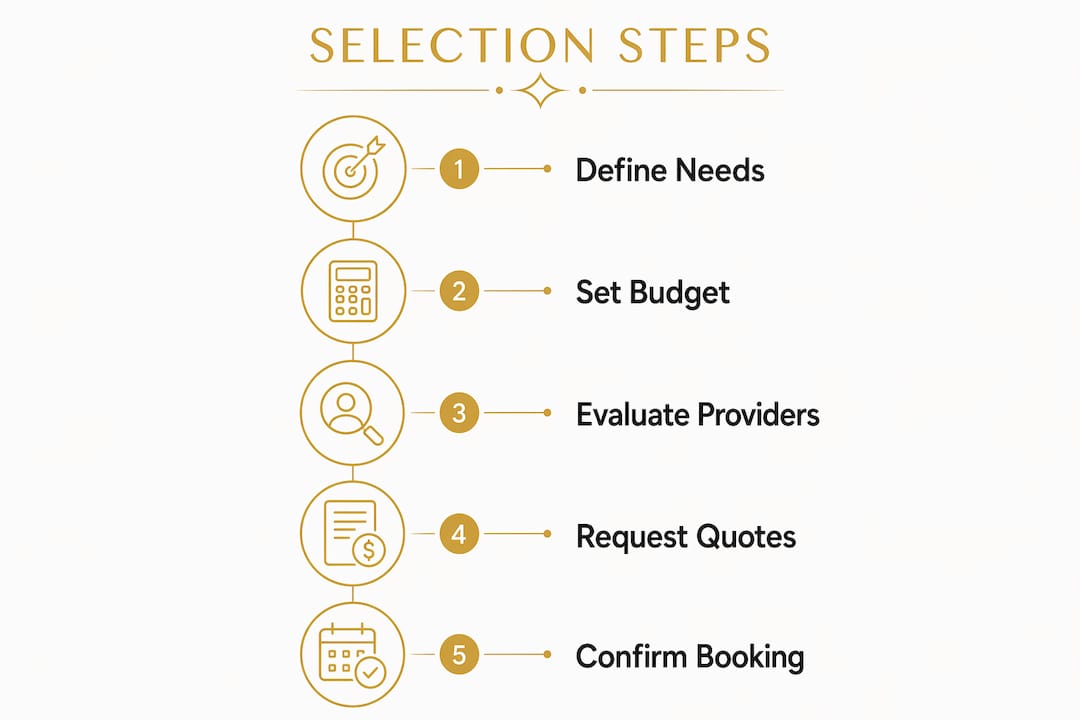
Follow these steps to build a reliable selection process:
- Create a weighted scorecard. Assign point values to criteria: safety record, fleet quality, driver credentials, technology features, pricing transparency, and references. Score each provider against the same rubric.
- Request a trial run. For ongoing relationships or high-stakes events, book a single transfer as a test before committing to a full itinerary. A trial reveals service quality that no brochure can.
- Confirm direct fleet ownership. Direct fleet ownership gives providers control over vehicle maintenance and driver standards. Brokers who subcontract to affiliates introduce variability that is difficult to manage.
- Book early and communicate special requests. Premium providers fill their best vehicles and drivers quickly. Booking at least two weeks ahead for standard transfers and 60 days ahead for events secures the best options. State dietary preferences, preferred music, temperature settings, and any accessibility needs at the time of booking.
- Prepare a contingency plan. Confirm the provider’s protocol for vehicle breakdowns, driver illness, and severe weather delays. A reputable provider has a documented backup plan and will share it without prompting.
“Operational confidence matters more than the lowest price. A provider who delivers consistent, professional service on every trip protects your schedule, your reputation, and your peace of mind. The cost of a failed transfer always exceeds the cost of choosing quality upfront.”
For executive travel planning, this structured approach is especially critical. A missed pickup before a board meeting carries consequences that no refund can fix.
What are the different premium transportation categories and when are they best suited?
Premium transportation divides into three broad categories: ground, air, and water. Each serves a distinct travel need, and choosing the right category is as important as choosing the right provider within it.

Ground transportation
Ground transport covers the widest range of use cases and vehicle types. It suits city transfers, airport pickups, multi-stop days, and short to medium distances where privacy and flexibility matter. Vehicle options within this category include:
- Executive sedans (Mercedes S-Class, BMW 7 Series): ideal for solo travelers or couples, starting at approximately $120–$150 per booking.
- Luxury SUVs (Cadillac Escalade, Range Rover): suited for small groups with luggage, offering more space without sacrificing comfort.
- Stretch limousines: reserved for special events, weddings, and group celebrations where arrival presence is part of the experience.
- Luxury coaches and sprinter vans: best for groups of 8 or more, combining capacity with high-end interiors.
For premium airport transfers, ground transport remains the most practical and cost-effective choice for distances under 150 miles.
Private air travel
Private air travel costs $3,000–$15,000 per hour and suits long-distance trips where time, privacy, and schedule control outweigh cost. The ability to depart from smaller regional airports, skip commercial security lines, and arrive closer to your final destination makes private air the preferred choice for executives and high-net-worth travelers on tight schedules.
Luxury water transport
Luxury water transport ranges from $5,000–$50,000 per day and fits leisure-focused itineraries: coastal cruises, island-hopping, and waterfront event arrivals. A private yacht charter in the Mediterranean or a luxury speedboat transfer in the Maldives adds an experiential dimension that no ground vehicle can replicate. Water transport is rarely the fastest option, but it is often the most memorable.
Key Takeaways
Selecting premium transportation requires aligning your travel goals, budget, and quality standards with a provider who can verify their credentials, fleet condition, and service record.
| Point | Details |
|---|---|
| Define requirements first | Clarify trip purpose, group size, distance, and privacy needs before contacting any provider. |
| Use the 95% benchmark | Require documented on-time performance of at least 95% from every provider you evaluate. |
| Demand full pricing transparency | Request itemized quotes covering gratuity, wait time, surcharges, and cancellation terms. |
| Prioritize direct fleet ownership | Providers who own their fleet deliver more consistent quality than brokers using affiliates. |
| Match category to travel need | Ground suits short distances; private air suits long distances; water transport suits leisure itineraries. |
What I’ve learned from years of arranging premium transportation
The single biggest mistake I see affluent travelers make is treating transportation as an afterthought. They spend weeks selecting the right hotel and the right restaurant, then book a car service in five minutes based on a Google search. That imbalance shows up the moment the driver arrives late, the vehicle smells of air freshener masking something worse, or the driver doesn’t know the route.
The providers worth trusting share one trait: they are transparent without being asked. They volunteer their insurance certificates, their driver vetting process, and their contingency protocols before you raise the question. Providers who hesitate or deflect on any of those three points are telling you something important.
I also believe the private transportation benefits conversation is often framed too narrowly around comfort. The real value is predictability. When your transportation is reliable, every other part of your itinerary holds together. When it fails, the ripple effect touches your dinner reservation, your meeting, and your mood for the rest of the day.
One more thing: always communicate your preferences in writing before the trip, not verbally on the day. A great provider will confirm every detail back to you. That confirmation is your signal that you have chosen well.
— Sandon
How Grandglobetrotting handles your premium transportation planning
Planning luxury transportation across multiple destinations, vehicle categories, and providers is genuinely complex. Grandglobetrotting takes that complexity off your plate entirely.

Through Grandglobetrotting’s personalized luxury travel planning, every transportation arrangement is vetted, coordinated, and confirmed before your trip begins. Whether you need a fleet of executive sedans for a corporate roadshow, a private yacht transfer for a honeymoon, or a seamless airport-to-resort ground service, the team sources providers who meet strict quality and safety standards. Every quote is itemized, every driver is credentialed, and every contingency is planned. You arrive focused on the experience, not the logistics.
FAQ
What is the industry benchmark for on-time performance in premium transportation?
The accepted benchmark for professional chauffeur services is a 95% on-time arrival rate. Ask any provider you evaluate to share documented performance data that supports this standard.
How do I verify that a luxury transportation provider is legitimate?
Request proof of commercial insurance, driver background check procedures, and fleet maintenance records. Reputable providers share these documents without hesitation.
What is the difference between a chauffeur service and a standard car service?
A chauffeur service delivers hospitality alongside transport: drivers are trained in etiquette, discretion, and anticipating passenger needs. A standard car service focuses on point-to-point transit without the elevated service layer.
When does private air travel make more sense than ground transport?
Private air travel becomes the practical choice for distances over 300 miles, time-sensitive schedules, or itineraries requiring access to smaller regional airports not served by commercial airlines.
How far in advance should I book premium transportation?
Book standard transfers at least two weeks ahead and event or multi-leg itineraries at least 60 days ahead. Early booking secures the best vehicles, drivers, and pricing before availability narrows.
Recommended
At Grand Globetrotting, we don't just plan vacations; we craft extraordinary adventures that leave you with cherished memories. Let us bring your dream vacation to life, perfectly tailored to your style, and immerse yourself in a world of luxury, exploration, and unforgettable moments. Your journey begins with us.
Itinerary planning services require a separate charge outside of cost to book travel accommodations. Depending upon the complexity of the itinerary and the level of effort required to acquire unique experiences, cost may vary. Speak with our team to learn more.
Book your consultation