

TL;DR:
- A babymoon is a celebratory vacation taken by expecting couples before their baby arrives, ideally during weeks 14 to 28 of the second trimester. Planning involves medical clearance, choosing low-stress destinations, and prioritizing rest over adventure to ensure a restorative experience. Working with a travel advisor can simplify logistics and help create a personalized, safe, and relaxing retreat.
A babymoon trip is a celebratory, restorative vacation taken by expecting couples before their baby arrives, and the single best time to go is during the second trimester, roughly weeks 14–28. Before you book anything, get clearance from your OB/GYN. That’s the whole framework in two sentences.
- Best timing: Second trimester (weeks 14–28), when morning sickness typically eases and mobility is still comfortable
- First action: Schedule a pre-travel appointment with your healthcare provider before reserving flights or accommodations
- Format flexibility: A babymoon can be a local spa weekend, a driveable coastal retreat, or a short domestic flight to a resort — all count equally
Table of Contents
- What is a babymoon, exactly?
- When should you take a babymoon?
- Why couples take a babymoon
- Where should you go for a babymoon?
- What should you do on a babymoon?
- Babymoon dos and don’ts
- What to pack for a babymoon
- How long to go and what it costs
- Your babymoon planning timeline
- How a travel advisor can simplify your babymoon
- Key Takeaways
- The case for designing a babymoon around rest, not ambition
- Plan your babymoon with Grandglobetrotting
- Useful sources to check before you travel
What is a babymoon, exactly?
A babymoon is a celebratory vacation parents-to-be take before their baby arrives to reconnect, rest, and mark the transition into parenthood. Think of it as the pregnancy equivalent of a honeymoon: a dedicated window of time to be present with each other before newborn life begins in earnest.
The concept has grown steadily in popularity as couples recognize that the months after a baby arrives leave little room for leisurely getaways. A babymoon creates a deliberate pause — a chance to sleep in, share long meals, and have the kinds of conversations that get crowded out once a newborn is home.
Who takes babymoons?
- First-time parents marking the end of life as a couple of two
- Parents expecting a second or third child, using the trip to reconnect before the family grows again
- Solo expecting parents who want a restorative retreat for themselves
- Couples who prefer a quiet staycation over any travel at all
Babymoons are not limited to first pregnancies. There is no rule that says you have to be a first-time parent to take one. The purpose stays the same regardless of how many children you already have: rest, reconnect, and arrive at the birth feeling grounded.
Common babymoon formats:
- A staycation at a local luxury hotel with prenatal spa services
- A weekend at a driveable spa resort or mountain inn
- A short domestic flight to a beach or wine-country destination
- A longer international trip (when medically appropriate and provider-approved)
When should you take a babymoon?
Medical experts and travel advisors typically recommend the second trimester, between weeks 14 and 28, as the optimal window. By week 14, most people have moved past the worst of first-trimester nausea and fatigue. By week 28, the third trimester brings increased physical demands, and many airlines begin imposing travel restrictions.
| Trimester | Weeks | Travel Suitability |
|---|---|---|
| First | 1–14 | Often difficult; nausea and fatigue are common |
| Second | 14–28 | Generally the most comfortable window for travel |
| Third (early) | — | Possible but requires extra planning and provider approval |
| Third (late) | — | Most airlines restrict travel; many providers advise against it |
For trip length, many advisors suggest 4–7 nights as the sweet spot. A long weekend gives you enough time to decompress without pushing your energy reserves. Longer trips can feel wonderful in theory but often require more recovery time than expected.
Pre-booking checklist:
- Get explicit travel clearance from your OB/GYN, including any destination-specific restrictions
- Check CDC travel advisories for Zika virus risk and other destination health alerts
- Confirm that your destination has accessible hospitals or clinics within a reasonable distance
- Review your airline’s pregnancy travel policy (most require a physician’s letter after 28 weeks)
Pro Tip: Book your OB/GYN pre-travel appointment at least six weeks before your departure date. This gives you time to address any concerns, adjust medications if needed, and request a travel letter if your airline requires one.
Why couples take a babymoon
The emotional case for a babymoon is straightforward: it is one of the last extended periods of uninterrupted time you will have as a couple before your household changes permanently. Rest, reconnection, and the chance to finalize parenting conversations in a calm setting are all genuinely valuable.
Practically, a babymoon also serves as a mental reset. Pregnancy involves a constant stream of appointments, decisions, and preparations. Stepping away from that rhythm, even briefly, tends to reduce stress and improve sleep, both of which matter for a healthy pregnancy.
“The point of a babymoon is to enjoy one last opportunity to focus on yourselves as a couple before the demands of newborn care begin. It’s a chance to bond, rest, and create memories that will carry you through the early weeks of parenthood.” — Healthline
Beyond the relationship benefits, a babymoon gives couples a natural deadline for completing early nursery decisions, finalizing a birth plan, or simply having the longer conversations that get postponed during busy weeks. Many couples find they return home feeling more aligned and prepared than they did before they left.
Where should you go for a babymoon?
Travel advisors consistently recommend staying relatively close to home and choosing low-stress settings over high-energy bucket-list destinations. The reasoning is practical: shorter travel times mean less physical strain, and proximity to familiar medical care reduces anxiety if something unexpected arises.

| Destination Type | Best For | Key Consideration |
|---|---|---|
| Staycation (local hotel or spa) | Low energy, tight budget, or late second trimester | Easiest to cancel; no travel logistics |
| Driveable escape (2–4 hours) | Couples who want a change of scenery without flying | Comfortable car setup; plan rest stops |
| Short domestic flight | Beach, mountain, or resort destinations | Confirm airline pregnancy policy; aisle seat recommended |
| Short international | Medically appropriate, provider-approved cases | CDC advisory check required; travel insurance essential |
| Luxury resort | Couples prioritizing comfort and on-site amenities | Verify spa and activity policies by trimester before booking |
Destination selection checklist:
- Travel time under four hours (door to door) is generally more comfortable
- Confirm hospital or urgent care access within 30 minutes of your accommodation
- Choose a mild climate; extreme heat or high altitude can be taxing during pregnancy
- Favor destinations with flexible cancellation policies on accommodations and activities
- Avoid high-altitude destinations unless your provider has specifically cleared them
- Prioritize low-activity settings over itinerary-heavy destinations
A well-planned staycation can deliver the same restorative benefits as a short getaway. Local spa treatments, fine dining, and in-home services are all legitimate babymoon experiences. The destination matters far less than the intention behind the trip.
What should you do on a babymoon?
The guiding principle for babymoon activities is simple: choose experiences that leave you feeling rested, not depleted. Experts advise prioritizing rest and accessibility over high-paced itineraries, which often lead to needing a vacation from your vacation.
- Prenatal spa treatments: Many resorts offer prenatal massage, which is one of the most popular babymoon activities. Always confirm the spa’s trimester-specific policies before booking.
- Long, unhurried breakfasts: Schedule nothing before 10 AM. Slow mornings are underrated and genuinely restorative.
- Scenic drives or easy nature walks: A 45-minute coastal drive or a flat trail through a botanical garden gives you fresh air without physical strain.
- Pool or patio time: Lounging near water with a good book is a perfectly complete babymoon afternoon.
- Prenatal yoga or gentle stretching classes: Many resorts and studios offer pregnancy-specific sessions; call ahead to confirm availability.
- Private boat cruise with comfortable seating: A calm harbor cruise or sunset sail on a stable vessel can be a memorable, low-exertion experience.
- Curated dining experiences: Reserve one or two special dinners at restaurants you would not normally visit. Unhurried meals are one of the simplest luxuries of a babymoon.
Keep at least one full unstructured day in your itinerary. Pregnancy fatigue can arrive without warning, and having a day with no commitments means you can rest without guilt or logistical reshuffling.
Pro Tip: If you feel unexpectedly fatigued mid-trip, treat it as useful information rather than a disruption. Cancel the afternoon activity, order room service, and rest. A babymoon that ends with you feeling genuinely restored is a success, regardless of how many items you checked off.

Babymoon dos and don’ts
What to do
- Consult your OB/GYN before booking and get written travel clearance if your airline requires it
- Confirm airline pregnancy policies and seat selection options before purchasing tickets
- Call your resort or hotel to verify trimester-specific restrictions on spa treatments, pools, and activities
- Secure refundable hotel rates and flexible flight tickets wherever possible
- Purchase travel insurance that explicitly covers pregnancy-related cancellations or medical events
- Carry a summary of your prenatal records and your provider’s emergency contact number
What to avoid
- Destinations with active Zika virus transmission (check CDC travel advisories before booking)
- High-altitude destinations without explicit provider clearance
- Activities with fall risk, high impact, or concussion potential (skiing, horseback riding, water slides)
- Traveling if your pregnancy is classified as high-risk without written provider approval
- Booking non-refundable packages that cannot be adjusted if your circumstances change
Pro Tip: When you call a resort to confirm pregnancy policies, ask three specific questions: What spa treatments are available in the second trimester? Are there any pool or hot tub restrictions? Is there a preferred local hospital or clinic for guests who need medical attention? A property that answers all three confidently is one worth booking.
What to pack for a babymoon
Clothing and comfort items:
- Supportive, low-heel shoes suitable for walking on uneven surfaces
- Layered clothing to accommodate temperature changes and a growing belly
- A travel pregnancy pillow or inflatable lumbar support for flights and car rides
- Compression socks for any flight over two hours
- Comfortable maternity swimwear if your destination has a pool or beach
Medical documents and essentials:
- A one-page prenatal records summary (current medications, blood type, due date, provider contact)
- Your OB/GYN’s emergency contact number and after-hours line
- Travel insurance policy documents with the claims number highlighted
- Copies of all prescriptions, filled for the full trip duration plus a few extra days
- Proof of vaccinations if your destination requires them
Extras worth packing:
- A reusable water bottle; staying hydrated during travel is more important during pregnancy
- Healthy snacks for flights and long drives (nuts, dried fruit, crackers)
- A small first-aid kit with antacids, prenatal vitamins, and any provider-approved pain relief
- A printed list of local hospitals or urgent care facilities near your accommodation
For a broader family vacation packing reference, Grandglobetrotting’s guide covers travel essentials that translate well to pregnancy-specific preparation.
How long to go and what it costs
Trip length guidance:
A weekend (two to three nights) works well for a staycation or short drive. Four to seven nights is the sweet spot for a resort stay or short domestic flight, providing enough time to genuinely decompress. Anything longer than a week tends to require more energy management than most couples anticipate in the second trimester.
| Booking Priority | Why It Matters for a Babymoon |
|---|---|
| Refundable hotel rate | Pregnancy circumstances can change quickly; non-refundable deposits add stress |
| Flexible flight ticket | Allows date changes without penalty if your provider advises against travel |
| Travel insurance with pregnancy coverage | Covers cancellation, medical evacuation, and on-trip medical costs |
| Medical access at destination | Reduces anxiety and ensures care is available if needed |
| Advance seat selection | Aisle seats near the front reduce discomfort on flights |
Budget categories (qualitative):
- Staycation: The most affordable option. A two-night stay at a local luxury hotel with a prenatal massage and two restaurant dinners is a complete babymoon experience.
- Short domestic trip: Moderate cost. A four-night beach or mountain resort stay with a short flight adds flight costs and resort fees but remains manageable.
- Luxury escape: Premium pricing. A private villa, bespoke concierge services, and premium flights represent the high end of the spectrum and benefit most from professional planning support.
Flexible booking options and travel insurance reduce stress significantly if pregnancy circumstances change. Book refundable wherever the price difference is reasonable.
Pro Tip: Ask your hotel directly about room upgrade availability for expecting guests. Many properties will move you to a ground-floor room, a suite with a soaking tub, or a room with easier access to amenities at no extra charge, especially when you mention it is a babymoon.
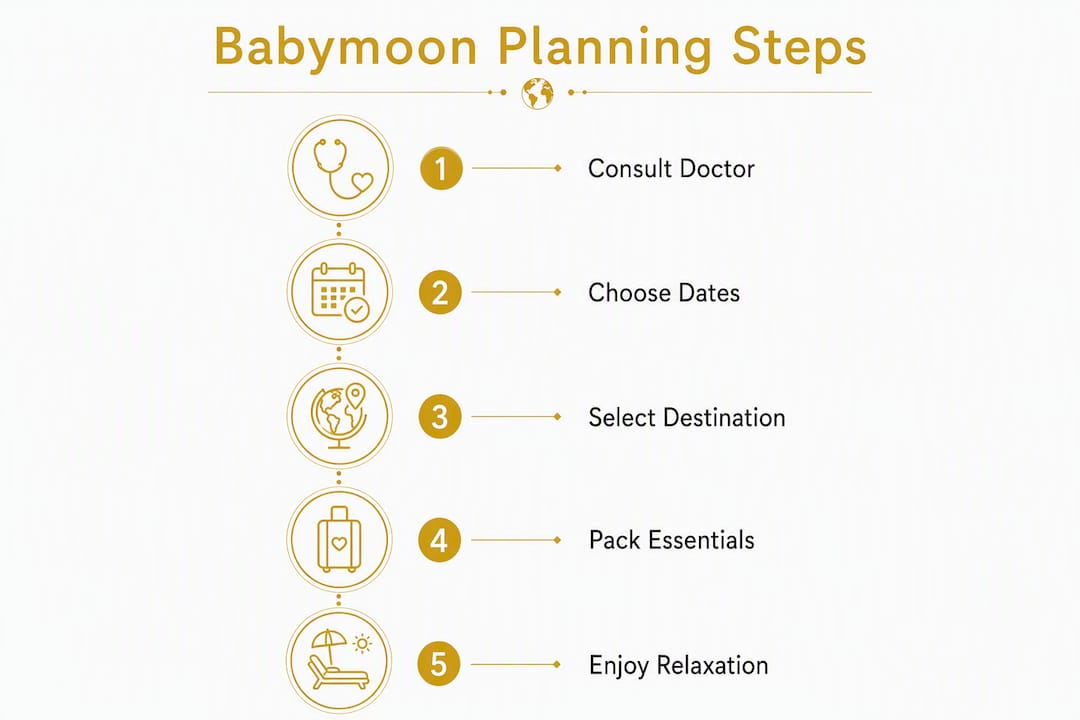
Your babymoon planning timeline
8 or more weeks before departure:
- Schedule a pre-travel OB/GYN appointment and discuss destination, trip length, and any restrictions
- Research destinations and confirm CDC advisory status for Zika and other travel health risks
- Book accommodations using refundable rates; reserve prenatal spa appointments if availability is limited
- Purchase travel insurance with explicit pregnancy coverage before finalizing any bookings
4–6 weeks before departure:
- Book flights with advance seat selection (aisle seats, front of cabin)
- Arrange private transfers or car rental if needed
- Call the resort to confirm trimester-specific spa, pool, and activity policies
- Fill all prescriptions for the trip duration plus a buffer
1–2 weeks before departure:
- Collect your prenatal records summary from your provider’s office
- Confirm all reservations and note cancellation deadlines
- Research the nearest hospital or urgent care facility to your accommodation
- Notify your travel insurance provider of your departure date
48–72 hours before departure:
- Reconfirm all bookings (hotel, transfers, spa appointments)
- Pack compression socks, travel pillow, snacks, and all medical documents
- Share your full itinerary and emergency contacts with a trusted family member or friend
- Check your airline’s current pregnancy travel policy one final time
How a travel advisor can simplify your babymoon
Planning a babymoon involves more logistical layers than a standard vacation: provider clearance, airline policies, resort restrictions, medical access verification, and flexible booking requirements all need to be coordinated simultaneously. A travel advisor handles that coordination so you do not have to.
What an advisor does for a babymoon:
- Secures refundable rates and flexible change policies across hotels and flights
- Calls resorts in advance to verify trimester-specific spa, pool, and activity restrictions
- Arranges private transfers to minimize airport and transit stress
- Confirms on-call medical support or identifies the nearest medical facility at the destination
- Designs low-energy itineraries with unstructured time built in, rather than back-to-back activities
- Arranges room upgrades, early check-in, and amenity packages that matter for pregnant travelers
The value is clearest for couples planning international destinations, managing complex medical considerations, or simply wanting a high-touch, low-effort experience. When you are already managing prenatal appointments, nursery decisions, and work transitions, handing off the travel logistics to a specialist is a practical choice.
Pro Tip: When working with a travel advisor for a babymoon, ask them to include a one-page on-call medical contact sheet in your itinerary documents. The best advisors build this in automatically; if yours does not, request it explicitly. Knowing the nearest hospital and a local English-speaking physician’s number before you need them is worth more than any room upgrade.
For bespoke itinerary planning that balances restorative pacing with genuine luxury, Grandglobetrotting’s approach to honeymoon and couples travel translates directly to babymoon design.
Key Takeaways
A babymoon trip is most successful when planned around the second trimester, with medical clearance secured before any booking is confirmed.
| Point | Details |
|---|---|
| Best trimester to travel | The second trimester (weeks 14–28) offers the most comfortable window for most couples. |
| Medical clearance first | Consult your OB/GYN and check CDC advisories before confirming any destination or booking. |
| Prioritize flexibility | Book refundable rates and travel insurance with pregnancy coverage to protect your plans. |
| Rest over bucket-list intensity | Choose low-energy, accessible destinations and keep at least one unstructured day in your schedule. |
| Grandglobetrotting’s role | Grandglobetrotting handles flexible bookings, resort policy verification, and concierge itinerary design for a low-effort babymoon. |
The case for designing a babymoon around rest, not ambition
Most couples approach a babymoon the way they approach any vacation: they want to see something new, eat somewhere memorable, and come home with good stories. That instinct is understandable, but it tends to produce the wrong kind of trip for this particular moment.
The babymoons that couples remember most fondly are rarely the ones with the most impressive itineraries. They are the ones where both partners genuinely slowed down. A four-night stay at a quiet coastal resort with two good dinners, a prenatal massage, and long mornings on a private balcony will outperform a packed week in a major city every time, not because the city is wrong, but because the pace is.
What I find when designing babymoon itineraries is that the couples who arrive most relaxed are the ones who gave themselves permission to do less. They booked one meaningful activity per day, left the afternoons open, and treated the trip as a genuine rest rather than a final adventure. That shift in mindset, from exploratory to restorative, is the single most important planning decision you will make.
A micro-itinerary that reflects this well: four nights at a beachside resort within a two-hour flight. Day one is arrival and settling in, nothing scheduled. Day two includes a prenatal massage in the morning and a sunset dinner reservation. Day three is entirely unstructured, pool or beach at whatever pace feels right. Day four is a short guided nature walk followed by a long lunch. Day five is departure. That is a complete, restorative babymoon. Nothing on that list requires a bucket list, a tour bus, or a packed schedule.
Plan your babymoon with Grandglobetrotting
Expecting couples who want a babymoon that is genuinely low-effort, medically considered, and beautifully executed have a clear advantage when working with a concierge travel advisor from the start. Grandglobetrotting specializes in exactly this: securing flexible, refundable bookings, verifying resort pregnancy policies before you ever call the property yourself, arranging private transfers, and building itineraries with the kind of unhurried pacing that a babymoon actually requires.

The bespoke travel planning service at Grandglobetrotting begins with a consultation where your trimester, medical considerations, preferred destination style, and budget all shape the plan. You receive a fully structured itinerary with flexible booking protections built in, not a generic package. For couples who want pregnancy-friendly hotel options with confirmed amenities and room upgrades arranged in advance, Grandglobetrotting’s hotel sourcing handles that coordination directly. Reach out to start your planning conversation and arrive at your babymoon with nothing left to figure out.
Useful sources to check before you travel
Before finalizing any babymoon plans, verify current guidance from these authoritative sources. Policies, advisories, and recommendations can change, and your OB/GYN remains the final authority for your individual situation.
- CDC Pregnant Travelers page: Check for destination-specific Zika advisories, vaccination recommendations, and general travel safety guidance for pregnant travelers. This is the primary U.S. authority for travel health during pregnancy.
- American College of Obstetricians and Gynecologists (ACOG): Review trimester-specific travel recommendations, airline policy guidance, and high-risk pregnancy considerations. ACOG guidance is the clinical standard most OB/GYNs follow.
- UT Southwestern Medical Center babymoon tips: Practical, physician-reviewed advice on planning a healthy babymoon, including staycation options and what to discuss with your provider before traveling.
- Healthline babymoon guide: A clear overview of what a babymoon is, how to plan one, and what activities and destinations to consider or avoid.
- BabyCenter babymoon planning: Covers practical planning steps, destination ideas, and answers common questions including whether babymoons are only for first-time parents.
A note on individualized clearance: Every pregnancy is different. The guidance above reflects general recommendations for uncomplicated pregnancies. If your pregnancy involves any elevated risk factors, always confirm travel plans directly with your OB/GYN before booking anything.
This article provides general travel planning information and is not a substitute for professional medical advice. Confirm all travel plans with your healthcare provider before booking.
Recommended
At Grand Globetrotting, we don't just plan vacations; we craft extraordinary adventures that leave you with cherished memories. Let us bring your dream vacation to life, perfectly tailored to your style, and immerse yourself in a world of luxury, exploration, and unforgettable moments. Your journey begins with us.
Itinerary planning services require a separate charge outside of cost to book travel accommodations. Depending upon the complexity of the itinerary and the level of effort required to acquire unique experiences, cost may vary. Speak with our team to learn more.
Book your consultation