

How to personalize luxury travel in 2026: 7 steps
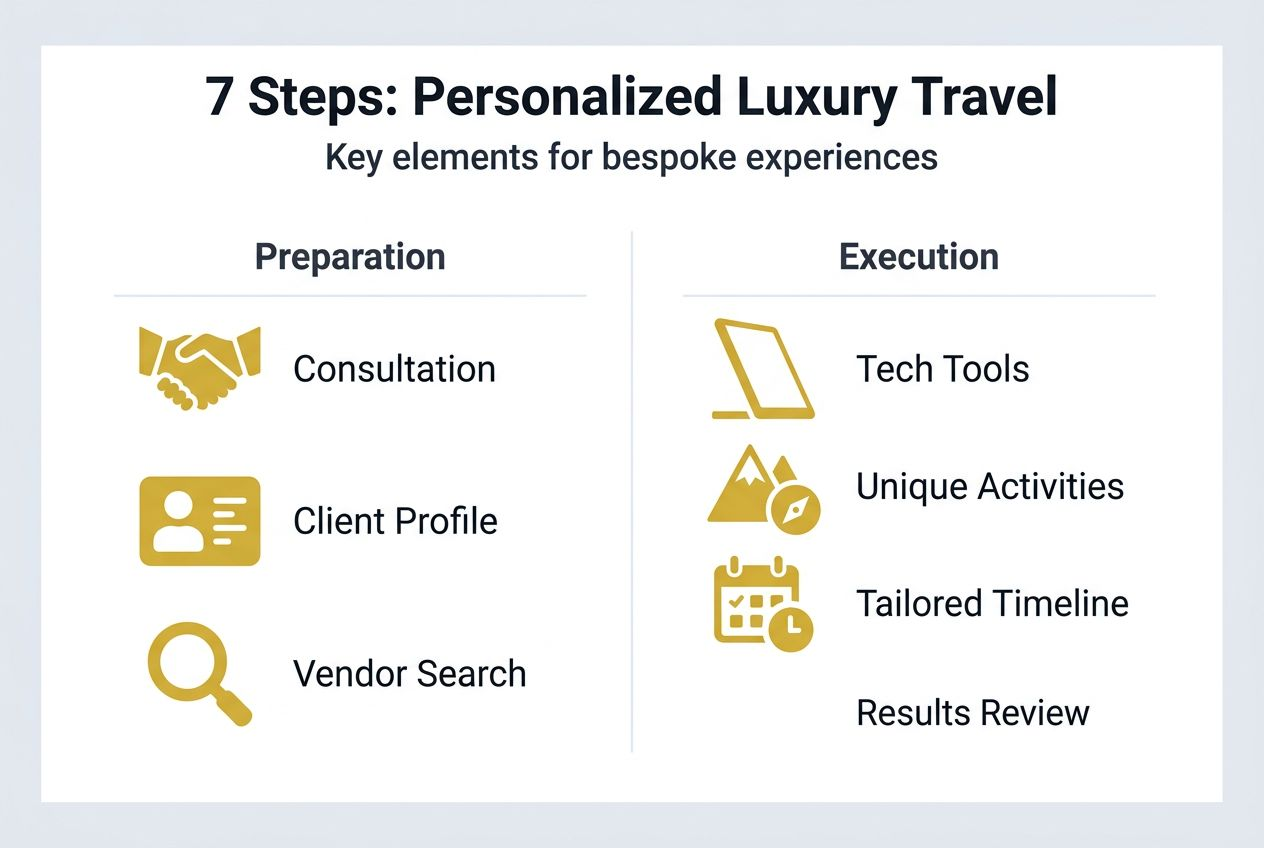
High-net-worth travelers often struggle to find itineraries that genuinely reflect their unique tastes, values, and niche needs like LGBTQIA+ inclusivity or multi-generational family dynamics. Generic luxury packages fall short, leaving discerning clients dissatisfied despite premium price tags. This guide provides a clear, step-by-step framework to craft truly bespoke travel experiences using technology, expert insights, and inclusive considerations. You’ll learn practical methods, realistic timelines, common pitfalls, and how to measure success in creating unforgettable personalized journeys.
Table of Contents
- Introduction To Personalized Luxury Travel
- Prerequisites: What You Need To Start Personalized Travel Planning
- Step 1: Initial Consultation And Needs Assessment
- Step 2: Leveraging Technology For Tailored Itineraries
- Step 3: Curating Exclusive Vendors And Unique Activities
- Step 4: Special Considerations For Niche Traveler Groups
- Step 5: Timeline, Costs, And Managing Expectations
- Step 6: Common Mistakes And How To Avoid Them
- Step 7: Expected Outcomes And Measuring Success
- Enhance Your Personalized Luxury Travel With Grand Globetrotting
Key takeaways
| Point | Details |
|---|---|
| Detailed client profiling captures unique tastes and niche requirements essential for personalization. | Standardized questionnaires and lifestyle interviews reveal unspoken preferences. |
| Technology accelerates planning by 40% while deepening customization without sacrificing personal touch. | AI and API integrations streamline vendor coordination and dynamic itinerary adjustments. |
| Exclusive local vendors create authentic luxury experiences beyond generic packages. | Sourcing trusted artisans and private guides boosts uniqueness by 30%. |
| Special considerations for LGBTQIA+, families, and honeymooners improve satisfaction significantly. | Verified inclusive accommodations increase booking rates by 50% for niche groups. |
| Realistic timelines of 3 to 6 weeks and transparent budgeting prevent rushed planning and misaligned expectations. | Clear communication builds trust and reduces dissatisfaction risk. |
Introduction to personalized luxury travel
Personalized luxury travel represents highly tailored journeys that reflect individual preferences, values, and lifestyle aspirations rather than cookie-cutter itineraries. For high-net-worth clients, personalization delivers exclusivity and authenticity that standard luxury offerings cannot match. You expect every detail to align with your tastes, from accommodation aesthetics to activity pacing and cultural immersion depth.
Personalization matters because discerning travelers value unique experiences that resonate personally. Generic luxury packages often miss the mark, failing to address specific interests like sustainable travel, culinary adventures, or family-friendly luxury. When done right, personalized travel transforms trips into memorable experiences that exceed expectations and foster lasting satisfaction.
Key personalization areas include:
- Honeymoons: Romantic, intimate itineraries designed around couples’ shared interests and relationship milestones.
- Family vacations: Multi-generational trips balancing diverse age groups with activities everyone enjoys.
- LGBTQIA+ friendly journeys: Safe, inclusive travel experiences respecting identity and comfort throughout.
- Solo adventures: Thoughtfully curated independent exploration aligned with personal growth goals.
Personalized travel enhances satisfaction by eliminating research overwhelm and ensuring every moment aligns with your vision. When you receive a bespoke itinerary reflecting deep understanding of your preferences, you feel valued and understood. This foundation sets the stage for exploring how to systematically create such experiences.
Prerequisites: What you need to start personalized travel planning
Before effective personalization begins, specific preparatory elements must be in place to ensure quality outcomes. Without these fundamentals, even the best intentions fall short.
Essential prerequisites include:
- Detailed client data: Access to comprehensive lifestyle information, travel history, and preference profiles enables accurate customization. Past trip feedback reveals what worked and what didn’t.
- Expert advisors: Luxury travel professionals or high-end concierge services bring industry knowledge and vendor relationships that elevate personalization quality beyond amateur planning.
- Technology tools: AI platforms and API integrations streamline itinerary creation, vendor coordination, and real-time adjustments, supporting efficient customization at scale.
- Clear parameters: Defined budget ranges, timeline expectations, and trip purpose provide alignment between planner and client, preventing scope creep and disappointment.
- Vendor network: Established relationships with hotels, guides, and activity providers ensure reliable execution of personalized plans.
Pro Tip: Create standardized questionnaires capturing deep client insights systematically. Include sections on travel style, preferred pace, dietary restrictions, accessibility needs, and past memorable experiences. This structured approach ensures no critical detail gets overlooked during initial consultations.
Investing time in thorough preparation pays dividends throughout the planning process. Clients appreciate the attention to detail, and planners work more efficiently with complete information. When you partner with travel planning bespoke itinerary services, these prerequisites form the foundation for exceptional personalized experiences.
Step 1: Initial consultation and needs assessment
The consultation phase establishes the foundation for all subsequent personalization. This critical first step involves detailed client engagement to capture preferences, constraints, and unspoken desires accurately.
Implementing effective consultation sessions:
- Schedule comprehensive interviews: Block 60 to 90 minutes for initial conversations, allowing space for deep exploration of lifestyle details and travel aspirations without rushing.
- Ask targeted questions: Probe specific niche needs such as LGBTQIA+ safety concerns, family dynamics across generations, or honeymoon intimacy preferences to surface critical requirements.
- Document travel history: Record past trips, highlighting what made experiences memorable or disappointing to identify patterns and preferences.
- Practice active listening: Pay attention to tone and emotion when clients describe preferences, revealing priorities they might not explicitly state.
- Confirm understanding: Summarize key points back to clients, ensuring alignment before moving forward with planning.
Research shows in-depth interviews increase satisfaction by 35% compared to basic questionnaires alone. When you actively listen and ask thoughtful follow-up questions, clients feel heard and valued. This emotional connection builds trust and opens dialogue about sensitive topics like budget constraints or special accessibility needs.
During consultations, explore inspiration from past successful trips to help clients articulate preferences they struggle to describe. Visual references and storytelling techniques bring abstract desires into concrete planning parameters. The goal is creating a comprehensive profile serving as your roadmap throughout the personalization journey.
Step 2: Leveraging technology for tailored itineraries
Advanced technology transforms personalized travel planning from labor-intensive manual work into efficient, data-driven customization. AI and API integrations accelerate the process while deepening personalization capabilities.
Technology reduces planning time by 40% while maintaining quality and personal touch. AI algorithms analyze client profiles against vast databases of destinations, accommodations, and activities, generating initial itinerary drafts in minutes rather than hours. API integrations with booking platforms simplify vendor coordination, lowering logistical complexity by 25% and reducing booking errors.
| Aspect | Manual Planning | Technology-Augmented Approach |
|---|---|---|
| Initial itinerary draft | 8 to 12 hours | 2 to 3 hours |
| Vendor coordination | Multiple phone calls and emails | Automated API requests |
| Customization depth | Limited by research time | Extensive data-driven matching |
| Adjustment speed | Slow, requires rework | Dynamic, real-time updates |
| Scalability | Low, planner-dependent | High, systems support multiple clients |
Dynamic itinerary adjustments represent a key advantage of technology integration. When client preferences shift mid-planning or new opportunities emerge, AI tools quickly regenerate options reflecting updated parameters. This flexibility enhances client satisfaction and reduces planner frustration.
Pro Tip: Combine AI tools with human expertise to maintain personal touch and quality control. Technology handles data processing and logistics, freeing you to focus on relationship building and creative curation. Review AI-generated suggestions critically, applying professional judgment to ensure recommendations truly align with nuanced client needs.
When you work with travel planning bespoke itinerary services leveraging cutting-edge technology, you benefit from both efficiency and personalization depth. The human-technology partnership delivers superior outcomes compared to either approach alone.
Step 3: Curating exclusive vendors and unique activities
Vendor selection transforms good itineraries into exceptional personalized experiences. Sourcing trusted local providers and exclusive activities elevates luxury perception and creates authentic, memorable moments.

Local vendor sourcing boosts uniqueness by 30%, differentiating bespoke journeys from mass-market luxury packages. When you partner with artisan chocolatiers, private vineyard owners, or local historians offering personalized tours, clients access experiences unavailable through standard channels. These connections create stories clients share long after returning home.
Key vendor curation strategies include:
- Align with client interests: Match activities to documented preferences, whether culinary adventures, wellness retreats, or adrenaline-fueled excursions.
- Verify reliability and quality: Vet vendors through reputation checks, client testimonials, and direct relationship building to ensure consistent excellence.
- Secure exclusive access: Negotiate private experiences, after-hours museum visits, or chef’s table reservations that demonstrate special treatment.
- Maintain vendor relationships: Cultivate long-term partnerships providing preferred rates, priority booking, and insider knowledge enhancing personalization.
- Consider logistical feasibility: Balance uniqueness with practical execution, ensuring vendors deliver reliably within timeline and budget constraints.
Examples of exclusive activities include private guided archaeological site tours before public opening, hands-on cooking classes with Michelin-starred chefs in their homes, or sunset yacht excursions with marine biologists narrating local ecology. These experiences feel personal and unrepeatable, exactly what discerning travelers seek.
Collaboration with premium hotels and curated activities excursions providers expands your personalization toolkit. When vendors understand your commitment to bespoke service, they often reveal hidden gems and special opportunities unavailable to general audiences.
Step 4: Special considerations for niche traveler groups
Personalization must adapt thoughtfully for specific traveler segments to maximize comfort and satisfaction. LGBTQIA+ clients, families, honeymooners, and other niche groups have distinct needs requiring specialized attention.
LGBTQIA+ inclusivity increases booking rates by 50% when travelers find verified friendly accommodations and activities. Safety and respect are paramount. Vet hotels for non-discrimination policies, train staff on inclusive language, and research destination attitudes toward LGBTQIA+ visitors. Clients need assurance they can be themselves without judgment or risk.
Multi-generational family travel requires balancing diverse age groups and interests to prevent dissatisfaction. Activities must engage toddlers, teenagers, parents, and grandparents simultaneously or provide flexible options allowing independent exploration. Accommodations need connecting rooms or villa layouts facilitating togetherness and privacy. Dining selections should accommodate various dietary preferences and energy levels.
Honeymoon personalization focuses on romantic, intimate experiences unique to each couple’s relationship. Some newlyweds prefer adventure and exploration, while others seek relaxation and pampering. Understanding their love story, proposal details, and shared dreams helps craft itineraries celebrating their union authentically. Privacy, special touches like champagne on arrival, and opportunities for meaningful connection enhance romance.
Examples of niche adjustments include:
- Gender-neutral amenities: Bathrooms and spa services respecting all gender identities.
- Family-friendly excursions: Activities engaging multiple ages simultaneously, like interactive cooking classes or wildlife encounters.
- Bespoke romantic options: Private beach dinners, couples’ spa treatments, or surprise vow renewal ceremonies.
- Cultural sensitivity: Researching local customs and potential challenges for specific traveler groups before finalizing destinations.
For inspiration on adapting personalization to niche needs, review case studies and client testimonials highlighting successful inclusive travel experiences. Safety, comfort, and authentic connection drive satisfaction for these specialized segments.
Step 5: Timeline, costs, and managing expectations
Realistic planning parameters prevent disappointment and rushed execution. Understanding timelines and costs upfront helps align client expectations with achievable outcomes.
Standard personalization timelines range from 3 to 6 weeks depending on trip complexity, destination remoteness, and vendor availability. Simple domestic trips with established vendor relationships may require only 3 weeks, while international multi-destination journeys involving exclusive experiences often need 6 weeks or more. Starting early provides buffer for unexpected delays and allows thoughtful curation rather than scrambling.
| Personalization Level | Timeline | Typical Cost Range | Key Features |
|---|---|---|---|
| Basic customization | 3 to 4 weeks | $10,000 to $20,000 | Standard luxury hotels, popular activities, minimal exclusivity |
| Moderate personalization | 4 to 5 weeks | $20,000 to $35,000 | Boutique accommodations, some private experiences, tailored pacing |
| Deep personalization | 5 to 6 weeks | $35,000 to $50,000+ | Exclusive vendors, fully bespoke itinerary, comprehensive concierge support |
Typical costs range between $10,000 and $50,000+ based on itinerary depth and exclusivity. Luxury accommodations, private transportation, exclusive activity access, and concierge services drive expenses. Transparent budget discussions during initial consultations help set realistic expectations and prevent sticker shock later.
Managing client expectations upfront reduces dissatisfaction risk. Clearly communicate what’s achievable within stated timelines and budgets. If a client requests extensive personalization on a compressed timeline, explain tradeoffs and offer alternatives. Honest dialogue builds trust and positions you as a reliable partner rather than a vendor promising unrealistic outcomes.
Pro Tip: Use transparent communication on timelines and budget constraints to build trust from day one. Provide detailed breakdowns showing how costs allocate across accommodations, activities, transportation, and services. When clients understand value delivery, they appreciate the investment in personalized experiences.
Partnering with a luxury travel advisor and reviewing sample itinerary template structures helps visualize realistic planning outputs and associated investments.
Step 6: Common mistakes and how to avoid them
Even experienced planners make errors that undermine personalization quality. Recognizing frequent pitfalls and implementing preventive measures improves client outcomes significantly.
Neglecting detailed lifestyle data leads to 30% of personalization failures. When planners rely on surface-level information or assumptions, itineraries miss the mark. Fix this by implementing standardized interview protocols capturing comprehensive client profiles including unstated preferences and constraints. Take time to ask follow-up questions and document nuances.
Key mistakes to avoid:
- Over-reliance on generic luxury experiences: Booking five-star chain hotels and popular tours diminishes uniqueness. Integrate local exclusive vendors and off-the-beaten-path experiences creating memorable differentiation.
- Ignoring niche inclusivity: Failing to verify LGBTQIA+ friendliness, family suitability, or accessibility accommodations risks dissatisfaction and booking cancellations. Adopt verified inclusive practices and vet all vendors thoroughly.
- Underestimating planning time: Rushing personalization to meet unrealistic deadlines compromises quality and increases errors. Set realistic timelines of 3 to 6 weeks and educate clients on why adequate time matters.
- Poor vendor vetting: Booking unproven vendors based solely on online reviews or low prices creates execution risks. Build relationships with reliable providers and conduct due diligence before recommendations.
- Ignoring safety or cultural considerations: Overlooking destination-specific risks or cultural sensitivities endangers clients and damages your reputation. Conduct thorough destination research and consult local experts.
Learning from common personalization mistakes shared by other luxury travel professionals accelerates your expertise. Join industry forums, attend conferences, and seek mentorship to continuously improve your personalization approach. Every mistake represents a learning opportunity refining future client experiences.
Step 7: Expected outcomes and measuring success
Measuring personalization success ensures continuous improvement and validates your approach. Clear metrics and client feedback mechanisms provide actionable insights.
Expected client satisfaction rates exceed 85% for well-personalized trips according to industry benchmarks. When every detail reflects client preferences and executes flawlessly, travelers feel the investment was worthwhile. Over 90% of clients intend to rebook when personalized travel meets expectations, creating valuable repeat business and referrals.
Success measurement strategies include:
- Post-trip satisfaction surveys: Structured questionnaires capturing specific feedback on itinerary uniqueness, vendor quality, and overall experience.
- Net Promoter Score (NPS): Simple metric asking how likely clients are to recommend your services, providing clear benchmarking data.
- Detailed reviews: Encourage comprehensive written reviews highlighting what worked exceptionally well and areas for improvement.
- Repeat booking rates: Track how many clients return for additional personalized trips, indicating sustained satisfaction.
- Referral generation: Monitor new clients acquired through existing client recommendations, demonstrating trust and satisfaction.
Specialized concierge follow-up services post-booking increases satisfaction rates by 20%, supporting ongoing personalization throughout the journey. When planners check in during trips, address issues proactively, and make real-time adjustments, clients feel supported and valued. This continuity bridges planning with execution, ensuring promises become reality.
“Personalized luxury travel succeeds when clients feel understood at every touchpoint. From initial consultation through post-trip follow-up, consistent attention to individual preferences transforms good trips into unforgettable experiences that clients eagerly share and repeat.”
Tracking these metrics systematically helps refine your personalization process. Identify patterns in feedback, celebrating successes and addressing weaknesses. When you commit to measurement and continuous improvement, your travel planning bespoke itinerary services evolve to meet changing client expectations and industry trends.
Enhance your personalized luxury travel with Grand Globetrotting
Creating truly personalized luxury experiences requires expertise, technology, and extensive vendor networks. Grand Globetrotting combines all three to deliver bespoke itineraries reflecting your unique preferences and niche needs.
Our team specializes in travel planning bespoke itinerary development, leveraging advanced AI tools and decades of industry relationships to craft unforgettable journeys. We provide access to exclusive hotels and curated activities excursions unavailable through standard booking channels.
We understand the importance of timely, transparent planning aligned with your requirements including LGBTQIA+ friendly options, multi-generational family dynamics, and romantic honeymoon experiences. Our concierge approach ensures every detail receives attention, from initial consultation through post-trip follow-up.
Pro Tip: Start your personalized travel journey with a comprehensive consultation exploring your lifestyle, preferences, and travel aspirations. This foundation unlocks unique possibilities tailored specifically to you, transforming ordinary trips into extraordinary memories.
Frequently asked questions
How long does personalized luxury travel planning typically take?
Typical planning time ranges from 3 to 6 weeks depending on trip complexity, destination remoteness, vendor availability, and client responsiveness to questions and draft reviews. Simple domestic trips with established vendors may finalize in 3 weeks, while elaborate international multi-destination journeys requiring exclusive access often need the full 6 weeks. Starting early provides buffer for unexpected delays and allows thoughtful curation rather than rushed execution.
What are the main challenges in personalizing travel for LGBTQIA+ clients?
Challenges include verifying LGBTQIA+ friendly vendors, ensuring destination safety regarding local laws and cultural attitudes, and creating inclusive experiences respecting client identity throughout the journey. Personalization integrates thoroughly vetted accommodations with non-discrimination policies, staff trained in inclusive practices, and activities in welcoming environments. Research and relationship building with trusted local partners are essential for delivering safe, comfortable experiences. Explore inspiration showcasing successful inclusive travel examples.
How can technology tools improve luxury travel personalization?
Technology reduces planning time by 40% through AI-driven matching of client profiles to destinations, accommodations, and activities from vast databases. API integrations streamline vendor coordination, booking, and real-time availability checks, lowering logistical complexity significantly. Dynamic itinerary generation allows quick adjustments when preferences change or new opportunities emerge, maintaining flexibility throughout planning. Technology handles data processing while human expertise provides creative curation and relationship management. Combining both approaches through travel planning bespoke itinerary services delivers superior personalization outcomes.
What common mistakes should travelers avoid during personalization?
Avoid neglecting detailed lifestyle data collection, ignoring niche inclusivity needs, underestimating required planning timelines, and overusing generic luxury experiences that lack uniqueness. Work with experienced professionals who implement standardized interview protocols, thoroughly vet vendors for reliability and inclusivity, and set realistic timelines of 3 to 6 weeks. Validate cultural sensitivities, safety considerations, and accessibility accommodations before finalizing destinations and activities. Learning from common personalization mistakes helps prevent disappointing outcomes and ensures your investment delivers exceptional value.
Recommended
At Grand Globetrotting, we don't just plan vacations; we craft extraordinary adventures that leave you with cherished memories. Let us bring your dream vacation to life, perfectly tailored to your style, and immerse yourself in a world of luxury, exploration, and unforgettable moments. Your journey begins with us.
Itinerary planning services require a separate charge outside of cost to book travel accommodations. Depending upon the complexity of the itinerary and the level of effort required to acquire unique experiences, cost may vary. Speak with our team to learn more.
Book your consultation