
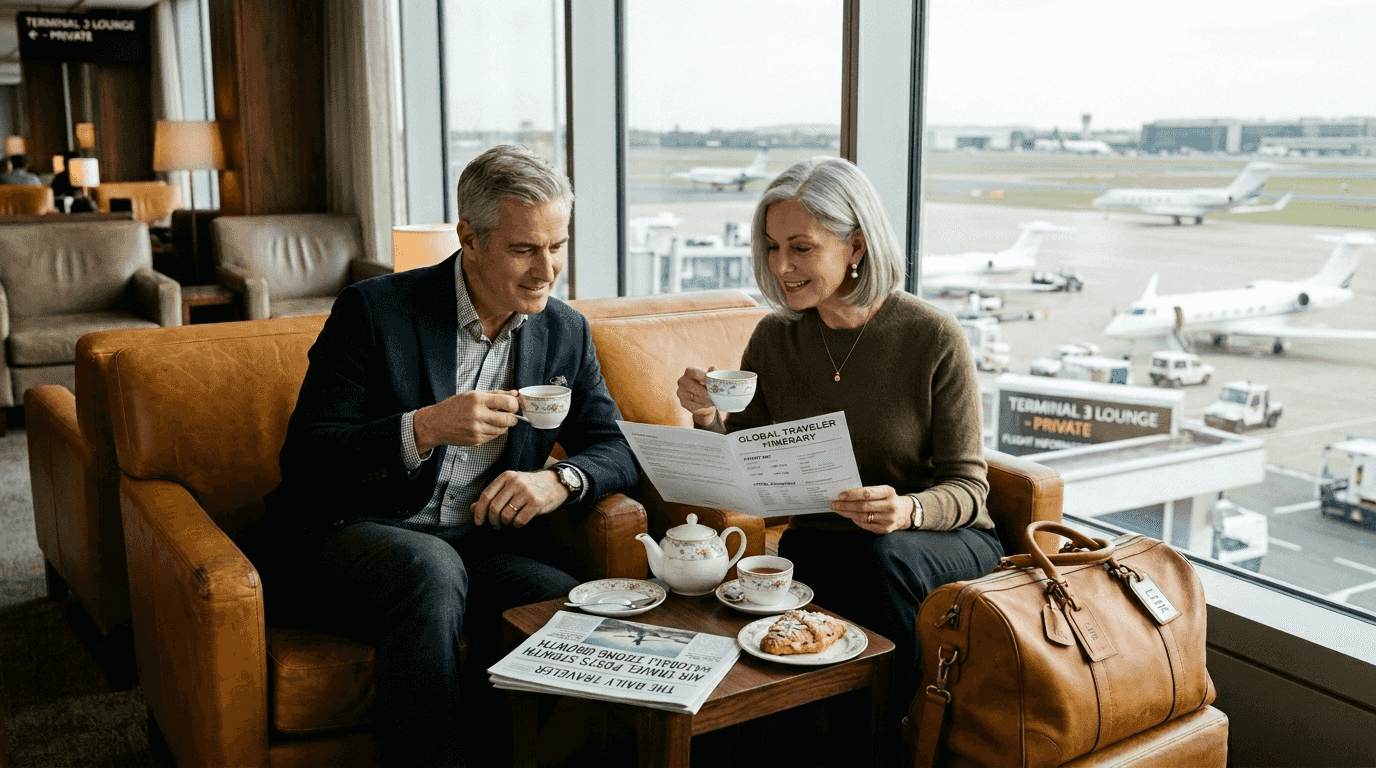
Luxury travel is no longer about visiting the most extravagant destinations. The industry has shifted toward crafting personalized experiences that prioritize how you spend your time, not just where you go. Trend analysis reveals this transformation, showing that discerning travelers now value privacy, authenticity, and meaningful engagement over traditional prestige markers. Understanding these insights helps you navigate the evolving landscape and make informed choices that align with your unique preferences. This article explores how data-driven trend analysis shapes luxury travel in 2026, from AI-powered personalization to emerging destinations redefining what luxury means.
Table of Contents
- The Evolving Luxury Travel Landscape In 2026
- How Advanced AI And Data Analytics Drive Personalization And Competitive Advantage
- Emerging Luxury Travel Trends Influenced By Data-Driven Insights
- Applying Trend Analysis To Personalize Your Luxury Travel Experience
- Discover Personalized Luxury Travel Planning With Grand Globetrotting
- Frequently Asked Questions
Key takeaways
| Point | Details |
|---|---|
| Time over place | Luxury travelers now prioritize itineraries designed around meaningful time use rather than iconic destinations alone. |
| AI drives personalization | Machine learning and data platforms enable real-time customization of experiences for high-net-worth individuals. |
| Emerging markets expand | Less-explored European regions and niche segments diversify traditional luxury travel geography. |
| Privacy and authenticity | Discerning travelers seek genuine local engagement and exclusive experiences tailored to personal values. |
| Tech meets human touch | Successful luxury providers balance automation with expert concierge services to elevate personalization. |
The evolving luxury travel landscape in 2026
The luxury tourism sector is experiencing remarkable expansion. The luxury tourism market reached $27.5 billion in 2024 and projects growth to $87.6 billion by 2032, driven by changing traveler priorities and technological innovations. This growth reflects more than increased spending; it signals fundamental shifts in what high-net-worth individuals value during their journeys.
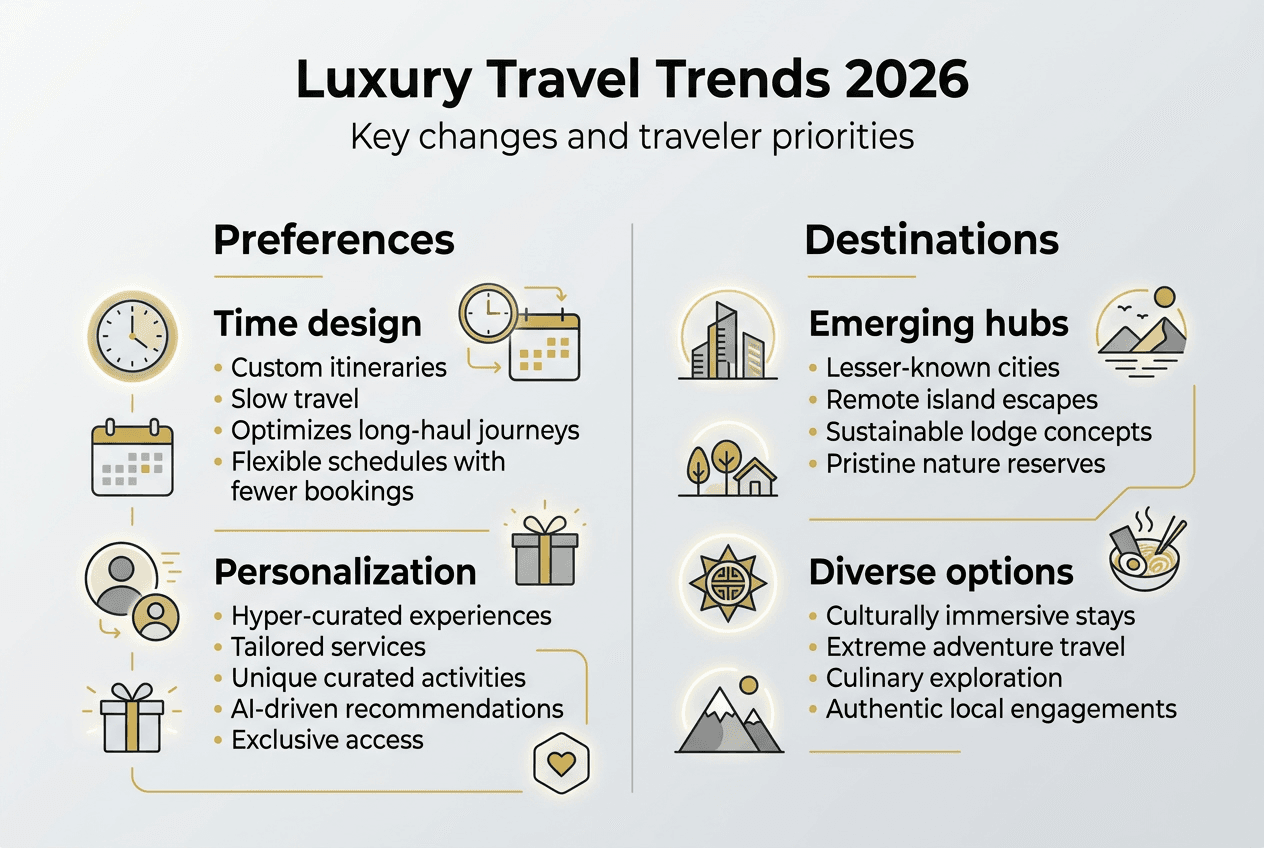
Traveler behavior demonstrates this evolution clearly. Data shows a 36% rise in demand for itineraries structured around time rather than place, indicating that luxury now means maximizing meaningful moments across multi-part trips. You want experiences that resonate personally, not just photo opportunities at famous landmarks. This shift parallels broader cultural changes where Gen Z’s influence on luxury travel emphasizes authenticity and purpose over conspicuous consumption.
Solo female travelers represent a particularly dynamic segment. Over half of bookings in the UK are made by women, reflecting growing confidence and purchasing power among female travelers seeking tailored, secure experiences. This demographic demands privacy, safety, and personalized service, pushing providers to innovate beyond traditional couple-focused or family-oriented packages.
Emerging destinations are reshaping luxury travel geography:
- Northern and eastern European countries like Poland, Wales, and Sweden attract travelers seeking cultural depth and value
- Secondary cities in established markets offer authentic experiences without overcrowding
- Eco-luxury destinations combine sustainability with high-end amenities
- Private island resorts and remote locations cater to privacy-focused travelers
Pro Tip: When evaluating emerging destinations, look for regions with strong infrastructure development and growing luxury hospitality investment, as these indicators suggest sustainable growth in quality offerings.
The following table illustrates key market dynamics shaping luxury travel:
| Metric | 2024 Value | 2032 Projection | Growth Driver |
|---|---|---|---|
| Market Size | $27.5B | $87.6B | Personalization demand |
| Time-Centric Itineraries | 36% increase | Continued rise | Meaningful engagement |
| Solo Female Bookings | 50%+ (UK) | Expanding | Safety and customization |
| AI Adoption Rate | 91% | Near universal | Operational efficiency |
These trends reveal that luxury travel success depends on understanding and anticipating evolving preferences through systematic analysis of traveler data, market signals, and technological capabilities.
How advanced AI and data analytics drive personalization and competitive advantage
Artificial intelligence has become essential infrastructure in luxury travel, not just a competitive edge. AI-driven Customer Data Platforms enable real-time personalized decisions that transform how providers understand and serve you. These systems aggregate streaming data from booking patterns, preference histories, social signals, and behavioral analytics to create comprehensive traveler profiles.
The technology stack powering this personalization includes:
- Machine learning algorithms like XGBoost and Random Forest that predict preferences with increasing accuracy
- Hybrid recommendation engines combining collaborative filtering with content-based approaches
- Natural language processing tools that analyze feedback and sentiment in real time
- Computer vision systems that match visual preferences to destination imagery
Adoption rates demonstrate the industry’s commitment to these tools. 91% of tourism and hospitality firms use AI, with 85% reporting measurable improvements in cost savings and operational efficiency. This widespread implementation means you benefit from increasingly sophisticated personalization regardless of which luxury provider you choose.
AI enhances multiple operational dimensions simultaneously. Predictive models forecast demand patterns, enabling dynamic pricing that balances exclusivity with value. Chatbots handle routine inquiries instantly while routing complex requests to human experts. Automated systems monitor guest experiences across touchpoints, alerting staff to opportunities for personalized interventions before you need to ask.
The most successful implementations blend automation with human expertise. AI handles data processing and pattern recognition at scale, but experienced travel advisors interpret insights within the context of your unique situation. This hybrid approach appears in personalized travel planning for luxury journeys, where technology amplifies rather than replaces the human touch.
Pro Tip: When working with luxury travel providers, ask how they integrate AI insights with advisor expertise, as the best experiences come from combining algorithmic precision with human intuition and relationship building.
Data segmentation enables hyper-targeted offers that feel individually crafted. Instead of broad demographic categories, platforms now segment based on psychographic profiles, travel motivations, and micro-preferences. You receive recommendations aligned with your values around sustainability, cultural engagement, adventure level, and social dynamics, creating experiences that feel authentically yours.
The privacy dimension matters enormously in this data-intensive environment. Leading providers implement robust data governance frameworks that protect your information while enabling personalization. Transparent opt-in mechanisms, secure storage protocols, and clear usage policies build trust essential for ongoing relationships with high-net-worth clients who value discretion.
Emerging luxury travel trends influenced by data-driven insights
Trend analysis reveals specific patterns reshaping how and where luxury travelers choose to spend their time and resources. The shift toward multi-destination efficiency stands out prominently. You increasingly prefer itineraries linking scenic routes with short flights, maximizing diverse experiences while minimizing transit fatigue. This approach transforms travel from a series of disconnected stops into a cohesive narrative journey.
Destination diversification accelerates beyond traditional luxury hubs. Luxury travelers are diversifying destinations, seeking authentic experiences in less-frequented locations that offer cultural richness without overcrowding. European travel growth is strongest in northern and eastern countries like Poland, Wales, and Sweden, where infrastructure improvements meet growing hospitality sophistication.

The following comparison illustrates how emerging destinations differ from traditional luxury markets:
| Factor | Traditional Destinations | Emerging Destinations |
|---|---|---|
| Crowding Level | High season saturation | Manageable visitor density |
| Cultural Access | Commercialized experiences | Authentic local engagement |
| Value Proposition | Premium pricing expected | Exceptional quality per dollar |
| Infrastructure | Mature and extensive | Rapidly developing and modern |
| Exclusivity | Achieved through price | Natural from lower awareness |
Eco-luxury represents another significant trend driven by data showing your growing environmental consciousness. Sustainable travel choices no longer mean compromising on comfort or service quality. Properties now integrate renewable energy, local sourcing, conservation programs, and carbon offset initiatives into genuinely luxurious experiences. You can explore luxury travel inspiration that balances environmental responsibility with exceptional quality.
Key emerging trends include:
- Wellness-focused itineraries combining physical activities, mindfulness practices, and nutritional programs tailored to your health goals
- Cultural immersion experiences providing privileged access to local artisans, chefs, and cultural practitioners
- Adventure luxury blending adrenaline activities with high-end accommodations and gourmet dining
- Multigenerational travel designed to engage family members across age ranges with varied interests
- Extended stays in fewer locations allowing deeper connection and reducing environmental impact
The time design philosophy manifests in these trends. Rather than rushing through bucket list items, you invest days or weeks in meaningful engagement with places and people. This approach creates memories rooted in genuine understanding rather than superficial tourism, aligning luxury with personal growth and authentic connection.
Technology enables these experiences through better matching algorithms and communication tools. Virtual reality previews help you select destinations that truly resonate. Real-time translation apps facilitate deeper local interactions. Blockchain-verified sustainability credentials ensure eco-luxury claims are legitimate. These innovations remove friction from pursuing your authentic travel preferences.
Applying trend analysis to personalize your luxury travel experience
Understanding trends means little without translating insights into actionable planning strategies. Start by clarifying your personal priorities across key dimensions: time usage, privacy requirements, authenticity desires, and niche interests. Personalized travel experiences are increasingly vital for discerning luxury travelers who refuse cookie-cutter itineraries regardless of price point.
Use data-driven insights to inform destination selection strategically. If trend analysis shows growing interest in northern European cultural experiences, investigate whether that aligns with your values before following the crowd. Emerging destinations offer advantages like better value and authentic engagement, but only if they match your genuine interests. Avoid choosing locations solely because data suggests they’re trending.
Leverage AI-powered personalized travel planning services to customize every detail of your journey. These platforms analyze your preferences, past trips, and stated priorities to generate recommendations you might not discover independently. The technology excels at identifying non-obvious connections, like pairing a culinary interest with a lesser-known wine region or matching adventure preferences with emerging eco-luxury properties.
Consider these practical application steps:
- Document your travel motivations honestly, distinguishing between genuine desires and perceived obligations to visit famous places
- Research emerging trends through reputable sources, filtering for patterns matching your authentic interests
- Engage luxury travel advisors who use data insights while prioritizing your individual preferences over generic recommendations
- Build flexibility into itineraries, allowing spontaneous experiences while maintaining structure around key priorities
- Evaluate providers based on their integration of technology with human expertise, ensuring personalization feels genuine rather than algorithmic
Pro Tip: Create a personal travel profile documenting your preferences across categories like pace, social interaction, cultural engagement, physical activity, and culinary interests, then share this with advisors to accelerate personalization.
Growing trends like solo female travel or eco-luxury may enhance your experience if they align with your situation. Solo travel offers complete control over pacing and activities, while eco-luxury satisfies environmental values without sacrificing comfort. Evaluate these options based on personal fit rather than trend popularity.
Plan for intentionality in every element. Time design means structuring days around meaningful activities rather than cramming maximum sights into minimum time. Multi-destination itineraries should flow logically, with each location building on previous experiences. Transportation becomes part of the journey rather than dead time between highlights.
Balance technology and human expertise throughout planning and execution. AI tools excel at processing vast option sets and identifying patterns, but experienced advisors understand context, anticipate challenges, and leverage relationships for exclusive access. The combination delivers personalization impossible through either approach alone, as demonstrated in services offering how to personalize luxury travel in 2026.
Finally, recognize that trend analysis provides frameworks for decision making, not prescriptions. Your luxury travel experience should reflect your unique preferences, values, and circumstances. Use insights to inform choices while maintaining agency over what luxury means to you personally.
Discover personalized luxury travel planning with Grand Globetrotting
Applying these trend insights to your own travel requires expertise, time, and industry connections most travelers lack. Grand Globetrotting specializes in translating data-driven insights into bespoke luxury experiences tailored precisely to your preferences. Our approach combines cutting-edge AI tools with personalized concierge service, ensuring you benefit from both technological precision and human intuition.
We leverage the same trend analysis discussed throughout this article to identify emerging destinations, optimize itineraries for meaningful time use, and anticipate your needs before you articulate them. Whether you’re planning a honeymoon, solo adventure, or multigenerational journey, our team crafts experiences reflecting your authentic interests rather than generic luxury templates. Explore our step-by-step luxury itinerary planning to see how we transform insights into unforgettable journeys, or discover our personalized travel planning for luxury journeys approach. For couples seeking romance, our luxury honeymoon planning tips demonstrate how we create once-in-a-lifetime experiences.
Frequently asked questions
What is trend analysis in luxury travel?
Trend analysis examines data patterns, traveler behaviors, and market signals to forecast shifts in luxury travel preferences and offerings. It helps providers and travelers anticipate emerging destinations, experiences, and technologies meeting evolving high-net-worth demands. This systematic approach transforms raw data into actionable insights for personalization.
How does AI improve personalization in luxury travel?
AI uses Customer Data Platforms and predictive algorithms to understand individual preferences at scale, processing behavioral data, booking patterns, and stated preferences simultaneously. This technology enables luxury providers to offer customized recommendations, optimize itineraries in real time, and anticipate needs before travelers articulate them. The result is experiences that feel individually crafted rather than mass-produced.
Which emerging destinations are popular in luxury travel for 2026?
Northern and eastern European countries like Poland, Wales, and Sweden are gaining significant traction among luxury travelers. These destinations offer authentic cultural experiences, modern infrastructure, and exceptional value compared to traditional luxury hubs. Travelers seek less-explored locations providing genuine local engagement without overcrowding or commercialization.
Why is time design more important than place in luxury travel?
Travelers increasingly want meaningful, multi-part trips structured around valuable experiences rather than simply visiting iconic locations. This shift reflects a desire to maximize time quality and create personal engagement during travel, moving beyond superficial tourism. Time design prioritizes how you spend each moment, ensuring activities align with your authentic interests and values rather than external prestige markers.
Recommended
At Grand Globetrotting, we don't just plan vacations; we craft extraordinary adventures that leave you with cherished memories. Let us bring your dream vacation to life, perfectly tailored to your style, and immerse yourself in a world of luxury, exploration, and unforgettable moments. Your journey begins with us.
Itinerary planning services require a separate charge outside of cost to book travel accommodations. Depending upon the complexity of the itinerary and the level of effort required to acquire unique experiences, cost may vary. Speak with our team to learn more.
Book your consultation