
TL;DR:
- Luxury dining today requires seamless personalization, exclusivity, and culinary innovation to meet high standards.
- Effective preparation and proactive communication with advisors elevate the dining experience and secure coveted reservations.
Even the most meticulously planned luxury itinerary can feel incomplete when the dining experiences fall short of expectations. You’ve booked a stunning suite, arranged a private transfer, and mapped out every excursion — yet finding a truly extraordinary meal, one that matches your specific tastes and standards, remains surprisingly difficult without the right guidance. Personalization in luxury dining now involves advanced data analytics, CRM systems, and dedicated concierges to capture preferences before you even arrive. This guide walks you through the proven strategies hospitality insiders use to secure and savor exceptional culinary experiences every time.
Table of Contents
- What defines a luxury dining experience?
- Essential preparation: Guest preferences and personalization
- Step-by-step: How to secure exclusive reservations
- Maximizing the experience: At the table and beyond
- Perspective: Why true luxury dining is built on anticipation, not just exclusivity
- Experience the world’s finest cuisine with Grand Globetrotting
- Frequently asked questions
Key Takeaways
| Point | Details |
|---|---|
| Anticipate and personalize | Pre-arrival preference capture and custom planning lead to exceptional dining experiences. |
| Secure elite reservations | Early booking and leveraging concierge relationships are crucial for top-tier access. |
| Embrace new benchmarks | Stay ahead by seeking restaurants and hotels with 2026’s latest Forbes and Michelin acclaim. |
| Turn setbacks into opportunities | Expert advisors can resolve last-minute changes creatively, from alternative venues to flying in rare ingredients. |
| Feedback fuels future access | Providing thoughtful feedback and building rapport unlocks unique repeat experiences. |
What defines a luxury dining experience?
Luxury dining in 2026 has moved well beyond white tablecloths and long wine lists. Today, the benchmark involves a seamless convergence of exclusivity, personalization, culinary innovation, and world-class service. Understanding what this looks like in practice gives you the clarity to demand what you deserve — and recognize when a restaurant truly delivers.
The clearest way to understand the distinction is to compare fine dining with ultra-luxury dining:
| Feature | Fine dining | Ultra-luxury dining |
|---|---|---|
| Menu approach | Seasonal, chef-curated | Fully personalized to guest profile |
| Service style | Formal and attentive | Ambassador-level, anticipatory |
| Environment | Elegant and refined | Private, theatrical, or destination-specific |
| Reservations | Open public booking | Often invitation-only or concierge-mediated |
| Customization | Limited substitutions | Off-menu creations, specialty imports |
| Recognition | Michelin stars | Forbes Five-Star, Michelin, and private accolades |
The key features that push dining into the ultra-luxury tier include:
- Exclusivity: Limited covers, private rooms, and chef’s table access
- Personalization: Custom menus built around your dietary profile, preferences, and past visits
- Innovation: Tasting menus featuring rare, seasonal, or geographically sourced ingredients
- Experiential service: Surprise courses, tableside ceremonies, and curated beverage pairings
- Flawless execution: Staff who anticipate needs without being asked
The Forbes Travel Guide’s 2026 Star Award Winners now include standouts like FZN Dubai and the groundbreaking Le Voyage, the world’s first five-star cruise dining experience, raising the bar for what discerning travelers should expect. Michelin hotel integrations are also changing the conversation, as top-tier accommodations partner with Michelin-recognized chefs to bring extraordinary cuisine directly into the stay.
“The difference between a great meal and an extraordinary one is not the food alone. It’s the invisible layer of preparation, knowledge, and care that makes a guest feel like every detail was designed exclusively for them.”
Exploring top luxury hotel dining options can help you identify properties where culinary excellence is baked into the experience from arrival to departure.
Essential preparation: Guest preferences and personalization
With the features and standards established, preparation becomes the key to tailoring your dining experience to perfection. The most memorable meals don’t happen by accident. They are the result of detailed advance work, smart technology, and close collaboration between the guest and their advisory team.
Here’s how leading hospitality professionals approach the personalization process:
Step 1: Profile capture. Before any reservation is made, a thorough guest profile is assembled. This includes dietary restrictions, allergies, flavor preferences, dining pace, and ambiance preferences (intimate vs. social, modern vs. classical).
Step 2: Technology integration. Top-tier advisors and hotel groups now use AI-powered platforms that match traveler profiles against restaurant offerings in real time. CRM systems (Customer Relationship Management platforms) store your preferences across visits and share relevant details with vetted partners.
Step 3: Advance coordination. Once a restaurant is selected, your concierge reaches out to the property directly. This means confirming private room availability, communicating dietary needs, pre-selecting signature dishes, and arranging any celebratory touches such as custom desserts or floral arrangements.
Step 4: Pre-arrival confirmation. Details are revisited 48 to 72 hours before the reservation to catch any last-minute updates, from changes in your party size to newly developed dietary needs.
Step 5: Real-time updates. The best advisory teams maintain live connections with restaurant contacts throughout the trip, allowing for same-day adjustments when your mood or circumstances shift.
| Personalization element | How it’s captured | Who manages it |
|---|---|---|
| Dietary needs and allergies | Pre-arrival forms, direct consultation | Concierge team |
| Ambiance preferences | Guest interview, past visit data | CRM system and advisor |
| Signature dish requests | Pre-booking communication | Hotel liaison |
| Private room setup | Special occasion notes | Restaurant coordinator |
| Beverage preferences | Preference profile, sommelier consultation | On-site sommelier |
The personalization frameworks behind bespoke luxury itineraries extend far beyond dining alone, but culinary preferences are often the most emotionally resonant element to get right.
Pro Tip: Always reconfirm restaurant details 48 hours prior to your reservation. VIP requests, such as private rooms, specific wine vintages, or celebratory arrangements, are far easier to confirm or adjust at that window than the night before or on the day itself.
The role of personalization for luxury journeys is growing more sophisticated each year. Sophisticated bespoke booking strategies now routinely incorporate data from past trips and evolving preferences to keep each experience feeling fresh and tailored.
Step-by-step: How to secure exclusive reservations
Once you know exactly where you want to dine, the next hurdle is actually securing a coveted table. The world’s most sought-after restaurants often operate with months-long waitlists and reservation windows that open at midnight, local time, for dates weeks in advance. Navigating this landscape requires the right relationships and a clear strategy.
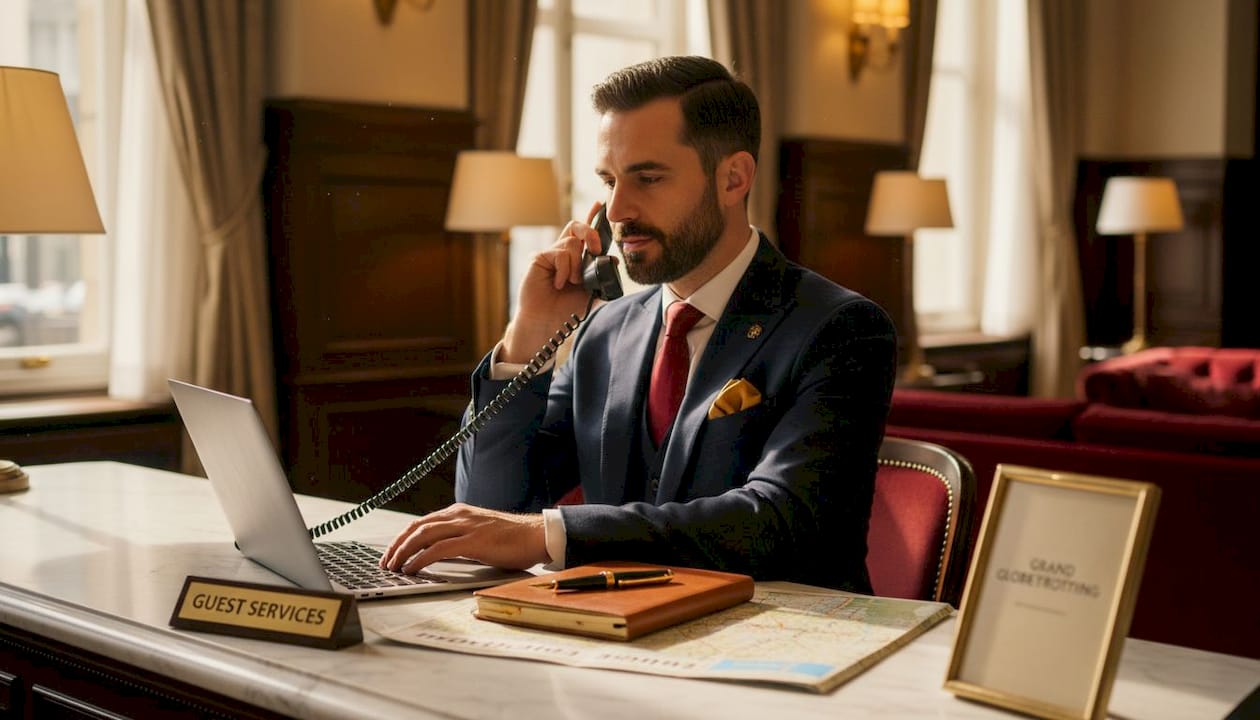
1. Engage your hotel concierge early. Luxury hotels maintain direct relationships with leading restaurants, and a well-connected concierge can access reservation windows that aren’t publicly available. Contact your hotel’s concierge team at least four to six weeks before your trip, and brief them on your full dining vision.
2. Work with a luxury travel advisor. Advisors who specialize in high-net-worth travel maintain ongoing relationships with restaurant managers and maitre d’s. These relationships translate into access. Your up-to-date dining recommendations from a seasoned advisor often include pre-vetted options with standing reservations held specifically for their clients.
3. Request the chef’s table explicitly. The chef’s table, a private seating inside or adjacent to the kitchen, is one of the most exclusive dining formats available. It requires advance notice of several weeks to months, a confirmed relationship with the restaurant, and often a minimum spend commitment. Ask for it directly rather than hoping it becomes available.
4. Build a backup plan. Even the most well-planned itineraries face disruptions. Restaurants close temporarily, chefs travel, and private events occasionally override guest reservations. Advisors who handle last-minute disruptions for ultra-high-net-worth clients have been known to fly in specialty ingredients or arrange equivalent experiences at partner restaurants within hours.
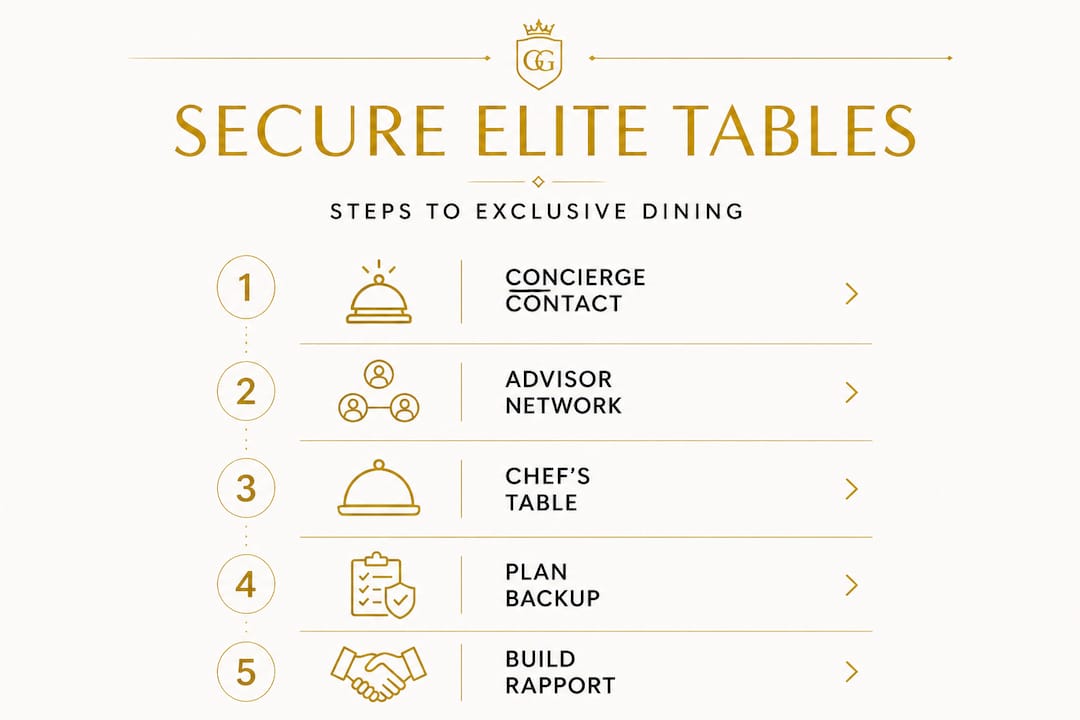
5. Communicate proactively. If your dietary needs shift after a reservation is confirmed, contact the restaurant and your advisor immediately. The more lead time a kitchen has, the more creatively they can respond.
6. Develop relationships for future access. After a memorable visit, take a moment to thank the restaurant manager by name. A brief, genuine note of appreciation after your meal opens doors on future visits that money alone cannot buy.
Pro Tip: Build rapport with the restaurant manager, not just the booking staff. Managers have direct influence over table availability, room assignments, and special accommodations. A relationship with this person is one of the most valuable assets a regular luxury diner can cultivate.
The hotel selection process also plays a major role in your dining access. Properties affiliated with Michelin-recognized or Forbes Five-Star restaurants often give their guests priority access to dining that the general public simply cannot reach.
Maximizing the experience: At the table and beyond
Securing the reservation is only half the story. How you experience and follow up can set you apart as a true connoisseur and unlock opportunities most guests never discover.
Once you’re seated, stay in active, subtle communication with your host or dining ambassador. If something feels slightly off — a temperature in the room, the pacing of a course, a wine pairing that doesn’t quite land — raise it quietly and early. Exceptional restaurants welcome this feedback; it gives their team the opportunity to deliver a better experience in real time.
Key considerations for maximizing your time at the table include:
- Timing: Avoid rushing through courses. Allow the kitchen to set the pace unless you have a firm commitment afterward, and communicate that timeline at the start.
- Attire: Dress codes at ultra-luxury establishments are often strictly enforced. When in doubt, go more formal rather than less.
- Special requests: For celebrations or surprise moments, brief your advisor in advance. Surprise courses, personalized dessert messages, and engraved menus are all possible when arranged ahead of time.
- Wine guidance: Trust your sommelier. Share your preferences honestly, including budget if relevant, and allow them to guide you toward pairings that will genuinely elevate each course.
- Engagement with the chef: If offered the chance to meet the chef, take it. A brief, informed conversation demonstrates respect for the craft and often leads to off-menu offerings on future visits.
“Our team has arranged specialty food deliveries at short notice, sourced ingredients from three countries in under 24 hours, and completely reimagined a dining itinerary after a restaurant closure — all to ensure the client never notices a disruption.” This level of response, as detailed in reporting on luxury advisor capabilities, is the standard elite travelers should expect from their advisory team.
After the meal, provide thoughtful feedback to both the restaurant and your advisor. Note which elements worked, which felt slightly off, and what you’d want to recreate or improve. This information feeds directly back into your guest profile and improves every future reservation. Personalized hotel dining services and smart dining technology are increasingly designed to capture this post-visit data automatically, refining your profile without requiring extra effort on your part.
Perspective: Why true luxury dining is built on anticipation, not just exclusivity
Here’s a viewpoint worth sitting with: the most exclusive table in the world is meaningless if the experience doesn’t feel personal. Exclusivity is an ingredient, not the recipe.
What separates a truly unforgettable meal from a merely expensive one is anticipation. Not the guest’s anticipation of a good meal, but the restaurant’s and advisor’s anticipation of what that specific guest will need, want, and feel in that specific moment. The best experiences come from partners who have studied your preferences so thoroughly that they can exceed your expectations before you’ve even had the chance to voice them.
This is where the data-driven side of luxury travel becomes genuinely exciting. UHNW (ultra-high-net-worth) guest personalization now relies on real-time CRM systems that share preference data across properties, so a preference noted in Paris can inform your experience in Tokyo without you lifting a finger. This is not impersonal technology. When used well, it’s the opposite. It’s the infrastructure that makes deeply personal service possible at scale.
Elite travelers benefit most from advisors and brands that treat anticipation as a core competency. The question to ask any dining or travel partner isn’t just “can you book this restaurant?” It’s “what do you already know about what will make this meal extraordinary for me?”
Brands that harness data, genuine responsiveness, and creative problem-solving consistently produce the most memorable meals. Exclusivity opens the door. Anticipation is what makes the room unforgettable. The ultimate guide to luxury planning reflects this philosophy throughout, building every recommendation around the guest’s evolving desires rather than static checklists.
Experience the world’s finest cuisine with Grand Globetrotting
Planning extraordinary dining experiences requires insight, relationships, and a team that understands exactly what you’re looking for. Grand Globetrotting brings all three together in one seamless service.
From securing coveted reservations and coordinating personalized menus to building your full itinerary around bespoke luxury experiences, the Grand Globetrotting team handles every detail with a white-glove approach. Whether you want to act on specific strategies from this guide or hand off the entire planning process, our advisors are ready to make it happen. Explore personalized travel planning options or browse top luxury excursions to start building the journey you’ve been imagining. Your next extraordinary meal is closer than you think.
Frequently asked questions
How do I communicate last-minute dietary preferences to a luxury restaurant?
Contact your hotel concierge or travel advisor as soon as possible, as they can coordinate changes directly with the kitchen and, if needed, source specialty ingredients on short notice.
What technology is used to tailor luxury dining experiences?
Leading advisors and hotel groups use data analytics and CRM systems alongside AI-powered platforms that match guest preferences to bespoke restaurant offerings in real time.
Can luxury advisors arrange exclusive dining experiences at short notice?
Yes. Expert advisors regularly leverage their industry networks to access last-minute tables and can even fly in specialty foods or arrange comparable alternatives when unexpected disruptions arise.
What are some emerging trends in luxury dining for 2026?
The leading trends include Michelin hotel integrations and five-star cruise dining, such as the debut of Le Voyage, alongside increasingly data-driven, personalized menu experiences curated around individual guest profiles.
Recommended
At Grand Globetrotting, we don't just plan vacations; we craft extraordinary adventures that leave you with cherished memories. Let us bring your dream vacation to life, perfectly tailored to your style, and immerse yourself in a world of luxury, exploration, and unforgettable moments. Your journey begins with us.
Itinerary planning services require a separate charge outside of cost to book travel accommodations. Depending upon the complexity of the itinerary and the level of effort required to acquire unique experiences, cost may vary. Speak with our team to learn more.
Book your consultation