

TL;DR:
- Premium business travel is a strategic investment that enhances employee performance, corporate reputation, and bottom-line outcomes. It offers superior comfort, productivity, and duty of care through personalized services, cabin class, and seamless logistics. By leveraging smart booking strategies and luxury experiences, companies maximize ROI and support their most valuable employees.
Premium business travel is not simply about flying in a bigger seat. Understanding what is premium business travel means recognizing it as a strategic investment that shapes employee performance, corporate reputation, and bottom-line outcomes. The traveler who arrives rested, prepared, and supported by concierge services walks into a meeting ready to close deals. The one who fought through middle seats and chaotic airports does not. For companies sending executives and key staff across the globe, the difference between standard and premium travel is measurable, and it matters more than most budget spreadsheets acknowledge.
Table of Contents
- Key takeaways
- What is premium business travel
- Business travel benefits that justify the investment
- Smart booking strategies for premium corporate travel
- Exclusive experiences that define luxury business travel
- My take on premium travel as a real business tool
- Plan your premium business trip with Grandglobetrotting
- FAQ
Key takeaways
| Point | Details |
|---|---|
| Premium travel is strategic | It improves arrival readiness, meeting performance, and employee well-being beyond comfort alone. |
| Duty of care is non-negotiable | Premium services integrate real-time tracking, crisis response, and proactive itinerary management. |
| Hybrid booking saves real money | Booking business class outbound and premium economy on return cuts costs by 30 to 40 percent. |
| Concierge services outperform automation | Human support handles disruptions instantly in ways no online booking tool can replicate. |
| Value beats price as the decision metric | Modern travel decisions center on productivity and experience, not just the ticket cost. |
What is premium business travel
Premium business travel refers to a category of corporate travel that prioritizes comfort, productivity, privacy, and personalized service across every stage of a trip. It sits above standard economy travel but encompasses a spectrum of options, from premium economy and business class through to first class and fully managed executive travel programs.
To understand the distinctions clearly, consider how the major cabin categories differ:
| Cabin class | Key features | Best suited for |
|---|---|---|
| Economy | Standard seating, limited legroom, basic service | Short domestic trips |
| Premium economy | Extra legroom, better meals, priority boarding | Medium-haul trips with budget limits |
| Business class | Lie-flat seats, lounge access, privacy, premium meals | Long-haul overnight flights |
| First class | Private suites, bespoke service, prestige | High-profile executives, prestige trips |
Business class delivers most of the practical benefits of first class, including restful sleep, genuine privacy, and attentive service, and often represents better value on long-haul routes. First class has evolved into primarily a prestige purchase for most corporate programs.
What is executive travel, then, beyond just a seat upgrade? It includes the full ecosystem surrounding the trip. Premium travel services typically cover:
- Dedicated airport lounge access with business-grade Wi-Fi, meals, and quiet zones
- Priority check-in and expedited security clearance
- Private ground transportation, from the office to the tarmac and again at the destination
- Concierge support for itinerary changes, visa needs, and last-minute bookings
- Luxury hotel accommodations selected for proximity, service level, and wellness amenities
Pro Tip: When evaluating premium travel for a corporate program, look at the total trip experience, not just the flight class. Ground transport, hotel quality, and lounge access often affect productivity more than the aircraft cabin itself.
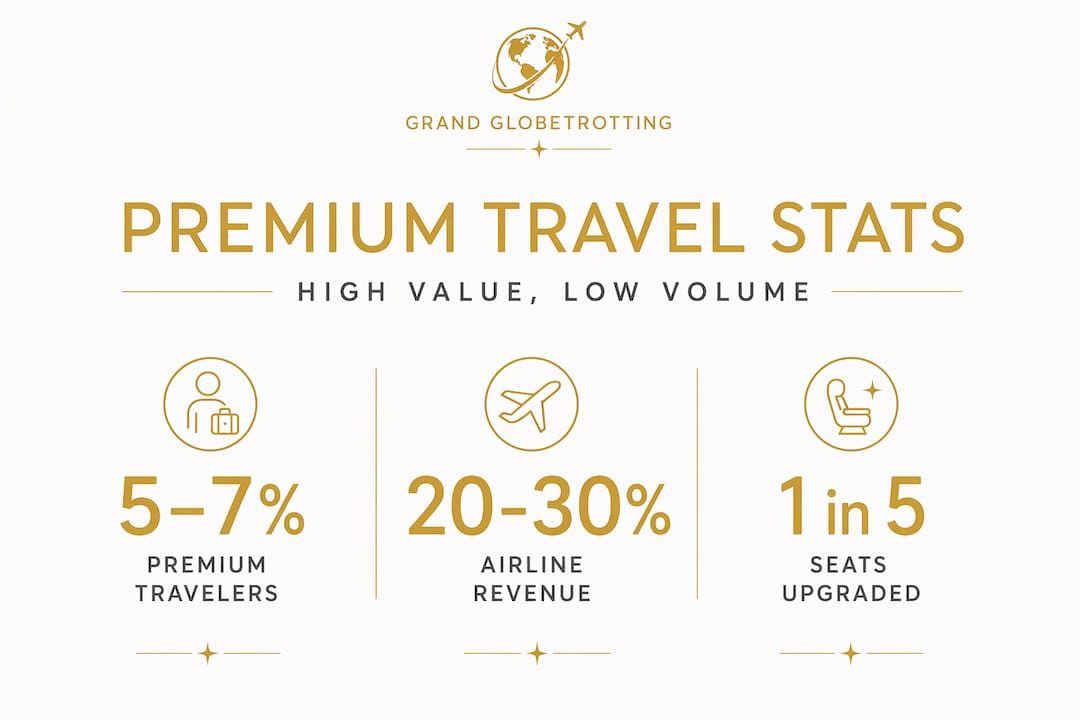
Premium passengers account for only 5 to 7 percent of long-haul traffic yet generate 20 to 30 percent of total airline revenue, with corporate travelers making up 55 to 70 percent of that segment. This is not a niche market. It is the backbone of airline economics, and the services built around it reflect that reality.
Business travel benefits that justify the investment
Many companies still treat premium travel as a perk rather than a tool. That framing is costly. When a senior executive arrives at an 8 AM negotiation having slept four hours in a middle seat, the business cost of that choice is real, even if it never appears on a budget line.
The business travel benefits that come with premium programs are direct and documentable:
- Arrival readiness: Lie-flat seats and quiet cabins allow genuine sleep on overnight flights, so travelers arrive cognitively sharp and physically rested.
- In-flight productivity: Premium cabins offer privacy, power outlets, and Wi-Fi reliable enough to prepare presentations, review contracts, or conduct calls.
- Reduced stress: Lounge access, priority processing, and concierge support remove the friction that drains executive energy before the trip even starts.
- Employee retention: High-performing professionals notice how they are treated on the road. Premium travel signals that the company values their time and well-being.
“Modern business travel decisions focus on value, productivity, and employee experience, not just ticket price.” — Advanced Business Travel Management
Duty of care is now a non-negotiable obligation for corporate travel programs. Premium travel services support it through real-time traveler tracking, proactive itinerary audits, and 24/7 human crisis response. This is not a luxury add-on. It is a legal and ethical baseline for companies sending employees abroad.
One area that complicates duty of care is “bleisure” travel, the blending of business and personal leisure into a single trip. Leisure bookings made outside corporate systems reduce employer visibility and control, creating gaps in tracking and support. Premium managed travel programs close those gaps by keeping all bookings within a monitored framework.

It is also worth noting the budget context. Even as corporate travel incidence dropped from 36 percent in 2024 to 31 percent in 2025, 74 percent of travel managers expanded their budgets. Companies are sending fewer people less often, but they are investing more in the quality of those trips. That shift reflects a genuine understanding of premium travel’s return on investment.
Smart booking strategies for premium corporate travel
Knowing what premium travel is only gets you halfway. Knowing how to book it intelligently is where companies save significant money without degrading the traveler experience.
Here are four strategies that experienced travel managers and concierge services rely on:
-
Use hybrid or split-cabin itineraries. Booking business class outbound on an overnight flight and premium economy on the return can reduce costs by 30 to 40 percent while preserving the rest that matters most. The outbound leg determines how the traveler shows up at the destination.
-
Work with a Travel Management Company. Corporate negotiated fares sourced by Travel Management Companies offer pricing unavailable on public booking sites. These private fare structures make premium travel accessible at meaningful discounts for frequent travelers.
-
Invest in concierge-level support. Online booking tools work well when nothing goes wrong. During disruptions, missed connections, or last-minute schedule changes, automated systems fall short. Concierge services operate on a follow-the-sun model with human experts who act immediately.
-
Match the travel class to the trip’s strategic importance. A domestic day trip to a routine meeting does not require business class. A transcontinental overnight flight before a major client presentation does. Calibrating premium spend to trip value is smart policy, not penny-pinching.
Pro Tip: Ask your concierge service or travel manager to conduct a quarterly audit of your travel spend. You will almost always find segments where premium class was booked unnecessarily and others where the savings from downgrading cost you in executive productivity.
| Booking approach | Cost impact | Best use case |
|---|---|---|
| Full business class round trip | Highest cost | Long-haul trips with back-to-back meetings |
| Hybrid outbound/return strategy | 30-40% savings | Overnight outbound, daytime return |
| Premium economy both ways | Moderate cost | Medium-haul trips, budget-conscious programs |
| Negotiated corporate fares | Reduced premium pricing | Frequent travelers with TMC relationships |
For travelers who want to go deeper on planning frameworks, the step-by-step business trip planning guide at Grandglobetrotting covers the full process in detail.
Exclusive experiences that define luxury business travel
The flight and hotel are the foundation, but the experiences surrounding them are where luxury business travel truly separates itself from a standard corporate trip.
Premium concierge services for corporate travelers go well beyond logistics. They include:
- VIP airport access: Private terminals or expedited arrivals that bypass commercial queues entirely, saving executives an hour or more per trip
- Private ground transfers: Chauffeured vehicles pre-loaded with preferred refreshments, reliable Wi-Fi, and real-time traffic routing
- Exclusive dining reservations: Access to restaurants that do not take public reservations, often secured through direct relationships that concierge providers maintain
- Tailored cultural or client-facing experiences: Private museum tours, curated event tickets, or bespoke excursions that serve as memorable client entertainment
- Wellness amenities: In-room spa treatments, fitness suite access, and sleep-focused accommodations that support recovery during multi-day trips
These services reduce decision fatigue and reclaim executive time. An hour spent finding transportation or a dinner reservation is an hour not spent on the business purpose of the trip. Good luxury hotel accommodations factor into this equation significantly. Properties that offer 24-hour business support, on-site meeting facilities, and genuine wellness infrastructure are not interchangeable with standard business hotels, regardless of star ratings.
The broader definition of premium travel experiences now includes personalized touches that anticipate needs rather than respond to them. That might mean a preferred newspaper in the room, a car already booked for a morning departure, or a spa appointment scheduled around a late-night arrival. These details are what separate a managed premium program from booking a business class seat and hoping for the best.
My take on premium travel as a real business tool
I have spent years helping clients plan and execute high-end corporate travel, and the most common mistake I see is treating premium travel as a reward rather than a resource. When companies frame it as a perk, they make ad hoc decisions. When they frame it as a tool, they build systems around it.
What I have learned is that the ROI of premium business travel is not abstract. It shows up in how a negotiator performs after a red-eye flight versus a restful business class cabin. It shows up in whether a client dinner feels thoughtfully arranged or last-minute. It shows up in whether a key employee stays or starts looking for a company that treats them better on the road.
I have also seen the limits of automation in this space. Online booking tools are fine for straightforward itineraries, but the moment something disrupts a trip, you want a person, not a chatbot. The concierge model works because it combines proactive planning with human judgment under pressure.
My honest advice to any corporate travel planner or executive building a travel program: stop optimizing only for the lowest fare. Start optimizing for the value delivered at the destination. That shift in thinking changes everything about how you book, how you support travelers, and how you measure success.
— Sandon
Plan your premium business trip with Grandglobetrotting
Grandglobetrotting specializes in building premium corporate travel programs that balance genuine luxury with strategic efficiency. From personalized itinerary planning and luxury hotel curation to 24/7 concierge support and exclusive access, every detail is handled with care.
Whether you are planning a single high-stakes executive trip or building a full corporate travel program, Grandglobetrotting brings the industry relationships and personal attention that automated booking platforms simply cannot offer. Explore the bespoke itinerary service to see how a tailored approach transforms the way your team travels.
FAQ
What does premium business travel include?
Premium business travel covers business or first class flights, luxury accommodations, lounge access, private ground transportation, and concierge support services. It is designed to protect traveler productivity and well-being from departure to return.
Is business class worth it for corporate travel?
For long-haul overnight flights, business class is widely considered the best value in premium travel. It delivers lie-flat sleep, privacy, and superior service at a lower price point than first class, with comparable productivity and rest benefits.
What is the difference between premium economy and business class?
Premium economy offers extra legroom, better meals, and priority boarding, but seats do not fully recline for sleeping. Business class provides lie-flat seats, greater privacy, and a substantially higher level of service, making it the preferred choice for overnight or long-haul corporate trips.
How can companies reduce premium travel costs without cutting quality?
Hybrid itineraries, which book business class for overnight outbound flights and premium economy for daytime return segments, can reduce costs by 30 to 40 percent. Negotiated fares through Travel Management Companies also provide access to pricing unavailable on public booking platforms.
What is executive travel compared to standard business travel?
Executive travel refers to a fully managed premium experience that extends beyond the flight class to include concierge services, private transfers, curated accommodations, and proactive itinerary support. It treats the entire trip as a coordinated experience rather than a series of individual bookings.
Recommended
At Grand Globetrotting, we don't just plan vacations; we craft extraordinary adventures that leave you with cherished memories. Let us bring your dream vacation to life, perfectly tailored to your style, and immerse yourself in a world of luxury, exploration, and unforgettable moments. Your journey begins with us.
Itinerary planning services require a separate charge outside of cost to book travel accommodations. Depending upon the complexity of the itinerary and the level of effort required to acquire unique experiences, cost may vary. Speak with our team to learn more.
Book your consultation