

TL;DR:
- Planning a group trip involves choosing between flexible FIT or structured GIT arrangements based on size and preferences. Escorted tours offer cultural immersion with manageable group sizes, while large tours and cruises prioritize convenience but limit immersion. Selecting the right model depends on group size, budget, desired experience, and personal control over the itinerary.
Planning a trip with family, friends, or a social group is exciting, but the sheer number of types of group travel arrangements available can feel genuinely overwhelming. Do you book a guided escorted tour? Go fully independent? Choose a cruise? In the travel industry, these options fall under two core frameworks: Free Independent Traveler (FIT) and Group Inclusive Tour (GIT) models, each with its own variations. Understanding which model fits your group’s needs before you book is what separates a memorable trip from a frustrating one. This guide breaks down every major arrangement clearly, so you can move forward with confidence.
Key takeaways
| Point | Details |
|---|---|
| Know FIT vs. GIT | FIT offers flexibility for small groups; GIT suits larger groups wanting fixed, simplified logistics. |
| Size shapes the experience | Group size directly affects social dynamics, pricing, and how much of a destination you actually see. |
| All-inclusive does not mean identical | Two “all-inclusive” packages can differ greatly in what is actually bundled versus charged as an extra. |
| Escorted tours balance structure and freedom | Most escorted tours include 2 to 4 hours of free time daily, offering convenience without total rigidity. |
| Match arrangement to traveler priorities | Budget travelers, luxury seekers, and first-timers each have an ideal arrangement type. |
1. Escorted tours: structure meets immersion
Escorted tours are one of the most popular group travel options for good reason. They take the logistics stress off your plate while still delivering genuine cultural experiences. Escorted tours typically carry 16 to 21 travelers, led by a dedicated tour leader who manages everything from hotel check-ins to day-trip timing.
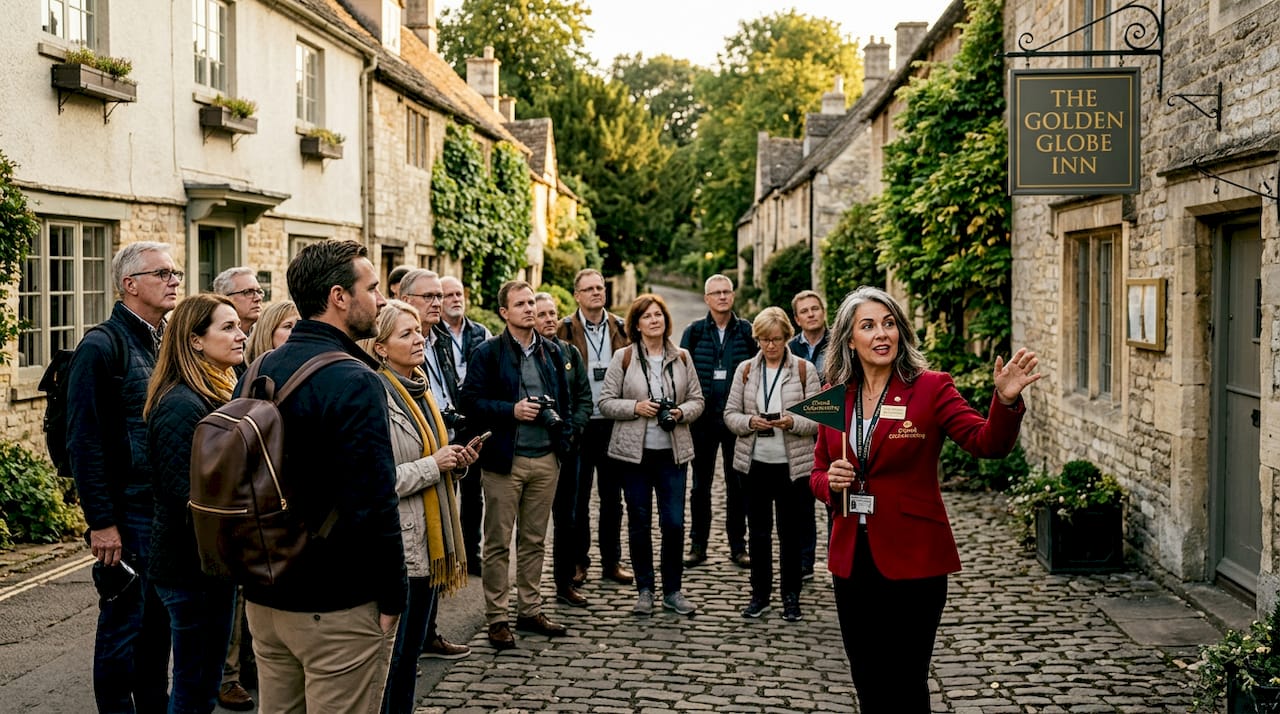
The itinerary is pre-planned and covers flights, accommodation, meals, excursions, and ground transport. Yet the experience rarely feels rigid. Most scheduled tours include 2 to 4 hours of free time daily, sometimes a full afternoon, so travelers can explore independently when they want to. That balance is what makes escorted tours a strong choice for first-time group travelers who want guidance without feeling herded.
The social atmosphere is one of the underrated benefits. Traveling with a small group of 16 to 21 people creates real opportunities to bond, share meals, and form friendships that can last well beyond the trip itself. The smaller headcount also means more intimate access to local guides and cultural experiences compared to larger group formats.
A few considerations worth knowing before you book:
- Pacing is set by the tour leader, which suits most travelers but can frustrate those who prefer a slower tempo
- Some meals are included while others are on your own, so check the specific inclusions carefully
- Tipping customs, dietary needs, and emergency contacts are typically covered in a pre-departure briefing
Pro Tip: Never skip the pre-departure group briefing. These sessions cover critical logistics including tipping norms, dietary accommodations, and emergency contacts. That information is rarely repeated during the trip itself.
For travelers curious about the exclusive side of this format, Grandglobetrotting’s guide on small group luxury tours explains how intimate group sizes unlock access that larger tours simply cannot match.
2. Large group tours and cruises: scale and convenience
Step up in group size and the experience shifts significantly. Large group tours typically carry 30 to 50 or more travelers, and cruise-based group travel can scale even higher. The trade-off for that scale is a meaningful loss of flexibility and cultural depth.
Cruises function as floating hotels. Shore excursions are brief, often just a few hours in each port, and the ship itself becomes the main attraction. For travelers who prioritize onboard entertainment, dining variety, and convenience over deep destination immersion, this works beautifully. For those hoping to spend real time exploring a city or village, it can feel rushed.
Large land-based group tours follow a similar logic. The per-person cost drops because expenses are spread across a bigger group, making this one of the most budget-friendly arrangements available. Logistics are completely handled, which appeals strongly to travelers who want to show up and be taken care of without making a single decision.
The limitations are worth naming directly:
- Itineraries are fixed and rarely accommodate individual preferences
- Restaurants, hotels, and excursion venues are chosen for capacity rather than quality
- The social dynamic with 40-plus strangers can feel impersonal compared to smaller formats
That said, for multigenerational family reunions or large social gatherings where the group itself is the event, this format delivers exactly what it promises.
3. FIT vs. GIT: understanding the core frameworks
The travel industry organizes most group arrangements under two frameworks, and understanding them changes how you evaluate every option. FIT (Free Independent Traveler) arrangements suit groups of 1 to 6 travelers and offer highly customizable itineraries with full control over pacing, accommodation choices, and daily schedules. GIT (Group Inclusive Tour) arrangements serve larger groups of 10 to 45 or more, with fixed departure dates, set itineraries, and group pricing.
Here is a side-by-side comparison:
| Factor | FIT | GIT |
|---|---|---|
| Group size | 1 to 6 travelers | 10 to 45+ travelers |
| Itinerary flexibility | High, fully customizable | Low, fixed schedule |
| Pricing structure | Higher per-person cost | Lower per-person cost |
| Booking complexity | More planning required | Simplified, pre-packaged |
| Best for | Luxury travelers, repeat visitors | First-timers, budget groups |
| Personalization | Full control | Limited options |
There is a third category worth knowing: the Semi-FIT or small group tour format. Small group tours of 6 to 12 travelers blend the intimacy and personalization of FIT with some of the pricing efficiency that comes with group bookings. This is an increasingly popular choice for friend groups and families who want a curated experience without paying full custom pricing.
Pro Tip: If your group is debating between FIT and GIT, ask yourself one question: does the group want to control the daily plan, or do they want to show up and follow a schedule? The answer usually settles the debate quickly.
GIT tours simplify planning with fixed departures, making them well-suited for families or friend groups who want the decisions made for them. FIT is the right call when travelers have specific interests, preferred properties, or past experience with a destination.
4. All-inclusive group travel packages: one price, no surprises
All-inclusive group packages bundle flights, accommodations, guided excursions, meals, and local transfers into a single transparent price. These packages often include 24/7 support and clear pricing without hidden fees, which is a meaningful advantage when managing a group budget across multiple travelers.
The appeal is straightforward. One invoice covers the trip, eliminating the coordination chaos that comes with splitting costs across flights, hotels, and activities separately. Local expertise is built in, often through resident guides who add genuine cultural context to every excursion.
Many all-inclusive packages also allow for add-ons or flexible upgrades, so travelers who want a private dinner or an extra day at a resort can usually accommodate that without rebuilding the entire itinerary. This is where all-inclusive group travel pulls ahead of standard GIT tours in terms of experience quality.
A critical point that often gets overlooked: two “all-inclusive” tours can differ greatly in what is actually included. One package may cover every meal and entrance fee while another counts only breakfast and transfers. Always request a full inclusions list before comparing prices.
Benefits travelers consistently cite:
- No surprise charges during the trip
- Single point of contact for logistics and support
- Strong value when the bundled services are genuinely used
- Local guide quality tends to be higher in curated packages
The main limitation is that true customization has a ceiling. The package is designed for a general audience, and highly specific preferences may require either an upgrade or a shift to an FIT arrangement entirely.
5. Choosing the right arrangement: a comparison guide
The right travel arrangement depends on cost structure, flexibility, and group composition. Here is a consolidated comparison across the main types, followed by scenario-based recommendations.
| Arrangement | Group size | Flexibility | Cost level | Cultural depth | Best for |
|---|---|---|---|---|---|
| Escorted tour | 16 to 21 | Moderate | Mid-range | High | First-timers, culture seekers |
| Large group tour | 30 to 50+ | Low | Budget-friendly | Low to moderate | Budget groups, large reunions |
| Cruise group | 50+ | Very low | Varies | Low | Entertainment-focused travelers |
| FIT arrangement | 1 to 6 | Very high | Premium | Very high | Luxury travelers, repeat visitors |
| Semi-FIT | 6 to 12 | High | Moderate-high | High | Friend groups, families |
| GIT package | 10 to 45+ | Low | Budget | Moderate | First-time groups, budget travelers |
| All-inclusive | Varies | Moderate | Mid to premium | Moderate-high | Convenience-focused groups |
When building cohesive travel plans for a mixed group, three decision criteria matter most:
- Group size and composition. A multigenerational family of 20 has different needs than six close friends. Larger and more diverse groups benefit from the built-in structure of GIT or large group formats.
- Budget transparency. Comparing inclusions across packages before booking prevents sticker shock. Two similarly priced tours can deliver wildly different actual value.
- Safety and support. For international travel especially, verified emergency procedures and 24/7 guide access should be non-negotiable in any arrangement you choose.
For solo travelers joining a group tour, many escorted and all-inclusive formats offer single supplements or roommate matching, making it easy to participate without paying a significant solo penalty. You can explore additional destination-specific decision criteria in Grandglobetrotting’s exclusive destination selection guide.
My take on picking the right group travel arrangement
When I reflect on the groups I have helped plan travel for over the years, the biggest mistake I see is choosing an arrangement based on price alone. A GIT package at a lower per-person rate sounds appealing until half the group spends four days wishing they could spend more time somewhere instead of moving on.
The question I always ask first is: what does this specific group actually want to feel at the end of the trip? If the answer is “relaxed and taken care of,” a well-curated all-inclusive or escorted tour delivers that beautifully. If the answer is “like we really experienced the place,” then an FIT or Semi-FIT arrangement is worth the higher investment.
I have also found that group size changes social dynamics in ways people do not anticipate. A group of eight navigates restaurants, decisions, and disagreements very differently than a group of 22. Smaller formats tend to build deeper shared memories. Larger formats work best when the group’s bonds are already strong enough to absorb the logistical friction.
One more thing I feel strongly about: read the inclusions list, not just the label. “All-inclusive” and “fully guided” are marketing terms. The actual contents of the package determine whether the price is a bargain or a trap.
— Sandon
Plan your perfect group trip with Grandglobetrotting
Whether you are organizing a family reunion in Europe, a friends’ getaway in Southeast Asia, or a luxury small-group adventure somewhere extraordinary, the right support makes all the difference.
Grandglobetrotting specializes in crafting personalized, high-end travel experiences for groups of every size and style. From bespoke FIT itineraries to curated all-inclusive packages, the team brings exclusive vendor connections and genuine concierge expertise to every booking. Explore the personalized luxury travel guide to see how tailored planning elevates a group trip from good to unforgettable. When you are ready to go further, the step-by-step luxury itinerary builder gives you a practical starting point for designing exactly the experience your group deserves.
FAQ
What are the main types of group travel arrangements?
The main types include escorted tours, large group tours, cruises, FIT (Free Independent Traveler) arrangements, GIT (Group Inclusive Tour) packages, Semi-FIT small group tours, and all-inclusive group packages. Each differs in group size, flexibility, pricing, and the level of cultural immersion provided.
What is the difference between FIT and GIT travel?
FIT arrangements suit small groups of 1 to 6 travelers with fully customizable itineraries, while GIT packages serve 10 or more travelers with fixed departure dates and set schedules. FIT costs more per person but offers significantly greater control over the trip experience.
How many people are in a typical escorted tour group?
Escorted tours typically include 16 to 21 travelers, led by a dedicated tour leader. This size is considered the sweet spot between logistical efficiency and a personal, immersive travel atmosphere.
Are all-inclusive group packages worth it?
They can be, provided you verify exactly what is included before booking. Two packages labeled “all-inclusive” can differ greatly in actual coverage, so requesting a full inclusions list is the best way to assess true value.
Can solo travelers join group tours?
Yes. Many escorted and all-inclusive tours offer single supplements or roommate matching to accommodate solo travelers, allowing them to participate without paying excessive solo premiums.
Recommended
At Grand Globetrotting, we don't just plan vacations; we craft extraordinary adventures that leave you with cherished memories. Let us bring your dream vacation to life, perfectly tailored to your style, and immerse yourself in a world of luxury, exploration, and unforgettable moments. Your journey begins with us.
Itinerary planning services require a separate charge outside of cost to book travel accommodations. Depending upon the complexity of the itinerary and the level of effort required to acquire unique experiences, cost may vary. Speak with our team to learn more.
Book your consultation