

TL;DR:
- Effective business travel requires a phased approach, involving pre-booking, travel, and post-trip tasks to avoid disruptions. Travelers can minimize delays and maintain alertness by early booking, strategic scheduling, and applying circadian rhythm management techniques. Embedding policy enforcement in booking systems and utilizing integrated tools like Navan and STEP enhance compliance, safety, and overall trip productivity.
Business travel best practices are defined as the structured set of planning, execution, health, and expense management strategies that maximize productivity and minimize disruption across every stage of a corporate trip. The most effective programs treat travel not as a series of isolated tasks but as a managed lifecycle, from the moment a trip is approved to the final expense report submission. Platforms like Navan, safety programs like the Smart Traveler Enrollment Program (STEP), and policy tools from ITILITE have formalized this lifecycle approach into repeatable, measurable workflows. Corporate travelers who follow these frameworks consistently report fewer delays, stronger policy compliance, and better performance at their destination.
1. Business travel best practices start with a phased approach
The most reliable way to manage corporate travel is to divide every trip into three distinct phases: pre-booking, travel day, and post-trip. Each phase carries specific tasks, and skipping steps in any one of them creates compounding problems later. Navan’s 2026 checklist formalizes this structure with clear task categories covering policy review, document verification, buffer times, receipt capture, and reconciliation workflows. This phased model is the foundation of effective travel management.
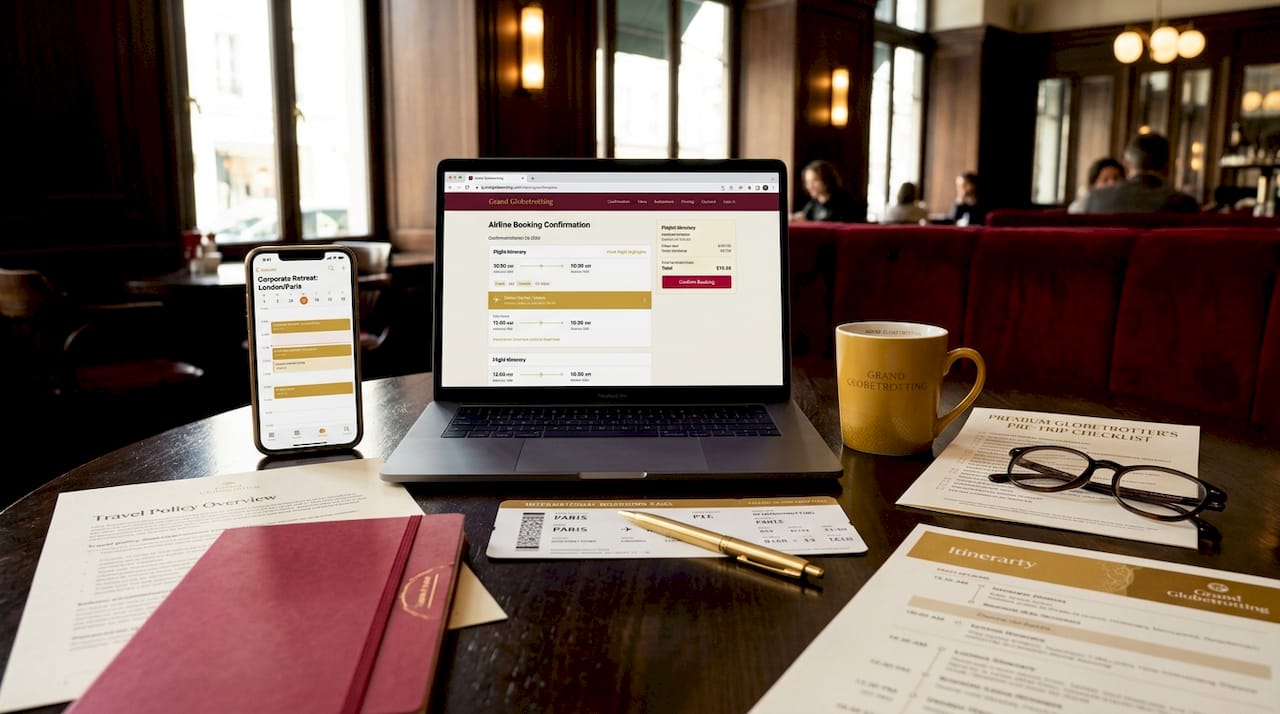
Pre-booking is where most compliance failures originate. Travelers should verify their company’s corporate travel guidelines before selecting any flight or hotel, confirm budget approval, and submit any required pre-authorization requests. Booking through a unified platform that embeds policy rules directly in the search results removes the guesswork entirely.
Travel day execution depends on preparation made days earlier. Accessible digital documents, pre-downloaded boarding passes, and confirmed ground transportation all reduce friction on the day itself. Post-trip reconciliation closes the loop: capturing receipts in real time and submitting expenses within 48 hours of returning prevents the backlog that slows finance teams and delays reimbursements.
Pro Tip: Verify that your receipts and itinerary data auto-link in unified T&E workflows before you depart. This single step cuts post-trip reconciliation time significantly.
2. How to optimize travel logistics and minimize delays
Operational efficiency on travel day comes down to decisions made at booking. First flights out and carry-on use are the two most impactful choices a traveler can make. Early morning departures have fewer cascading delays because the aircraft has not yet accumulated schedule disruptions from earlier routes. Carry-on luggage eliminates checked baggage wait times and removes the risk of lost bags entirely.
Here are the core logistics principles that consistently reduce travel day friction:
- Book the earliest available flight. Amex Global Business Travel identifies this as the single most effective tactic for avoiding delay accumulation across a travel day.
- Build buffer time into layovers. A 90-minute minimum connection window on domestic routes and two hours on international ones absorbs most gate change and boarding delays.
- Arrive three hours early for international departures. This timing rule accommodates security queues, customs, and unexpected gate changes without stress.
- Use a mobile travel app for real-time monitoring. Apps from platforms like Navan or TripIt Pro push gate change alerts and rebooking options directly to your phone, removing the need to queue at service desks.
- Pack a universal adapter and portable charger. Dead devices in transit are a productivity killer that costs nothing to prevent.
Pro Tip: If your flight is canceled, call the airline’s elite line or use the app to rebook simultaneously. Gate agents handle hundreds of passengers at once; the phone line is almost always faster.
3. What strategies maintain health and alertness during business travel
Jet lag disorder recovery is defined by the American Academy of Sleep Medicine as a clinical condition requiring timed melatonin, strategic light exposure, and adjusted sleep scheduling to realign the circadian rhythm. This is not a minor inconvenience. A senior executive presenting to a board 12 hours after a transatlantic flight is operating at a measurable cognitive deficit if no recovery strategy was applied.
The science-backed methods for staying sharp on the road include:
- Timed melatonin use. Circadian rhythm reset protocols recommend taking 0.5 to 5 mg of melatonin at the destination’s target bedtime, starting the night before arrival. This signals the brain to shift its internal clock toward the new time zone.
- Strategic light exposure. Morning sunlight at the destination suppresses residual melatonin and accelerates adaptation. Avoiding bright screens for 90 minutes before bed reinforces the shift.
- The sleep anchor method. Fast Company’s 2026 research on executive performance identifies consistent sleep timing as the highest-leverage recovery tool. Treating a fixed wake time as a non-negotiable appointment stabilizes the circadian rhythm faster than any supplement.
- Arrive one day early before critical meetings. Landing the evening before a major presentation gives the body one full sleep cycle to adjust. This single practice is the most underused tactic in business trip planning.
- Hydrate aggressively and avoid alcohol in flight. Cabin humidity typically runs below 20%, which accelerates dehydration and amplifies fatigue. Alcohol compounds this effect and disrupts sleep architecture.
Frequent travelers benefit most from treating circadian management as an operational schedule, aligning meal timing and light exposure to the destination zone starting 48 hours before departure. The performance difference between travelers who apply this and those who do not is visible within the first meeting.
4. How to enforce travel policies and manage expenses effectively
Corporate travel policy enforcement is most effective when rules are embedded at the point of booking rather than audited after the fact. Pre-trip policy enforcement through platforms like ITILITE prevents out-of-policy selections before they occur, which reduces post-trip audit volume and improves overall compliance rates. This shift from reactive auditing to proactive governance is the defining feature of modern travel and expense management.
The table below compares the two dominant approaches to travel policy enforcement:
| Approach | How it works | Key advantage | Key limitation |
|---|---|---|---|
| Post-trip audit | Finance reviews expenses after submission | Catches all violations | Creates reimbursement delays and friction |
| Pre-trip enforcement | Policy rules embedded in booking platform | Prevents violations at source | Requires integrated booking technology |
Tiered approval workflows reduce manager overload while maintaining oversight. Low-cost, in-policy bookings are auto-approved; bookings above a defined threshold trigger a one-step manager review; and bookings outside policy entirely are blocked or escalated. This structure means managers only review the exceptions that genuinely require judgment.
Centralized T&E processing consolidates booking, expense submission, and accounting integrations into a single workflow, cutting manual handoffs and reducing errors. Finance teams that implement this report significantly faster month-end close cycles. Tracking compliance metrics monthly through live dashboards allows travel managers to identify recurring exceptions and address them with targeted policy updates rather than blanket rule changes.
Pro Tip: Set a live compliance dashboard to flag any booking category where out-of-policy rates exceed 10%. That threshold almost always signals either a policy gap or a training need, not deliberate non-compliance.
5. Which technology tools and programs enhance corporate travel efficiency
The right technology stack for corporate travel covers three functions: booking and itinerary management, expense capture, and traveler safety. Each function requires a dedicated solution or a platform that handles all three in an integrated way.
- Navan serves as a unified platform for travel booking, real-time itinerary updates, and expense management. Its policy enforcement layer flags out-of-policy selections during the booking process, not after the fact.
- Smart Traveler Enrollment Program (STEP) is a free U.S. government service that registers travelers with the nearest U.S. embassy or consulate. In an emergency, enrolled travelers receive direct alerts and consular assistance. Every professional traveling internationally on company business should be enrolled before departure.
- AI-powered governance tools are reshaping managed travel programs. Managed travel programs are evolving from retrospective reporting to real-time operational governance through AI-driven policy automation. This means compliance decisions happen in the booking flow, not in a finance review two weeks later.
- Cross-functional duty of care teams are the operational backbone of traveler safety. Effective duty of care requires real-time traveler location monitoring, rapid rebooking capability, and clear insurance payment protocols. Travel risk management works best as a coordinated effort across HR, security, and travel operations rather than as a single department’s responsibility.
- Jet lag calculators provide personalized schedules for light exposure, melatonin timing, and sleep adjustments based on phase-response curves for circadian realignment. Tools like Timeshifter translate this science into a day-by-day schedule any traveler can follow.
For travelers who want to reward their teams or recognize high-performing road warriors, corporate travel incentives offer a structured way to acknowledge the demands of frequent travel while reinforcing a positive travel culture.
Key takeaways
Effective business travel requires integrating phased planning, logistics discipline, health optimization, and pre-trip policy enforcement into a single repeatable system.
| Point | Details |
|---|---|
| Use a phased travel checklist | Cover pre-booking, travel day, and post-trip tasks to prevent gaps and delays. |
| Book early flights and travel carry-on | First departures and carry-on luggage eliminate the most common sources of travel day disruption. |
| Apply circadian rhythm strategies | Timed melatonin, light exposure, and a consistent sleep anchor restore alertness after time zone shifts. |
| Enforce policy at booking, not after | Embedding rules in the booking platform prevents violations and reduces post-trip audit workload. |
| Enroll in STEP for international travel | This free U.S. government program provides emergency alerts and consular support abroad. |
Why the best business travelers treat their trips like operations
The travelers I work with who perform best on the road share one trait: they treat every trip as a managed operation, not a logistical inconvenience. They have a pre-trip checklist they actually use, a sleep protocol they follow without exception, and a booking process that handles policy compliance before they ever see a flight option.
What surprises most people is how much of the conventional wisdom around business travel gets the priorities backward. Most travelers focus on lounge access and hotel points. The ones who consistently show up sharp and close deals focus on sleep timing, early flights, and expense workflows that do not require them to think after they land.
The technology piece matters, but only when it reduces friction rather than adding another app to manage. Platforms like Navan work because they consolidate what used to require three separate tools. STEP enrollment takes five minutes and has saved travelers from genuine emergencies. These are not glamorous choices, but they are the ones that separate a productive trip from a draining one.
The executive travel itineraries that work best are built around the traveler’s performance needs first and the logistics second. When you design a trip that way, the luxury and the efficiency reinforce each other rather than compete.
— Sandon
How Grandglobetrotting elevates your business travel experience
Grandglobetrotting designs corporate travel experiences that perform as well as they look. Every itinerary is built around your schedule, your company’s travel policy requirements, and your personal standards for comfort and productivity.
From private flight coordination and luxury hotel selection to ground transportation and dining reservations, Grandglobetrotting handles the details that drain your time and focus. The concierge team works directly with your travel policy parameters to keep bookings compliant without sacrificing quality. Whether you are preparing for a single high-stakes trip or managing a recurring travel schedule, the personalized luxury planning guide at Grandglobetrotting gives you a clear starting point. For a structured approach to your next corporate trip, the executive trip planning service delivers a complete itinerary built to your exact specifications.
FAQ
What are business travel best practices?
Business travel best practices are the structured planning, logistics, health, and expense management strategies that cover every stage of a corporate trip. They include pre-trip policy review, smart booking decisions, circadian rhythm management, and post-trip expense reconciliation.
How do I stay productive and alert during long business trips?
Apply the sleep anchor method by keeping a consistent wake time at your destination, use timed melatonin the night before arrival, and arrive one day early before critical meetings. These strategies, supported by American Academy of Sleep Medicine guidelines, restore alertness faster than rest alone.
What is the Smart Traveler Enrollment Program (STEP)?
STEP is a free U.S. government service that registers international travelers with the nearest U.S. embassy or consulate, providing emergency alerts and consular assistance. The U.S. Department of Veterans Affairs recommends enrollment for all official foreign travel.
How should companies enforce corporate travel policies?
The most effective approach embeds policy rules directly in the booking platform so travelers cannot select out-of-policy options without a flagged approval request. ITILITE’s 2026 best practices confirm that pre-trip enforcement consistently outperforms post-trip auditing for compliance rates.
What technology tools are most useful for corporate travelers?
Navan covers unified booking, itinerary management, and expense capture in one platform. STEP handles international safety registration. AI-driven policy tools automate compliance decisions in real time, and jet lag calculators like Timeshifter provide personalized circadian adjustment schedules for frequent flyers.
Recommended
At Grand Globetrotting, we don't just plan vacations; we craft extraordinary adventures that leave you with cherished memories. Let us bring your dream vacation to life, perfectly tailored to your style, and immerse yourself in a world of luxury, exploration, and unforgettable moments. Your journey begins with us.
Itinerary planning services require a separate charge outside of cost to book travel accommodations. Depending upon the complexity of the itinerary and the level of effort required to acquire unique experiences, cost may vary. Speak with our team to learn more.
Book your consultation