

TL;DR:
- Effective corporate travel management integrates policy enforcement, expense automation, and duty of care into a strategic program. Modern platforms automate booking, enforce policies at purchase, and provide real-time traveler safety tools to reduce costs and risks. Choosing the right CTM platform involves evaluating integration, automation, user experience, and supplier access to optimize travel programs.
Corporate travel management is the structured process by which organizations plan, book, monitor, and optimize employee business travel, covering cost control, policy compliance, expense reporting, and traveler safety. Known formally as CTM (Corporate Travel Management), this discipline has shifted from a purely administrative function into a strategic priority for finance and operations leaders. Platforms like Travel Code and Spendesk now automate tasks that once consumed entire teams, delivering 20 to 30% lower travel costs through automated policy enforcement. For corporate travel managers and executives, understanding CTM is the foundation for building programs that protect people, control spend, and scale with the business.
What is corporate travel management and why does it matter?
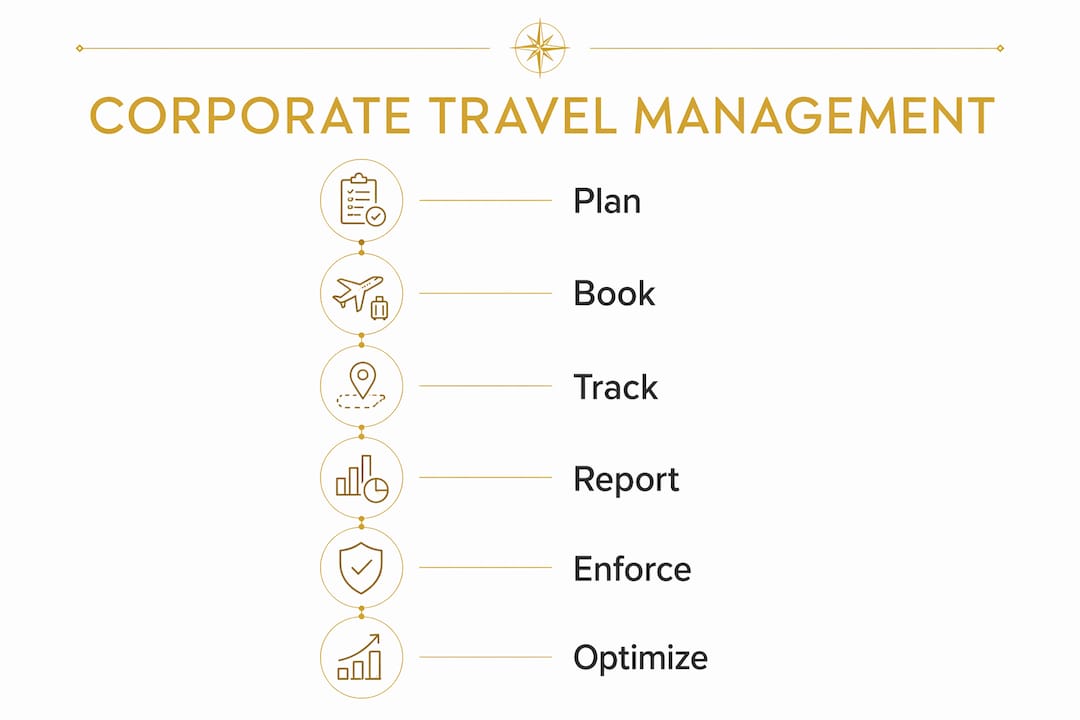
Corporate travel management encompasses planning, booking, tracking, expense reporting, and policy enforcement across all employee travel activity. The scope is broader than most executives realize. A mature CTM program covers flights, hotels, ground transportation, meals, and even pre-trip risk assessments. Automated expense reporting processes reimbursements approximately five times faster than manual methods, which directly reduces friction for traveling employees and improves cash flow visibility for finance teams.

The business case for structured CTM is clear. Without a managed program, employees book through consumer platforms, miss preferred supplier rates, and submit expenses with inconsistent documentation. This creates audit risk and inflated costs. Platforms built for business travel planning give organizations a single source of truth for all travel data, making it far easier to negotiate supplier contracts and report on program performance.
CTM also addresses a responsibility that goes beyond cost. Employers have a legal and ethical obligation to know where their people are and to support them when things go wrong. Embedding that obligation into the travel program, rather than treating it as a separate HR concern, is what separates reactive organizations from genuinely prepared ones.
What are the essential features of a corporate travel management system?
A modern CTM system is not simply an online booking tool. It is an integrated platform that connects booking, policy enforcement, expense management, and traveler safety into one workflow. The core features that define a capable system include:
- Online booking with global inventory. Travelers access flights, hotels, and car rentals from a single interface, with preferred suppliers surfaced first. This eliminates the need to cross-reference multiple sites and ensures negotiated rates are applied automatically.
- Automated policy enforcement at booking. Rules are applied at the point of purchase, not after the fact. Out-of-policy options are flagged or blocked before the traveler confirms, which prevents overspend rather than correcting it later.
- Expense reporting automation. Receipt capture, expense matching, approval routing, and reconciliation happen within the same system. Automation frees finance teams from manual data entry and reduces errors that delay reimbursement.
- Duty of care modules. Real-time traveler location dashboards, safety alerts, and 24/7 emergency support lines are built into the platform. Managers can see who is traveling, where they are, and whether any active incidents affect their routes.
- Analytics and spend dashboards. Travel managers get live visibility into spend by category, department, and supplier. This data drives smarter negotiations and identifies where policy adjustments are needed.
Pro Tip: When evaluating CTM platforms, request a live demonstration of the policy enforcement engine specifically. Many platforms enforce rules only at the approval stage, not at the booking stage. Enforcement at booking is the only method that reliably prevents out-of-policy spend.
How do corporate travel policies improve cost control and compliance?
A travel policy is the rulebook that governs how employees book and spend on business travel. Without one, every traveler makes independent decisions, and costs vary wildly. Well-defined travel policies specify booking rules, spend limits, approval hierarchies, and preferred suppliers, creating a consistent framework that balances organizational control with reasonable traveler flexibility.
The financial impact of policy enforcement is measurable. Automated enforcement improves compliance rates by 15 to 25% and reduces administrative processing time by 60 to 95%. That compliance improvement translates directly into lower average trip costs, because travelers are guided toward approved options rather than premium alternatives. Building an effective travel policy involves several deliberate steps:
- Define class of service rules. Set clear standards for domestic versus international flights, typically economy for short haul and business class for flights exceeding a defined duration, such as six hours.
- Set hotel rate caps by city tier. A maximum nightly rate for New York or London differs from what is appropriate for secondary markets. Tiered caps reflect real market conditions and prevent blanket restrictions that push travelers toward inconvenient properties.
- Establish advance booking requirements. Requiring bookings at least 14 days in advance for flights captures lower fares and gives the travel team visibility to plan logistics.
- Create layered approval thresholds. Trips below a cost threshold may require only manager approval, while international travel or premium cabin upgrades escalate to a director or CFO. This keeps routine approvals fast without removing oversight on high-cost decisions.
- Review the policy at least annually. Market conditions, supplier relationships, and business priorities shift. A policy written in 2023 may no longer reflect current hotel rates or the company’s preferred airline partnerships.
Pro Tip: Avoid writing a policy so restrictive that travelers routinely seek exceptions. Every exception request costs administrative time and signals that the policy is out of step with operational reality. Build in a structured exception process with clear criteria, and track exception rates as a policy health metric.
What role does duty of care play in corporate travel management?
Duty of care is defined as an employer’s legal and ethical responsibility to protect the health, safety, and wellbeing of employees while they travel for work. It is not a checkbox. Duty of care is a continuous process requiring risk assessment, real-time monitoring, escalation workflows, and post-incident review to be effective.
The core operational elements of a duty of care program include:
- Pre-trip risk assessments that flag destination-specific health, security, or political risks before the traveler departs
- Real-time traveler tracking dashboards that show current locations and flag travelers in affected areas during incidents
- 24/7 emergency support lines staffed by specialists who can rebook, evacuate, or coordinate medical assistance
- Clear escalation procedures that define who is notified, in what sequence, and within what timeframe when an incident occurs
- Annual policy reviews that incorporate lessons from incidents and updated risk intelligence
“Travel teams that fail to operationalize duty of care with clear escalation and traveler tracking face challenges measuring response times and demonstrating compliance during incidents.” Corporate Travel Counsellors
Technology makes duty of care scalable. Platforms with integrated traveler safety tools can send automated alerts to travelers and managers simultaneously when a security event occurs near a booked destination. Without that automation, travel managers are left manually cross-referencing itineraries against news feeds, which is neither fast nor reliable at scale.
How can companies optimize travel expense management?
Travel expense management is the process of capturing, approving, reconciling, and reporting all costs incurred during business travel. When done well, it produces clean financial data and fast reimbursements. When done poorly, it creates audit exposure and frustrated employees.
The comparison below illustrates the difference between manual and automated expense processes:
| Capability | Manual process | Automated process |
|---|---|---|
| Receipt capture | Paper or email submission | Mobile app scan at point of purchase |
| Expense matching | Finance team manually matches to bookings | System auto-matches receipts to booked itineraries |
| Approval routing | Email chains with no audit trail | Structured workflow with timestamps and approver records |
| Reimbursement speed | 2 to 4 weeks typical | Approximately 5x faster with automation |
| Audit readiness | Inconsistent documentation | Structured data meeting IRS substantiation standards |
Travel audit readiness requires capturing five data points for every expense: amount, date, location, business purpose, and itemization. Meals over $75 require receipts. Lodging requires an itemized folio. Missing a single element can jeopardize the tax deductibility of that expense. Platforms like Spendesk address this by generating virtual cards per booking, which ties each payment to a specific trip and traveler automatically, eliminating the reconciliation gap that causes most audit problems.
Pro Tip: Assign virtual cards at the trip level rather than issuing a single corporate card to each traveler. Per-trip virtual cards cap spending at the approved budget, prevent unauthorized charges, and expire automatically after the trip ends. This single change removes the most common source of expense policy violations.
What should companies consider when choosing a CTM platform?
Selecting the right CTM platform is one of the highest-leverage decisions a travel manager makes. The wrong choice creates adoption problems, integration failures, and hidden costs. The right choice reduces administrative burden by 60 to 95% and cuts implementation time from weeks to days compared to traditional Travel Management Companies.
The key criteria to evaluate include:
- Integration depth. The platform must connect to your HR system for traveler profiles, your ERP or accounting software for expense data, and your corporate card provider for payment reconciliation. Gaps in integration create manual workarounds that negate the efficiency gains.
- Automation capabilities. Evaluate whether policy enforcement happens at booking or only at approval. Assess whether expense matching is automatic or requires manual input. The depth of automation determines how much time your team actually saves.
- User experience for travelers. A platform that travelers find difficult to use will be bypassed. High bypass rates mean unmanaged spend, safety gaps, and lost data. Test the mobile booking flow with actual travelers before committing.
- Cost model transparency. Some platforms charge per transaction, others per seat, and others as a percentage of managed spend. Model your expected transaction volume against each pricing structure to identify the true annual cost.
- Supplier partnerships and inventory access. Platforms with direct connections to global distribution systems and hotel chains give travelers more options at negotiated rates. Thin inventory forces travelers off-platform.
For mid-market companies, technology-first platforms typically offer faster deployment and lower total cost than traditional full-service TMCs. Enterprise organizations with complex multi-country programs may benefit from a hybrid model that combines a technology platform with dedicated account management. Either way, effective travel management requires a platform that grows with the program rather than constraining it.
Key takeaways
Effective corporate travel management requires integrating policy enforcement, expense automation, and duty of care into a single connected program rather than managing each as a separate function.
| Point | Details |
|---|---|
| Automate policy at booking | Enforce travel rules at the point of purchase to prevent out-of-policy spend before it occurs. |
| Embed duty of care operationally | Build escalation workflows and traveler tracking into the platform, not just the policy document. |
| Use virtual cards per trip | Per-trip virtual cards eliminate reconciliation gaps and cap spending at the approved budget automatically. |
| Audit-proof your expense data | Capture all five IRS substantiation elements for every expense to protect tax deductibility. |
| Choose platforms over legacy TMCs | Technology-first platforms reduce implementation time and administrative burden significantly for most company sizes. |
Why corporate travel deserves a strategic seat at the table
Having worked with corporate travelers and executives across dozens of programs, I have seen one pattern repeat itself: companies treat travel as a cost to be minimized rather than a function to be managed. Those two orientations produce very different outcomes.
The organizations that get the most from their travel programs are the ones that invest in the right technology, write policies that reflect operational reality, and treat duty of care as a genuine operational commitment rather than a legal formality. They also pay attention to the details that most programs overlook. Ground travel is a perfect example. Managed travel programs that include ground transportation close the gaps in safety coverage, pricing consistency, and expense tracking that unmanaged ground travel creates. Most programs I have reviewed do not manage ground travel at all, which means a meaningful portion of trip costs and traveler risk sits entirely outside the program.
The other thing I would push back on is the assumption that automation replaces the need for human judgment. It does not. Automation handles volume and consistency. Human expertise handles complexity, exceptions, and the traveler relationships that determine whether people actually use the program. The best programs combine both. Technology-first platforms like Travel Code handle the transactional work. Experienced travel managers and advisors handle the strategic decisions that no algorithm can make. That combination is what produces programs that are both efficient and genuinely trusted by the people who travel.
— Sandon
Plan your next corporate trip with Grandglobetrotting
Grandglobetrotting brings the same precision and personalization to corporate travel that executives expect from their most important business engagements. Whether you need bespoke itinerary planning for a multi-city roadshow, preferred access to luxury hotel properties in key business destinations, or premium flight arrangements that keep your team rested and productive, Grandglobetrotting handles every detail with a high-touch concierge approach. The platform’s exclusive vendor connections and deep industry knowledge translate directly into better rates, smoother logistics, and travel experiences that reflect the standard your organization represents.

Reach out to Grandglobetrotting to discuss how a tailored corporate travel program can reduce planning time, improve traveler satisfaction, and deliver the quality your executives deserve.
FAQ
What does corporate travel management include?
Corporate travel management covers the full lifecycle of business travel: booking, policy enforcement, expense reporting, traveler tracking, and duty of care. It encompasses flights, hotels, ground transportation, and meal expenses within a single managed program.
How much can companies save with automated travel policy enforcement?
Companies using automated policy enforcement at the booking stage typically see 20 to 30% lower travel costs and compliance rate improvements of 15 to 25% compared to manual policy management.
What is duty of care in corporate travel?
Duty of care is an employer’s legal and ethical obligation to protect traveling employees through risk assessments, real-time tracking, emergency support, and clear escalation procedures. It must be reviewed at least annually to remain effective.
How do virtual cards improve travel expense management?
Virtual cards generated per booking automatically tie each payment to a specific trip and traveler, eliminating reconciliation gaps and capping spend at the approved budget. This prevents unauthorized charges and simplifies audit documentation significantly.
What is the difference between a TMC and a technology-first CTM platform?
A traditional Travel Management Company (TMC) provides full-service account management alongside booking tools, while a technology-first platform prioritizes automation and self-service with faster setup. Technology-first platforms typically reduce administrative burden by 60 to 95% and deploy in days rather than weeks.
Recommended
At Grand Globetrotting, we don't just plan vacations; we craft extraordinary adventures that leave you with cherished memories. Let us bring your dream vacation to life, perfectly tailored to your style, and immerse yourself in a world of luxury, exploration, and unforgettable moments. Your journey begins with us.
Itinerary planning services require a separate charge outside of cost to book travel accommodations. Depending upon the complexity of the itinerary and the level of effort required to acquire unique experiences, cost may vary. Speak with our team to learn more.
Book your consultation