

TL;DR:
- LGBTQIA+ travel planning involves thorough destination research, certification verification, and safety measures. It emphasizes selecting safe locations, verified accommodations, and protecting digital and personal documents for a confident trip. Proper preparation ensures a safe, inclusive, and genuinely welcoming experience for queer travelers worldwide.
The LGBTQIA+ travel planning process is the structured set of steps that ensures a safe, welcoming, and genuinely affirming trip tailored to queer travelers’ unique needs. Only 31% of LGBTQIA+ travelers are out when traveling, and 40% conceal their identity to visit desired destinations. That reality makes thoughtful preparation non-negotiable, not optional. Tools like the Gay Travel Index, Equaldex, and Travel Proud certifications exist precisely to close the gap between a destination that looks welcoming and one that truly is. This guide walks you through every stage of that process, from destination research to digital safety, so you can travel with confidence.
How to research and select LGBTQIA+ friendly destinations
Destination research is the foundation of any solid LGBTQIA+ travel planning guide. The first question is never “Where looks beautiful?” It is “Where is it legally and socially safe to be yourself?”

The Gay Travel Index provides country-level safety scores based on legal protections, social attitudes, and LGBTQIA+ rights. Iceland scores 14 out of 14, making it the world’s safest destination for queer travelers. Spain and Malta follow at 13 out of 14, while Belgium, Canada, Germany, and Portugal each score 12 out of 14. These rankings give you a reliable starting point for building your LGBTQIA+ friendly destinations list.
Legal protections and social attitudes do not always align. A country may decriminalize same-sex relationships on paper while local communities remain hostile in practice. Resources like Human Dignity Trust and Equaldex let you research anti-discrimination laws, partnership recognition, and hate crime protections at the country and regional level. Cross-referencing both gives you a clearer picture than any single source.
Here is a quick comparison of top-ranked destinations for 2026:
| Destination | Gay Travel Index Score | Key Strength |
|---|---|---|
| Iceland | 14/14 | Full legal equality, strong social acceptance |
| Spain | 13/14 | Vibrant Pride culture, inclusive cities |
| Malta | 13/14 | Progressive laws, welcoming atmosphere |
| Canada | 12/14 | Federal protections, diverse queer communities |
| Portugal | 12/14 | Affordable luxury, growing LGBTQIA+ scene |
Beyond scores, consider whether a destination hosts major Pride events, has a visible queer neighborhood, or offers curated LGBTQIA+ travel destinations through verified travel providers.
Pro Tip: Look for accommodations and tour operators with verified Travel Proud or IGLTA certifications before booking. These certifications signal staff training and genuine policy commitments, not just rainbow window dressing.
What travel logistics do LGBTQIA+ travelers need to manage?
Practical preparation separates a smooth trip from a stressful one. The LGBTQIA+ travel planning process includes several logistics steps that go beyond standard travel prep.
- Verify passport validity. Most countries require your passport to be valid for at least six months beyond your return date. Check passport validity well before departure, not the week before.
- Research visa requirements carefully. Never assume visa-on-arrival is available. Some countries with restrictive LGBTQIA+ laws also have unpredictable entry processes for queer travelers.
- Secure comprehensive travel insurance. Travel insurance for LGBTQIA+ travelers should cover medical emergencies and identity documentation challenges, including issues that arise from legal name or gender marker discrepancies.
- Protect your digital presence. Some countries criminalize LGBTQIA+ identities based on social media or dating app content. A VPN is non-negotiable for protecting your digital identity in less accepting countries.
- Prepare copies of key legal documents. If you are traveling with a partner, carry copies of marriage licenses or powers of attorney. These documents matter in medical or legal situations abroad.
Pro Tip: Share your full itinerary with at least two trusted contacts before departure. Include hotel addresses, flight numbers, and local emergency contacts. This single step significantly reduces risk if something goes wrong.
A few additional items worth addressing before you fly:
- Review your social media profiles and adjust privacy settings for the destination’s legal climate.
- Download offline maps and local emergency numbers before landing.
- Research whether your destination country has specific entry restrictions tied to gender markers on passports.
How do you find genuinely LGBTQIA+ friendly accommodations?
Many “LGBTQIA+ friendly” labels are superficial. A rainbow flag in a hotel lobby does not confirm staff training, gender-neutral facilities, or a genuine commitment to inclusion. Identifying truly welcoming properties requires a more deliberate approach.
The most reliable indicators are verified certifications. IGLTA (International Gay and Lesbian Travel Association) membership and Travel Proud certification from Booking.com both require documented training and policy commitments. There are 142,000 Travel Proud properties worldwide, which means you have real options across price points and destinations.
Beyond certifications, direct communication reveals a great deal. Ask hotels and tour operators specific questions before booking: Do staff use preferred pronouns? Are gender-neutral bathrooms available? Has the team received LGBTQIA+ inclusion training? A property that answers these questions confidently and specifically is far more trustworthy than one that responds with vague reassurances.
Queer traveler reviews on platforms like TripAdvisor and dedicated LGBTQIA+ travel communities provide ground-level feedback that certifications cannot capture. Look for recent reviews from travelers who share your identity, not just general positive ratings.
Pro Tip: Build a buffer day into the start of your trip. Arriving one day before your main activities begin gives you time to assess the local environment, recover from travel fatigue, and adjust your comfort level before committing to public spaces.
You can also explore inclusive hospitality options that prioritize queer-friendly environments at the accommodation level, which adds another layer of community and safety.
Solo versus group LGBTQIA+ travel: which is right for you?
Both solo and group travel work well for LGBTQIA+ travelers. The right choice depends on your comfort level, destination, and how much planning support you want.
Group travel reduces the uncertainty tax that solo queer travelers often absorb. Planned transport, vetted accommodations, and on-ground support from experienced organizers remove the need to make safety judgments in real time. For first-time travelers to unfamiliar regions, this structure is genuinely valuable. Grandglobetrotting’s private group tour options are designed with exactly this kind of support in mind.
“The value of a vetted group trip is not just logistics. It is the confidence that comes from traveling with people who understand your experience and have planned for your safety.”
Solo travel offers flexibility and a deeper connection to local culture. The trade-off is that you carry more responsibility for your own safety assessment. A few practices make solo LGBTQIA+ travel significantly safer:
- Share your itinerary with trusted contacts before each leg of the trip.
- Use apps like Grindr to connect with local queer communities, but always use a VPN and exercise caution about sharing location data.
- Research local queer spaces, bars, and community centers in advance so you have safe gathering points identified before you arrive.
- Set clear personal boundaries about public displays of affection based on your destination’s social climate, not just its legal status.
LGBTQIA+ travel planning checklist and pitfalls to avoid
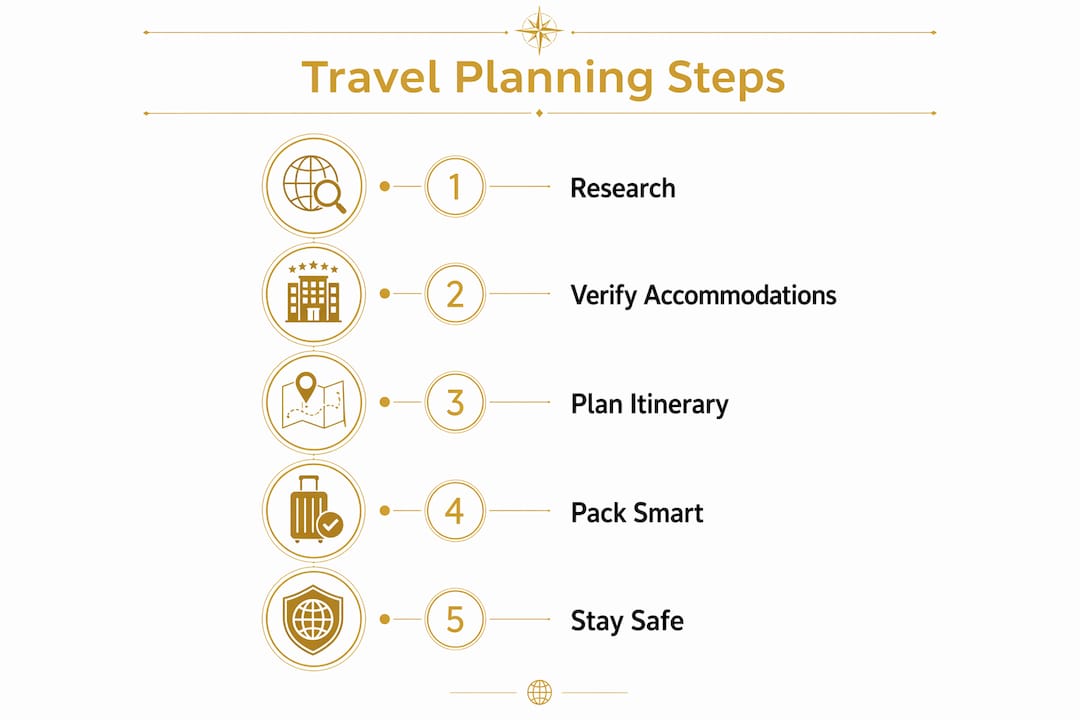
A practical checklist keeps the full LGBTQIA+ vacation planning guide from feeling overwhelming. Work through these steps in order:
- Research destination laws and social attitudes using Gay Travel Index, Equaldex, and Human Dignity Trust.
- Book LGBTQIA+ friendly accommodations with verified IGLTA or Travel Proud certifications.
- Secure travel insurance that covers medical emergencies and identity documentation issues.
- Update digital safety settings: activate a VPN, review social media privacy, and remove or archive sensitive content before entering restrictive countries.
- Pack essential documents: passport, insurance cards, copies of legal documents, and emergency contacts.
- Share your itinerary with two trusted contacts, including hotel addresses and local emergency numbers.
- Plan a buffer day at the start of your trip to assess the environment before full engagement.
- Prepare emotionally: set expectations about public behavior, discuss boundaries with travel companions, and identify local support resources.
The most common planning mistakes are avoidable. Overpacking your schedule leaves no room to adjust if a neighborhood or venue feels uncomfortable. Ignoring local customs, even in legally progressive countries, can create unnecessary friction. Unsafe online behavior, such as using dating apps without a VPN in restrictive countries, creates real legal risk.
Pro Tip: Contact your trip organizer or hotel directly before arrival with any specific questions. A proactive message asking about pronoun policies or gender-neutral facilities tells you everything you need to know about whether the welcome is genuine.
Here is a comparison of checklist steps versus common traveler errors:
| Planning step | Common mistake to avoid |
|---|---|
| Research destination laws | Relying only on general travel blogs |
| Book certified accommodations | Trusting rainbow branding without verification |
| Secure travel insurance | Choosing the cheapest policy without checking LGBTQIA+ coverage |
| Update digital safety | Using dating apps without a VPN in restrictive countries |
| Share itinerary | Keeping travel plans entirely private for privacy reasons |
| Plan a buffer day | Scheduling activities from the moment of arrival |
Key takeaways
The most effective LGBTQIA+ travel planning process combines verified destination research, certified accommodation choices, and proactive digital safety measures before departure.
| Point | Details |
|---|---|
| Start with safety scores | Use the Gay Travel Index and Equaldex to assess legal and social conditions before choosing a destination. |
| Verify accommodation certifications | Look for IGLTA membership or Travel Proud certification, then ask direct questions about policies. |
| Protect your digital identity | Use a VPN and review social media privacy settings before entering any country with restrictive laws. |
| Choose the right travel style | Group travel reduces safety uncertainty; solo travel requires more personal preparation and itinerary sharing. |
| Build in a buffer day | Arriving one day early lets you assess the local environment before committing to public activities. |
What I have learned planning LGBTQIA+ travel at the luxury level
One thing I have noticed after years of planning bespoke travel for LGBTQIA+ clients is that the biggest gap is not between safe and unsafe destinations. It is between travelers who plan proactively and those who assume a high Gay Travel Index score means they can skip the research.
Iceland at 14 out of 14 is genuinely extraordinary. But even in progressive destinations, the privilege gap between international queer travelers and local residents is real. International travelers often carry more legal protection than locals do. That asymmetry is worth understanding, not to create anxiety, but to build respect for local context into every itinerary.
The clients who have the best experiences are the ones who treat planning as a form of self-care, not a chore. They research thoroughly, ask direct questions of every provider, and build flexibility into their schedules. They also recognize that inclusive travel matters not just for personal safety but for the broader culture of destinations they visit.
My honest advice: do not let the research phase intimidate you. The tools available today, from Equaldex to Travel Proud to IGLTA, make it easier than ever to build a trip that is both luxurious and genuinely safe. The planning is the first act of taking care of yourself on the road.
— Sandon
Plan your inclusive luxury trip with Grandglobetrotting
Grandglobetrotting specializes in bespoke LGBTQIA+ travel planning that goes well beyond destination lists. The team handles destination vetting, certified accommodation selection, travel insurance coordination, and group logistics so you can focus on the experience rather than the research. Every itinerary is built around your specific needs, comfort level, and travel style.
Whether you are planning a solo adventure to Iceland, a group trip through Portugal, or a luxury honeymoon in Spain, Grandglobetrotting’s concierge approach covers every detail. Reach out through the bespoke itinerary service to start building a trip that is as safe as it is unforgettable.
FAQ
What is the LGBTQIA+ travel planning process?
The LGBTQIA+ travel planning process is a structured approach to researching destination safety, booking inclusive accommodations, managing travel logistics, and preparing for digital and personal safety. It uses tools like the Gay Travel Index, Equaldex, and Travel Proud certifications to ensure a welcoming experience.
How do I find LGBTQIA+ friendly destinations?
Use the Gay Travel Index to compare country safety scores, then cross-reference with Equaldex for specific legal protections. Iceland, Spain, Malta, Canada, and Portugal consistently rank among the safest destinations for queer travelers.
What travel insurance do LGBTQIA+ travelers need?
Travel insurance for LGBTQIA+ travelers should cover medical emergencies and identity documentation challenges, including issues related to legal name or gender marker discrepancies. Verify inclusive coverage explicitly before purchasing any policy.
Is group travel safer than solo travel for LGBTQIA+ travelers?
Group travel with vetted providers reduces the uncertainty tax by offering planned transport, on-ground support, and community. Solo travel is equally viable with proper preparation, including itinerary sharing and digital safety measures.
Why is digital safety part of LGBTQIA+ travel planning?
Some countries criminalize LGBTQIA+ identities based on social media content or dating app usage. Using a VPN and reviewing privacy settings before entering restrictive countries is a non-negotiable part of any thorough LGBTQIA+ travel planning guide.
Recommended
At Grand Globetrotting, we don't just plan vacations; we craft extraordinary adventures that leave you with cherished memories. Let us bring your dream vacation to life, perfectly tailored to your style, and immerse yourself in a world of luxury, exploration, and unforgettable moments. Your journey begins with us.
Itinerary planning services require a separate charge outside of cost to book travel accommodations. Depending upon the complexity of the itinerary and the level of effort required to acquire unique experiences, cost may vary. Speak with our team to learn more.
Book your consultation