
TL;DR:
- Booking private cruises for business provides superior confidentiality, brand control, and a setting that enhances human interaction.
- The environment fosters genuine conversations, improves decision-making, and leaves lasting impressions on clients and teams.
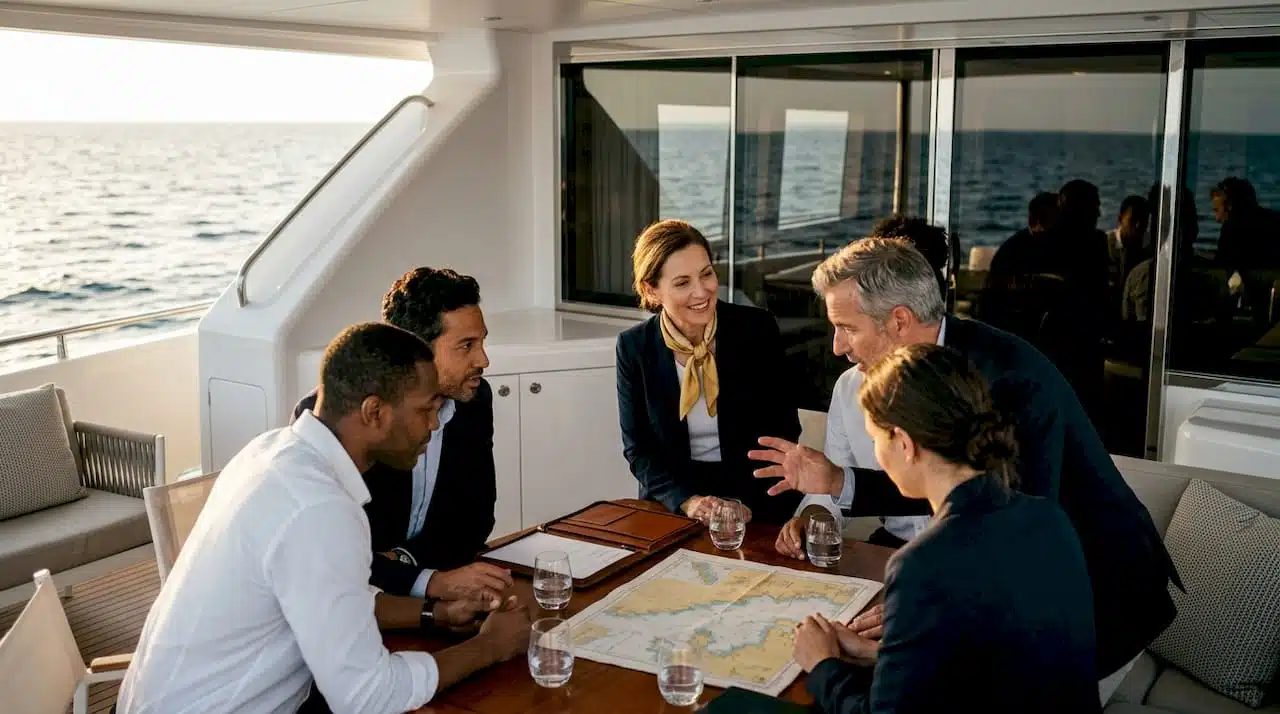
A private cruise for business is defined as the exclusive charter of a vessel, from an intimate yacht to a full-size ship, for corporate meetings, client events, or team retreats. The practice is formally known as corporate yacht chartering or private ship chartering in the events industry. Understanding why book private cruises for business comes down to three core advantages: total environmental control, brand exclusivity, and a setting that produces better conversations than any conference room. These are not amenities. They are strategic outcomes that directly affect the quality of decisions, relationships, and culture your organization builds.
What are the main benefits of booking private cruises for business events?
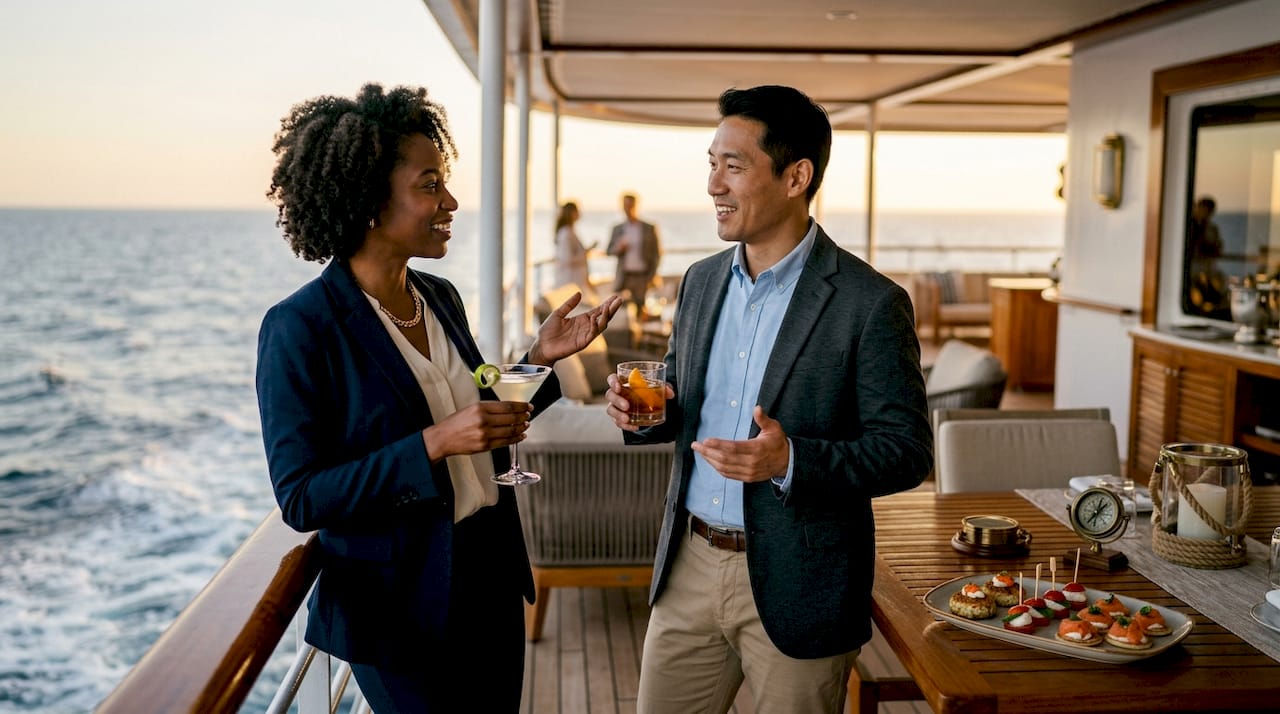
Private cruises deliver advantages that traditional venues structurally cannot replicate. The most significant is physical and psychological isolation. Private yacht charters provide operational control and psychological distance from everyday pressures, creating superior conditions for high-stakes corporate decision-making. That distance is not incidental. It removes the ambient noise of office politics, email alerts, and commuting stress that quietly degrades meeting quality on land.
The second major advantage is complete brand ownership of the event environment. Cruise lines offer fully customizable itineraries, dedicated event programming, and full venue personalization, from restaurants to entertainment spaces. Your brand message becomes the only message on board. No competing signage, no other companies’ clients in the lobby, no shared conference floors.
The benefits of private cruises for corporate events include:
- Confidentiality by design. Strict confidentiality agreements and maritime crew discretion create a level of information security that hotel conference centers cannot guarantee.
- Hierarchy flattening. The informal maritime setting encourages executives to speak more freely. Executives report increased authentic communication and honest feedback during sea-based retreats.
- Distraction-free productivity. Private cruises eliminate common event distractions such as commuting, office politics, and email, creating focused space for leadership teams.
- Flexible scheduling. Unlike fixed hotel ballroom blocks, private cruises allow real-time agenda adjustments based on group energy and progress.
- Memorable client impact. The exclusivity of the setting signals to clients that they are genuinely valued, not just managed.
Pro Tip: Schedule your most critical agenda items for the second morning at sea. By then, the environment has done its work. Attendees are relaxed, hierarchy has softened, and conversations run deeper.
How do private business cruises compare with traditional corporate event venues?
The comparison between private cruises and land-based venues is not simply about luxury. It is about control, confidentiality, and the quality of human interaction the setting produces.
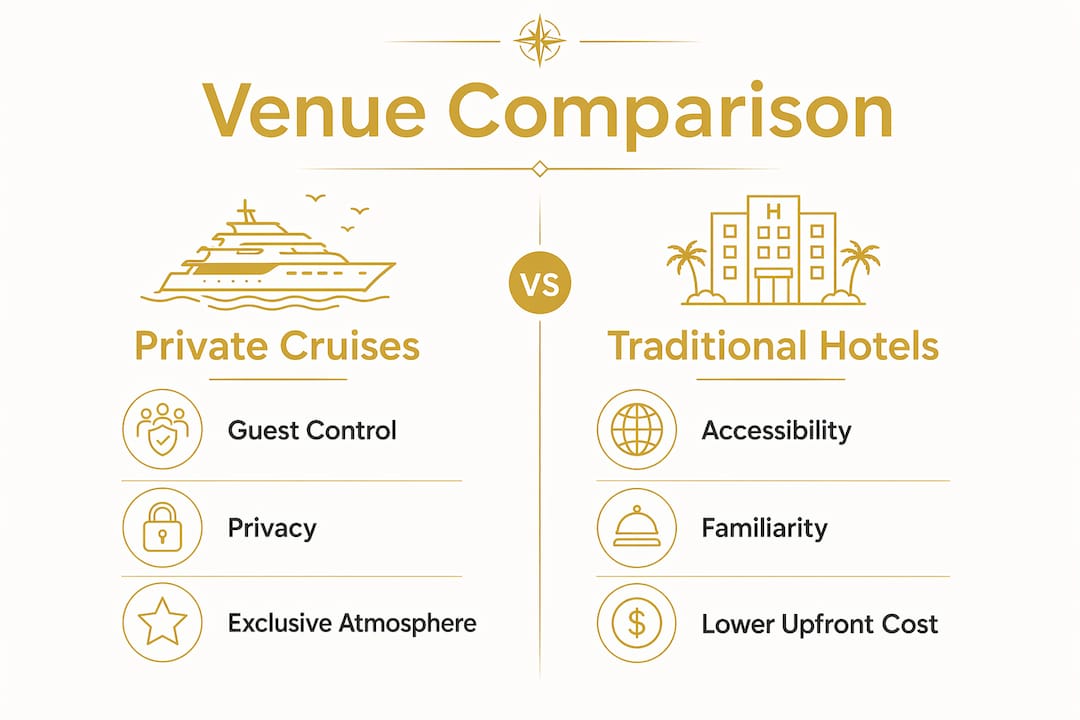
| Factor | Private cruise charter | Traditional hotel or conference center |
|---|---|---|
| Guest list control | Complete. No outside guests board. | Partial. Shared lobbies, elevators, and spaces. |
| Brand environment | Full takeover of all spaces. | Shared with hotel branding and other events. |
| Confidentiality | Maritime crew discretion and signed NDAs. | Standard hotel staff protocols only. |
| Agenda flexibility | Real-time adjustments possible. | Bound by room booking blocks and catering schedules. |
| Commuting burden | Zero. Guests live on board. | Attendees travel daily to and from the venue. |
| Personalized service | Tailored crew interaction and bespoke menus. | Standardized service across all guests. |
| Size scalability | Intimate groups under 20 to full-ship charters for 2,700+. | Flexible but impersonal at scale. |
| Weather dependence | A real consideration requiring contingency planning. | Minimal weather risk for indoor venues. |
The cost of a private charter is higher upfront than a hotel conference package. The return, however, shows up in measurable ways: stronger client relationships, faster decision-making cycles, and team cohesion that persists after the event ends. The executive retreat planning discipline consistently identifies venue quality as one of the top variables in retreat ROI. A private cruise scores at the top of that variable.
Weather dependence is the one genuine limitation. Experienced planners address this with flexible routing agreements and onboard contingency programming. The vessel moves. The agenda does not have to stop.
What are the planning considerations for a private business cruise?
Successful private cruise events require planning timelines that differ significantly from hotel bookings. Most full-ship charters require 6–12 months of lead time. Smaller yacht charters for groups under 30 can sometimes be arranged in 8–12 weeks, but premium vessels in peak seasons book out fast.
-
Define the vessel size early. Group size drives every other decision. A yacht for 12 executives creates an intimate retreat dynamic. A ship for 500 creates a large-scale incentive program. Corporate event cruises accommodate groups from under 20 to thousands, so the right vessel exists for your objective.
-
Customize the itinerary around business goals. Private cruises offer complete freedom to select destinations, durations, and activities. Use that freedom deliberately. A leadership retreat benefits from quieter anchorages. A client incentive trip benefits from high-profile ports with memorable shore excursions.
-
Audit onboard technology before signing. Connectivity and onboard technological support are essential for hybrid meetings and real-time communication needs. Confirm satellite internet speeds, AV capabilities, and video conferencing setups before committing to a vessel.
-
Balance structured sessions with unstructured time. Formal evening dinners naturally transition structured work into informal networking. That transition is where relationships deepen. Build it into the schedule deliberately, not as an afterthought.
-
Address legal and compliance requirements. Maritime law governs private charters. Contracts should specify liability, cancellation terms, port fees, and crew obligations. Work with a travel advisor who understands both corporate event law and maritime charter agreements.
-
Use professional itinerary management. Complex cruise events with multiple ports, sessions, and vendors require centralized coordination. Itinerary management for luxury travel reduces errors and keeps all stakeholders aligned in real time.
Pro Tip: Request a vessel walkthrough, either in person or via detailed video, before signing the charter agreement. The difference between a yacht described as “conference-ready” and one that actually functions as a meeting space is significant.
How can private cruises enhance client engagement and corporate culture?
Private cruises serve three distinct corporate purposes, and each one produces measurable cultural and relational outcomes.
Client entertainment and incentive trips use the exclusivity of the setting to communicate value. When a client boards a private charter arranged specifically for them, the message is clear: this relationship matters. That signal is difficult to replicate with a dinner reservation or a hotel suite upgrade. Tailored dining, entertainment, and experiential programming aligned with company values deepen client trust in ways that standard hospitality cannot.
Strategic leadership retreats benefit from the hierarchy-flattening effect of the maritime environment. The informal setting encourages candid conversations that rarely happen in boardrooms. Innovation and honest feedback flow more freely when the physical context removes the usual cues of rank and formality.
Employee motivation and retention programs gain from the sheer memorability of the experience. The benefits of private cruises as incentive tools include:
- A clear signal that the organization invests in its people at a high level.
- Shared experiences that build team identity and loyalty beyond the office.
- A break from routine that recharges motivation and creative thinking.
- Informal spaces where cross-functional relationships form naturally.
- A tangible reward that employees discuss and remember for years.
The corporate travel incentives that produce the strongest retention results share one quality: they are experiences that cannot be bought individually. A private cruise is exactly that.
Key takeaways
Private cruises for business outperform traditional venues on confidentiality, brand control, and the quality of human interaction they produce.
| Point | Details |
|---|---|
| Confidentiality by design | Maritime crew discretion and signed NDAs provide security that hotel venues cannot match. |
| Full brand environment | Private charters allow complete takeover of all spaces, removing competing messages. |
| Hierarchy-flattening effect | The informal maritime setting produces more authentic communication and better decisions. |
| Plan 6–12 months ahead | Full-ship charters require long lead times; technology and legal audits must happen before signing. |
| Measurable cultural ROI | Private cruises strengthen client loyalty, team cohesion, and employee retention in lasting ways. |
What I have learned from watching leaders at sea
The most underrated argument for corporate yacht chartering is not the scenery or the food. It is what happens to leadership dynamics when the office disappears. I have watched executives who are guarded and formal in boardrooms become genuinely open within 24 hours of being at sea. The environment does something that no facilitation technique fully replicates.
The conventional wisdom in corporate events is that the agenda drives outcomes. My experience says the setting drives outcomes, and the agenda follows. A well-chosen vessel with the right itinerary creates the conditions for real conversations. The agenda fills in the rest.
The other thing I would push back on is the assumption that private cruises are only for large budgets. A yacht for 10–12 people for two nights can cost less per head than a premium hotel retreat when you factor in accommodation, meals, and venue fees. The math is closer than most decision-makers expect.
The trend I see accelerating is the use of private cruises as hybrid event anchors. A core leadership group meets at sea while remote participants join for specific sessions via satellite video. That model combines the depth of an in-person retreat with the reach of a distributed team. It is one of the more practical applications of private cruise formats that I expect to become standard practice by the end of this decade.
— Sandon
Planning your private business cruise with Grandglobetrotting
Grandglobetrotting specializes in private cruise planning for corporate clients who need more than a booking confirmation. The team handles vessel selection, itinerary design, onboard technology audits, and event logistics coordination from a single point of contact. Every detail is tailored to your business objectives, not a generic group travel template.
Whether you are planning an intimate leadership retreat for 12 or a full-ship incentive program for hundreds, Grandglobetrotting’s concierge approach removes the complexity and delivers an experience your clients and team will remember. Start with a personalized luxury travel consultation to define your objectives and get expert guidance on the right vessel, route, and program for your goals.
FAQ
What makes a private cruise better than a hotel for business events?
A private cruise gives you complete control over the guest list, environment, and brand messaging. Hotels share lobbies, staff, and spaces with other guests and events, which limits confidentiality and focus.
How far in advance should you book a private business cruise?
Full-ship charters typically require 6–12 months of lead time. Smaller yacht charters for groups under 30 may be arranged in 8–12 weeks, though premium vessels in peak seasons book out quickly.
What group sizes work for corporate cruise charters?
Corporate event cruises accommodate groups from under 20 people on intimate yachts to full-ship charters for 2,700 or more attendees, making the format scalable across event types.
How does a private cruise support team building?
The maritime setting flattens corporate hierarchy and encourages authentic communication. Executives consistently report more honest feedback and stronger team bonds after sea-based retreats than after land-based events.
What technology should you confirm before chartering a vessel for business?
Confirm satellite internet speeds, AV equipment, and video conferencing capability before signing any charter agreement. These provisions are not standard across all vessels and must be verified in the contract.
Recommended
At Grand Globetrotting, we don't just plan vacations; we craft extraordinary adventures that leave you with cherished memories. Let us bring your dream vacation to life, perfectly tailored to your style, and immerse yourself in a world of luxury, exploration, and unforgettable moments. Your journey begins with us.
Itinerary planning services require a separate charge outside of cost to book travel accommodations. Depending upon the complexity of the itinerary and the level of effort required to acquire unique experiences, cost may vary. Speak with our team to learn more.
Book your consultation