

TL;DR:
- Private jet travel saves time by bypassing airport procedures and providing direct routes.
- It offers unmatched scheduling flexibility, privacy, and access to thousands of smaller airports.
Private jet travel is defined by the industry as on-demand aviation that gives passengers full control over their schedule, route, and cabin environment. The benefits of private jet travel go well beyond comfort. They include saving up to 2 hours per trip, accessing over 5,000 U.S. airports, and compressing a 12-hour commercial travel day to as little as 3.5 hours. For affluent travelers who treat time as their most valuable asset, these advantages are not luxuries. They are operational necessities.
1. Dramatic time savings on every trip
Time savings are the single most compelling reason to fly private. Private jets can reduce a 12-hour commercial travel day to as little as 3.5 hours door to door. That compression comes not from flying faster, but from eliminating every buffer commercial travel demands.
Most private aviation time savings come from bypassing the commercial flying process entirely. You skip the two-hour pre-departure window, the gate queues, the boarding delays, and the baggage claim. Landing closer to your destination can save more time than the flight itself by cutting ground transfers and eliminating connections.
- Arrive at the terminal minutes before departure, not hours
- No layovers or connecting flights on most routes
- Direct routing to airports near your final destination
- Ground transfer time cut significantly on multi-stop trips
Pro Tip: When calculating the true value of flying private, include the full door-to-door time, not just flight duration. The savings at the airport often exceed the savings in the air.
2. Unmatched convenience and scheduling flexibility
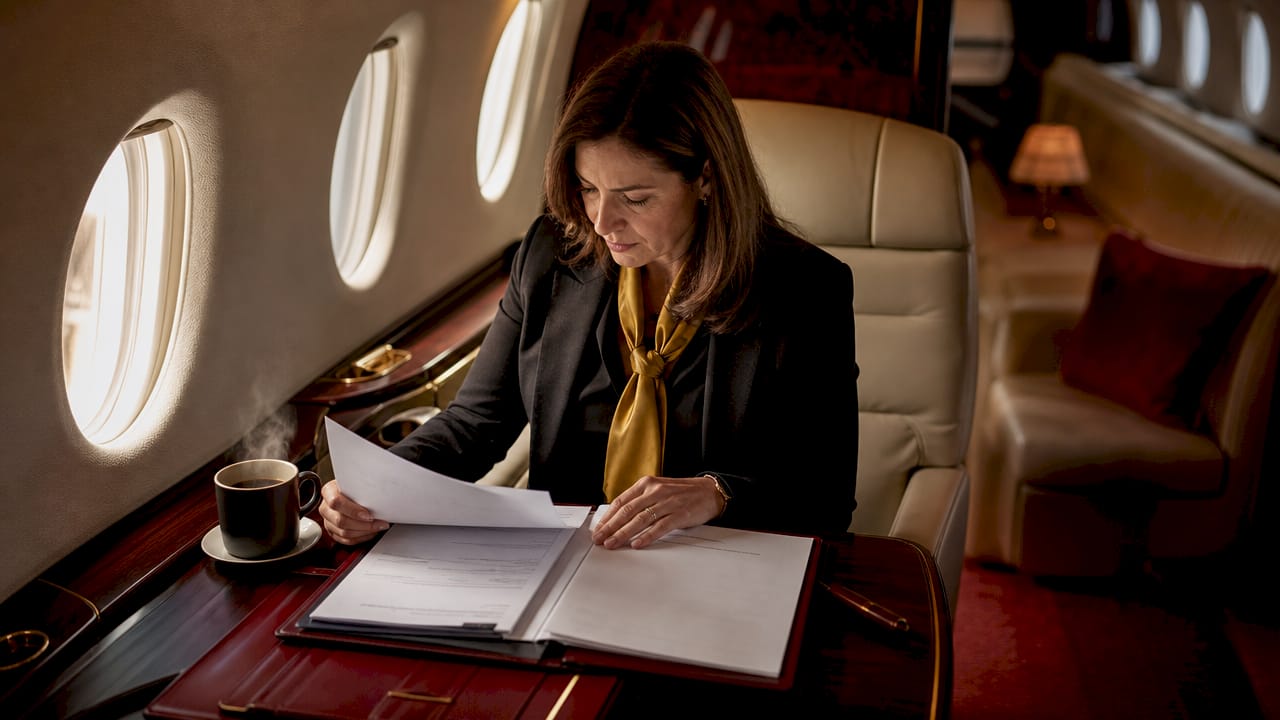
The advantages of flying private center on control. You set the departure time. You change it if your meeting runs long. No airline schedule dictates your day. That flexibility alone transforms how business and leisure travelers plan their trips.
Passengers arrive minutes before departure with private jets, bypassing security lines and crowded terminals entirely. Private terminals, often called fixed-base operators (FBOs), offer dedicated lounges, private parking, and direct ramp access to the aircraft. The experience from car door to cabin seat can take under 15 minutes.
- Departure times set and adjusted by you
- Itinerary changes made with minimal notice
- No middle seats, no gate changes, no boarding groups
- Travel with your own group, no strangers in the cabin
Pro Tip: Book through a concierge service like Grandglobetrotting to coordinate your FBO arrival, ground transport, and hotel check-in as a single itinerary. That coordination eliminates the gaps that cost time.
3. Privacy and confidentiality in the air
Privacy aboard a private jet is an operational advantage, not a status symbol. Private jets offer a secure environment that enables confidential meetings and uninterrupted work during flight. No adjacent passengers, no overhead conversations, no risk of sensitive information being overheard.
For executives, legal teams, and deal-makers, this matters enormously. A transatlantic flight becomes a working session where strategy is discussed, documents are reviewed, and decisions are made. Business travelers gain improved productivity and security with private aviation because the cabin functions as a private office at 40,000 feet.
For leisure travelers, the privacy advantage is equally real. Families travel without the friction of public spaces. Couples on honeymoons enjoy an intimate atmosphere from the moment they board. The cabin belongs entirely to the people you choose to bring.
4. Superior comfort and a personalized cabin experience
The comfort gap between private jets and commercial first class is wider than most travelers expect. Private cabins offer fully reclining seats, low cabin noise, and layouts designed for both work and rest. There are no fixed meal times, no shared armrests, and no recline battles.
Onboard amenities are tailored to the passenger. Catering is ordered in advance to personal preferences, from specific dietary requirements to preferred wines. Cabin temperature, lighting, and entertainment are all adjustable. For longer flights, many aircraft include private sleeping quarters, full bathrooms, and conference table configurations.
- Premium seating that fully reclines on most mid and large cabin jets
- Custom catering ordered before departure
- Quiet cabins with significantly reduced ambient noise
- Flexible layouts for work, dining, or rest
The luxury jet travel advantages here extend beyond physical comfort. Arriving rested and focused, rather than fatigued from a crowded terminal, changes the quality of the entire trip.
5. Access to far more airports and destinations
Private aviation opens a network of airports that commercial airlines simply do not serve. Private jets access over 5,000 U.S. public airports, compared to roughly 500 served by commercial carriers. That difference translates directly into proximity to your destination and reduced ground travel time.
Access to thousands of smaller airports enables direct flights to exclusive destinations that commercial routes cannot reach. A resort in Montana, a vineyard in Napa Valley, or a private island in the Bahamas all become far more accessible when you are not limited to major hub airports.
| Travel factor | Commercial airline | Private jet |
|---|---|---|
| U.S. airports accessible | ~500 | 5,000+ |
| Typical pre-departure arrival | 2 hours or more | Under 15 minutes |
| Direct routing to destination | Limited by hub network | Available to most airports |
| Ground transfer after landing | Often 45–90 minutes | Often under 20 minutes |
| Schedule flexibility | Fixed airline timetables | Fully on-demand |
The table above shows why charter flight benefits go beyond the cabin. The airport access advantage alone justifies the cost on many complex itineraries.
6. Productivity gains for business travelers
Flying private converts dead travel time into productive work time. The cabin is quiet, secure, and configured for focus. Teams can hold full strategy sessions, review confidential financials, or prepare for presentations without the distractions of a commercial cabin.
For private flights in business trips, the productivity case is straightforward. A four-person executive team flying privately can hold a two-hour working session during the flight. That same team on a commercial flight loses that time to noise, interruptions, and the general unpredictability of shared travel.
The private aviation perks here are measurable. Decisions get made faster. Teams arrive aligned. The travel day becomes part of the work day rather than a break from it.
7. Reduced stress and a more controlled travel experience
Commercial travel introduces stress at nearly every stage. Check-in lines, security queues, gate changes, delays, and baggage claim all add friction. Private aviation removes most of those friction points by design.
Passengers drive to the FBO, walk directly to the aircraft, and board without a single queue. Luggage is handled by staff and loaded directly. On arrival, bags come off the aircraft immediately. The entire experience is designed around the passenger’s time, not the airline’s operational schedule.
For travelers who take multiple trips per month, this reduction in stress compounds significantly. The private jet travel convenience advantage is not just about comfort. It is about arriving at your destination in the same condition you left home.
8. Ideal for groups and multi-stop itineraries
Private jets become especially cost-effective when traveling in groups. The per-person cost drops sharply as the group size increases, and the logistical advantages multiply. Everyone departs together, arrives together, and moves through the itinerary on the same schedule.
Multi-stop itineraries are where private aviation truly separates itself. A commercial traveler visiting three cities in two days faces connection risks, rebooking fees, and overnight delays. A private traveler completes the same itinerary with precision, landing at airports closest to each meeting location and departing on their own schedule.
For private group travel, the combination of shared cost, shared schedule, and shared cabin creates an experience that commercial travel cannot replicate at any price point.
Key takeaways
Private jet travel delivers its greatest value when time savings, airport access, and privacy advantages combine to address a specific travel challenge.
| Point | Details |
|---|---|
| Time savings are the core benefit | Private jets reduce a 12-hour commercial travel day to as little as 3.5 hours door to door. |
| Airport access multiplies the advantage | Access to 5,000+ U.S. airports puts private jets far closer to most final destinations. |
| Privacy is an operational tool | Confidential meetings and focused work sessions are possible only in a fully private cabin. |
| Groups and multi-stop trips maximize value | Per-person costs drop with group size, and complex itineraries become far more manageable. |
| Best value requires multiple benefits | Financial justification is strongest when at least two of time, privacy, convenience, and access apply. |
Why I think most people misunderstand private aviation
Most travelers frame private jets as a luxury purchase. I frame them as a mission purchase. The question is never “can I afford to fly private?” The question is “does this trip have a problem that private aviation solves?”
Brown Advisory’s guidance on private aviation puts it plainly: buy the mission, not the jet. That means evaluating each trip on its specific demands. A solo leisure flight to a well-served commercial hub rarely justifies the cost. A four-person executive team flying to a remote location for a time-sensitive deal almost always does.
The privacy point is where I see the most underestimation. Travelers think of privacy as comfort. I think of it as a competitive advantage. The ability to hold a frank conversation at 35,000 feet, with no risk of being overheard, changes what you can accomplish before you land.
My honest advice: evaluate the value by comparing real costs against premium commercial alternatives, then count how many of the four core benefits apply to your specific trip. If two or more apply, the case for flying private is strong. If only one applies, the math rarely works in your favor.
Matching your flight volume to the right option matters just as much. Occasional travelers get the best value from charter flights. Frequent flyers with predictable schedules benefit from jet cards or fractional ownership. The wrong structure costs more than the wrong aircraft.
— Sandon
How Grandglobetrotting enhances your private aviation experience
Private jet travel is only one part of a truly exceptional trip. The experience between landing and returning home matters just as much as the flight itself.
Grandglobetrotting builds bespoke travel itineraries that connect your private flight arrival with curated luxury hotels, private excursions, and personalized dining. Every detail is coordinated so that the quality of your flight carries through to every moment on the ground. From a private villa in Tuscany to a chartered yacht in Phuket, Grandglobetrotting’s concierge team handles the full picture. If you are ready to plan a trip where the entire experience reflects your standards, explore personalized luxury travel planning with Grandglobetrotting.
FAQ
What are the main benefits of private jet travel?
The main advantages of private jet travel are time savings, scheduling flexibility, privacy, and access to over 5,000 U.S. airports. Together, these benefits can reduce a 12-hour commercial travel day to as little as 3.5 hours.
Is private jet travel worth the cost?
Financial value is strongest when at least two of the core benefits apply to your specific trip. For groups, multi-stop itineraries, or time-critical travel, the cost per person often compares favorably to premium commercial alternatives.
How early do you need to arrive for a private jet?
Private jet passengers typically arrive at the terminal just minutes before departure. Private terminals called FBOs allow direct ramp access, so the process from car to cabin can take under 15 minutes.
Can private jets reach destinations that commercial airlines cannot?
Private jets access over 5,000 U.S. public airports, compared to roughly 500 served by commercial airlines. That expanded network puts private aircraft far closer to remote resorts, rural business locations, and exclusive destinations.
What is the difference between charter flights and fractional ownership?
Charter flights are booked per trip and suit occasional travelers. Fractional ownership and jet cards work better for frequent flyers with predictable schedules, as they reduce per-trip costs and improve aircraft availability.
Recommended
At Grand Globetrotting, we don't just plan vacations; we craft extraordinary adventures that leave you with cherished memories. Let us bring your dream vacation to life, perfectly tailored to your style, and immerse yourself in a world of luxury, exploration, and unforgettable moments. Your journey begins with us.
Itinerary planning services require a separate charge outside of cost to book travel accommodations. Depending upon the complexity of the itinerary and the level of effort required to acquire unique experiences, cost may vary. Speak with our team to learn more.
Book your consultation