

TL;DR:
- Following a structured sequence from defining the occasion to confirming logistics streamlines restaurant choice and enhances the dining experience.
- Using filters for cuisine and dietary restrictions, along with detailed review analysis, reduces decision fatigue and avoids last-minute surprises.
The most effective dining recommendation steps follow a clear sequence: define your occasion and preferences, apply filters for cuisine, budget, and ambiance, consult trusted reviews and local sources, confirm reservations and timing, and verify dietary accommodations before you commit. Done in order, these steps cut through the noise of endless options and lead you to a meal worth remembering.
Here is the core process at a glance:
- Define the occasion and guest preferences (casual, romantic, business, celebration)
- Filter by cuisine type, price range, and location to reduce the field quickly
- Check dietary restrictions and menu options before shortlisting
- Read recent, detailed reviews across multiple platforms for honest patterns
- Evaluate ambiance cues including noise level, seating style, and atmosphere
- Confirm reservation availability and timing to avoid waits and mismatched expectations
- Plan for group size and any special accommodations needed
Each step builds on the last. Skip one, and you risk arriving at a beautiful restaurant that has nothing your guest can eat, or booking a lively bar-style space for a quiet anniversary dinner.
What are the best dining recommendation steps to follow?
A structured approach to restaurant selection turns an overwhelming decision into a confident one. Work through these steps in sequence for any occasion, from a quick weeknight dinner to a milestone celebration.
-
Clarify the occasion and who is attending. A business lunch calls for a quiet room with reliable service. A birthday dinner needs group-friendly seating and a festive atmosphere. Date night favors cozy lighting and a lower noise level. Defining the purpose first shapes every filter that follows.
-
Set your budget before you search. Decide on a per-person range that covers food, drinks, tax, and gratuity. Menu prices alone rarely reflect the full cost of a meal, especially at upscale venues where a well-chosen bottle of wine and service charges can add considerably to the total.
-
Apply the cuisine filter first. Agreeing on cuisine type before looking at specific restaurants can reduce your options by roughly 80%, which is the single fastest way to cut decision fatigue. Whether you are craving Japanese, Italian, or modern American, narrowing by cuisine gives you a manageable shortlist immediately.
-
Check dietary restrictions against the menu. Nearly 30% of U.S. adults follow some form of dietary restriction, so reviewing menus online before booking is not optional for group dining. Look for explicit labeling of gluten-free, vegan, halal, or allergen-friendly options, and call the restaurant directly if the menu is ambiguous.
-
Read reviews with a critical eye. Platforms like Yelp and TripAdvisor let you filter by cuisine and price, but the real value is in the detail. Focus on recent comments that mention specific dishes, service pacing, and noise level. A pattern across a dozen reviews tells you far more than a single five-star rating.
-
Evaluate ambiance from photos and descriptions. Look for reviewer-uploaded photos rather than professional shots. Search for terms like “intimate tables” or “acoustic treatment” in reviews when a quiet atmosphere matters. Noise level directly shapes conversation and mood, particularly for business meals or romantic dinners.
-
Confirm reservation logistics. Check whether the restaurant accepts reservations, what the advance booking window looks like, and whether there is a time limit on your table. For popular venues, booking through platforms like OpenTable or Resy a week or more ahead is standard practice.
-
Plan for group size and special needs. Large parties often require a private dining room or semi-private space, and some venues charge a minimum spend or deposit. Confirm accessibility requirements, parking, and any special requests such as a cake cutting or custom menu in advance.
-
Apply a time limit to the decision. Give yourself five minutes once you have a shortlist of three to five options. Decision fatigue is real, and a structured cutoff prevents the group from cycling through the same choices indefinitely.
Pro Tip: When dining in an unfamiliar city, ask a local bartender or taxi driver where they would eat on their lunch break. Local insiders consistently point toward authentic spots that review platforms and tourist guides overlook.
How does restaurant service sequence affect your dining experience?
Understanding how a well-run restaurant operates helps you set accurate expectations and recognize quality service when you encounter it. The sequence of service in dining follows a defined order: booking, greeting, seating, ordering, serving, clearing, and billing. Each stage has its own rhythm, and knowing what to expect at each one makes the experience smoother for everyone at the table.
- Booking: Reservations confirm party size, timing, and any special requests. Providing dietary restrictions at this stage gives the kitchen time to prepare.
- Greeting and seating: A warm, prompt welcome sets the tone. In formal dining, expect to be escorted to your table; in casual settings, a host stand or open seating is standard.
- Ordering: Servers in quality establishments guide you through the menu, note allergens, and pace the meal. Do not hesitate to ask about preparation methods or substitutions.
- Serving: Formal dining follows a courses-based sequence, with timing between courses calibrated to the table’s pace. Casual venues move faster, often bringing dishes as they are ready.
- Clearing: Plates are typically cleared after all guests at the table have finished a course, not when the first person is done. This is a standard hospitality etiquette point worth knowing.
- Billing: In the United States, the check arrives when requested. Splitting bills by item or equally is widely accommodated; confirm the restaurant’s policy for large groups before you arrive.
Ambiance cues also play a role throughout the meal. A restaurant with thoughtful acoustic design, well-spaced tables, and appropriate lighting signals that the operator has considered the full dining experience, not just the food. When evaluating options, these details are worth weighing alongside menu quality. For travelers seeking authentic culinary experiences, the atmosphere of a room often carries as much weight as what arrives on the plate.
How Grandglobetrotting approaches luxury dining planning
Grandglobetrotting uses the FEAST framework to bring structure and intention to dining planning within luxury travel. FEAST stands for Find, Evaluate, Accommodate, Select, and Time. Each stage corresponds directly to the dining recommendation steps outlined above, but applied with the depth and personalization that a premium travel experience demands.
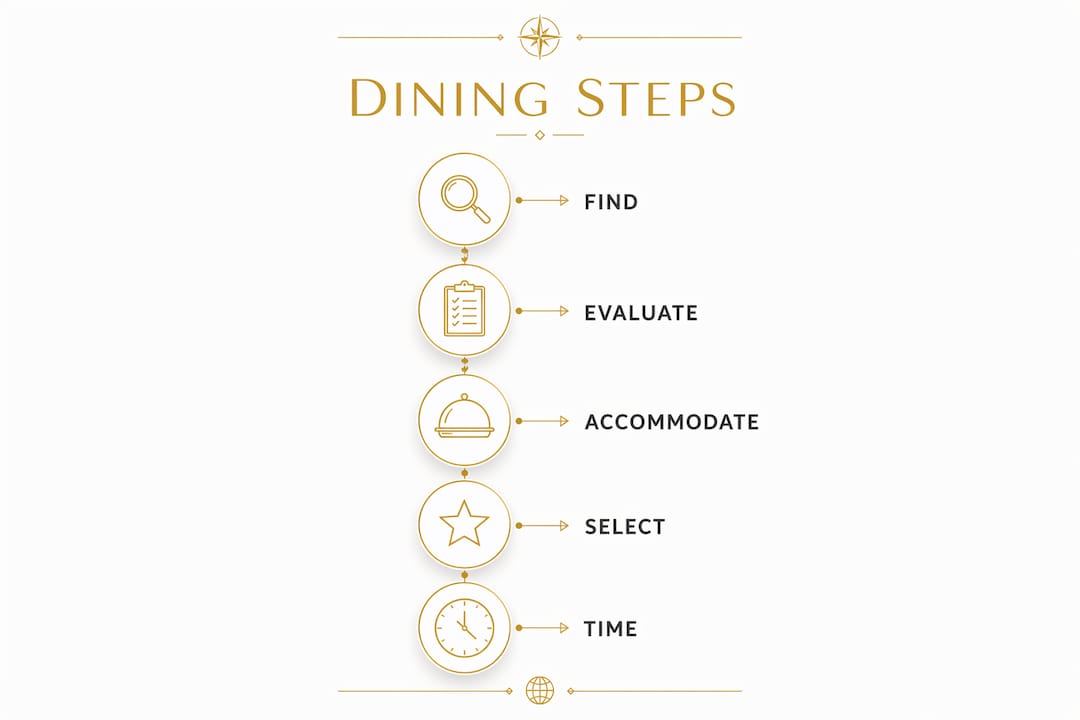
Find means going beyond a basic search. Grandglobetrotting’s approach draws on curated local recommendations, food critics, and vetted guides rather than relying solely on aggregate ratings. Professional food writers consistently note that authentic local dining lies outside tourist hotspots, accessible through local guides and curated food tours rather than the first page of a search result.
Evaluate focuses on the quality of information, not just the quantity. Recent, detailed reviews that address service consistency, ingredient quality, and noise level carry more weight than a high aggregate score built on outdated feedback. Experts also recommend avoiding restaurants that display menu pictures in windows, a reliable signal that the venue targets transient visitors rather than delivering a genuine culinary experience.

Accommodate addresses dietary needs, group dynamics, and accessibility before arrival. This step eliminates last-minute surprises and allows the kitchen to prepare properly for any restrictions.
Select is where dining becomes part of the travel narrative. Grandglobetrotting treats a great meal not as a logistical checkbox but as a defining moment of a trip. Matching the restaurant’s character to the occasion, whether a private tasting menu for an anniversary or a lively neighborhood trattoria for a family celebration, is what separates a memorable experience from a forgettable one.
Time covers reservation strategy, peak-hour avoidance, and event coordination. Booking well in advance, understanding the best day and time slot for your party size, and confirming table duration all prevent the friction that undermines an otherwise excellent evening.
Pro Tip: When budgeting for a luxury dining experience, account for all-in costs including tax, gratuity, and beverages. Menu prices alone rarely reflect the full spend, and a luxury dining guide built around realistic totals prevents unwelcome surprises at the end of the night.
Grandglobetrotting’s concierge team applies the FEAST framework across every itinerary, connecting travelers with curated dining options that reflect the character of each destination. For those who want dining woven thoughtfully into their travel dining experiences, this structured approach removes the guesswork entirely. The FEAST method also pairs well with broader trip planning resources, such as this guide on combining lodging and gastronomy, which explores how accommodation and dining choices reinforce each other across a full itinerary.
Grandglobetrotting can plan your next dining experience
Every great trip deserves a dining plan that matches its ambition. Grandglobetrotting’s concierge team handles the full process, from identifying the right venues to securing reservations at sought-after restaurants that rarely appear on standard booking platforms.
Whether you are planning a honeymoon dinner, a business trip itinerary, or a multi-city culinary adventure, Grandglobetrotting builds the experience around your preferences, not a generic template. Explore the personalized luxury travel guide to see how bespoke dining planning fits into a complete luxury itinerary.
Key Takeaways
Effective dining recommendation steps follow a defined sequence that begins with occasion clarity and ends with confirmed logistics, reducing decision fatigue and raising the quality of every meal.
| Point | Details |
|---|---|
| Cuisine filter first | Agreeing on cuisine type before browsing specific restaurants reduces options by roughly 80%. |
| Dietary checks are non-negotiable | Nearly 30% of U.S. adults follow dietary restrictions, making menu review before booking a standard step. |
| Reviews require critical reading | Focus on recent, detailed feedback covering service pacing, noise level, and specific dishes rather than aggregate scores. |
| FEAST framework for luxury dining | Grandglobetrotting’s Find, Evaluate, Accommodate, Select, Time method brings structure to premium dining planning. |
| Timing and reservations matter | Confirming advance booking windows, table duration, and peak-hour patterns prevents friction on the night. |
Recommended
At Grand Globetrotting, we don't just plan vacations; we craft extraordinary adventures that leave you with cherished memories. Let us bring your dream vacation to life, perfectly tailored to your style, and immerse yourself in a world of luxury, exploration, and unforgettable moments. Your journey begins with us.
Itinerary planning services require a separate charge outside of cost to book travel accommodations. Depending upon the complexity of the itinerary and the level of effort required to acquire unique experiences, cost may vary. Speak with our team to learn more.
Book your consultation