

Planning a destination wedding is one of the most rewarding decisions an engaged couple can make. Done with intention, it transforms your celebration into an immersive experience that guests remember. The key is starting early, making decisions in the right order, and treating logistics with the same care you give the aesthetics.
Before anything else, here are the initial actions that set every successful destination wedding in motion:
- Settle on a rough guest count (intimate under 30, mid-range 30–80, or large 80+) before choosing any destination
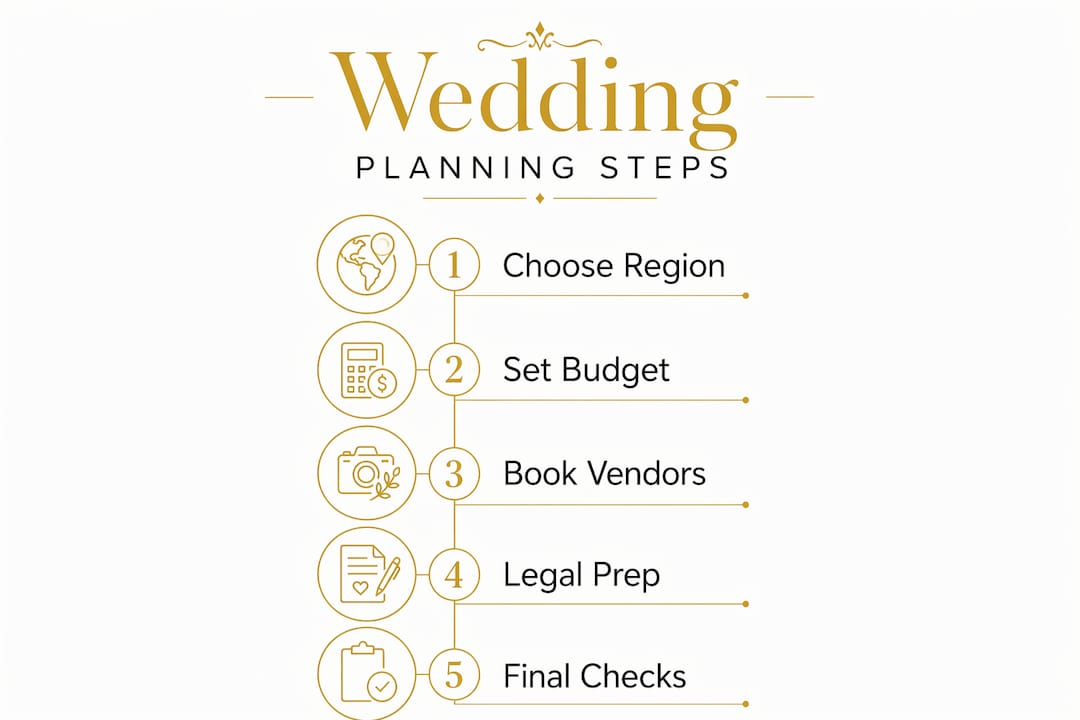
- Set a realistic total budget, including a contingency buffer for currency shifts and unforeseen costs
- Choose a geographic region before falling in love with a specific resort, so logistics guide the decision
- Research legal requirements for your shortlisted countries early, since paperwork timelines vary widely
- Check passport validity for you, your partner, and key guests (most countries require validity at least six months past the wedding date, per travel.state.gov)
- Decide whether you want a legally binding ceremony abroad or a symbolic celebration paired with a civil ceremony at home
How to plan a destination wedding: your month-by-month checklist
Most professional planners recommend over a year as the minimum runway for a destination wedding, particularly for peak-season venues in Santorini, the Amalfi Coast, or Hawaii. Tighter timelines of several months are possible with a small guest list and a destination with straightforward legal requirements, but they leave little room for error.
18+ months out
- Lock in your region using accessibility, weather patterns, and guest travel needs as filters
- Hire an independent wedding planner before approaching any venue
- Confirm your symbolic vs. legal ceremony decision, since legal-in-destination paperwork can require 6–10 weeks for apostilles alone
12–18 months out
- Book your venue and confirm the deposit; top properties fill this far in advance
- Send save-the-dates well in advance so guests can arrange flights, request time off, and budget accordingly
- Book your photographer and any vendor you are importing from home
9–12 months out
- Negotiate your group hotel room arrangements and share booking details with guests
- Launch your wedding website with travel info, accommodation options at multiple price points, and visa requirements
- Finalize your vendor team with local hires for florist, hair and makeup, and entertainment
6 months out
- Send formal invitations with an RSVP deadline; six months gives you enough time to finalize headcounts with the venue
- Begin collecting legal documents: birth certificates, proof of marital status, and any required apostilles
- Confirm all vendor contracts in writing
3 months out
- Submit legal documents to the relevant embassy or local registry
- Finalize the full wedding weekend itinerary and share it with vendors
- Review all contracts for cancellation and rebooking terms
1–2 months out
- Confirm final guest count and share with caterers
- Arrange guest transportation between accommodations and the venue
- Prepare welcome bags and ship any items that cannot travel as carry-on luggage
Budgeting and guest communication for destination weddings
The budget conversation is where destination wedding planning either gains traction or stalls. A budget buffer is essential; currency fluctuations alone have significantly impacted couples’ final balances when venues price in foreign currencies. Build that cushion in from day one.
A practical budget framework allocates most costs to the venue or resort package, travel and group transfers, group experiences and upgrades, extras like upgraded décor or a DJ, and a small emergency reserve. The gap between an all-inclusive package price and the total cost of a destination wedding typically comes from add-ons such as imported photographers, welcome bags, excursions, and gratuities.
Budget planning checklist
- Include venue fees, catering, photography, décor, attire, legal fees, and all travel costs
- Account for service charges (often 10–25%) and local taxes, which can add considerably to the base package price
- Factor in vendor travel costs if importing professionals from home, since flights, hotels, and meals become your responsibility
- Set a separate line item for guest-facing costs you choose to cover, such as welcome dinners or shuttle transfers
Guest communication is equally consequential. Domestic weddings typically need six months’ notice; destination weddings benefit from a full 12 months because guests are booking flights, arranging childcare, and potentially renewing passports. Transparency about costs early prevents the worst outcome: guests RSVPing yes and declining two months out.
Guest communication best practices
- Send save-the-dates with the destination, date range, and a hint at room block pricing
- Create a wedding website with flight recommendations, hotel options, visa requirements, and a packing guide
- Include practical local details guests won’t think to ask: shade availability, tipping customs, and transfer times from the airport
- Set a clear RSVP deadline and follow up personally with key guests who haven’t responded
Pro Tip: Treat your wedding website as a guest experience hub rather than a simple announcement page. Couples who include curated excursion lists, nearby restaurant recommendations, and a local “cheat sheet” consistently see higher attendance and more relaxed guests on arrival.
Legal requirements and vendor booking for a smooth celebration
The legal side of a destination wedding surprises more couples than any other aspect of the process. Many countries require apostilled documents, blood tests, or minimum residency periods, making the paperwork timeline longer than most couples anticipate. The most popular solution, chosen by the majority of couples, is a symbolic ceremony at the destination paired with a legal civil ceremony at home. It eliminates foreign bureaucracy entirely and gives you complete creative freedom over the celebration itself.

If you choose to marry legally abroad, start document collection at least six months out. Apostille processing alone can take 4–8 weeks depending on your home jurisdiction.
Essential legal documents checklist
- Valid passports (minimum six months past the wedding date)
- Original birth certificates, often apostilled
- Proof of marital status: divorce decree or death certificate if applicable
- Any country-specific requirements such as blood test results or residency certificates
- Copies of all documents stored both digitally and in print
On the vendor side, the single most valuable move is hiring an independent local planner before signing any venue contract. A resort’s wedding coordinator serves the resort’s interests; an independent planner negotiates on yours. They know which line items are flexible, which “included” vendors are genuinely good, and what real concessions look like at your room-block level.
Book photographers, florists, and entertainment 9–12 months out. When vetting vendors remotely, ask for full wedding galleries rather than highlight reels, and confirm they have a documented backup plan for weather disruptions. Prioritize airport proximity when evaluating venues; a property four hours from the nearest international airport adds significant fatigue and transfer costs for guests arriving after long flights.
Final preparations and wedding day execution
A destination wedding weekend typically spans 2–4 days, structured around arrival, a welcome dinner or cocktail event, the ceremony and reception, and a farewell brunch. Not every event needs to be mandatory; guests are on vacation, and breathing room makes the overall experience feel generous rather than scheduled. For a detailed multi-day structure, the luxury wedding weekend itinerary guide offers a practical framework for pacing events across multiple days.

Arrive at least one to two days before your guests. That window lets you walk the venue with your planner, confirm vendor arrival times, and handle any last-minute details without an audience.
Final preparations checklist
- Confirm all vendor bookings in writing, including details on times, prices, and deliverables
- Share the minute-by-minute wedding day timeline with every vendor and your wedding party
- Arrange guest transportation between accommodations and the ceremony site
- Prepare welcome bags with local tips, a printed itinerary, and practical items like sunscreen or a local SIM card
- Check the weather forecast and confirm your venue’s indoor backup plan is activated if needed
- Never check your wedding dress as luggage; carry it on or use a hanging garment bag, and ask flight attendants about closet space before boarding
- Carry all critical documents, rings, and irreplaceable items in your carry-on
- Send a final update to guests one to two weeks before arrival with the complete itinerary and any last-minute logistics
On the day itself, delegate. Your planner handles the unexpected; your job is to be present. Guests rarely notice when something small goes differently than planned, and the moments that matter most have nothing to do with the details you spent months perfecting.
Key Takeaways
Successful destination wedding planning comes down to starting at least a year in advance, choosing a region before a specific venue, and building in a 10–15% budget buffer for the international logistics that always surface.
| Point | Details |
|---|---|
| Start with a region, not a resort | Choosing the region first ensures accessibility, weather, and vendor availability guide the decision. |
| Build in a budget buffer | A 10–15% contingency covers currency shifts, service charges, and last-minute logistics costs. |
| Give guests at least a year’s notice | International guests need a full year to book flights, arrange leave, and budget for the trip. |
| Hire an independent planner first | A local planner negotiates venue contracts in your favor before you sign anything. |
| Never check the wedding dress | Carry the gown on board to avoid the risk of lost luggage on international flights. |
Let Grandglobetrotting handle the details

A destination wedding is an extraordinary celebration, and the travel logistics behind it deserve the same level of care as the ceremony itself. Grandglobetrotting specializes in personalized luxury travel planning for exactly this kind of occasion, from curating guest accommodation blocks at world-class properties to coordinating private transfers and bespoke itineraries for your entire wedding party. Whether you are envisioning an intimate cliffside ceremony in Santorini or a grand resort celebration in the Caribbean, the Grandglobetrotting concierge team brings the industry connections and hands-on expertise to make every element feel effortless. Reach out to begin building your wedding travel experience today.
Recommended
At Grand Globetrotting, we don't just plan vacations; we craft extraordinary adventures that leave you with cherished memories. Let us bring your dream vacation to life, perfectly tailored to your style, and immerse yourself in a world of luxury, exploration, and unforgettable moments. Your journey begins with us.
Itinerary planning services require a separate charge outside of cost to book travel accommodations. Depending upon the complexity of the itinerary and the level of effort required to acquire unique experiences, cost may vary. Speak with our team to learn more.
Book your consultation