
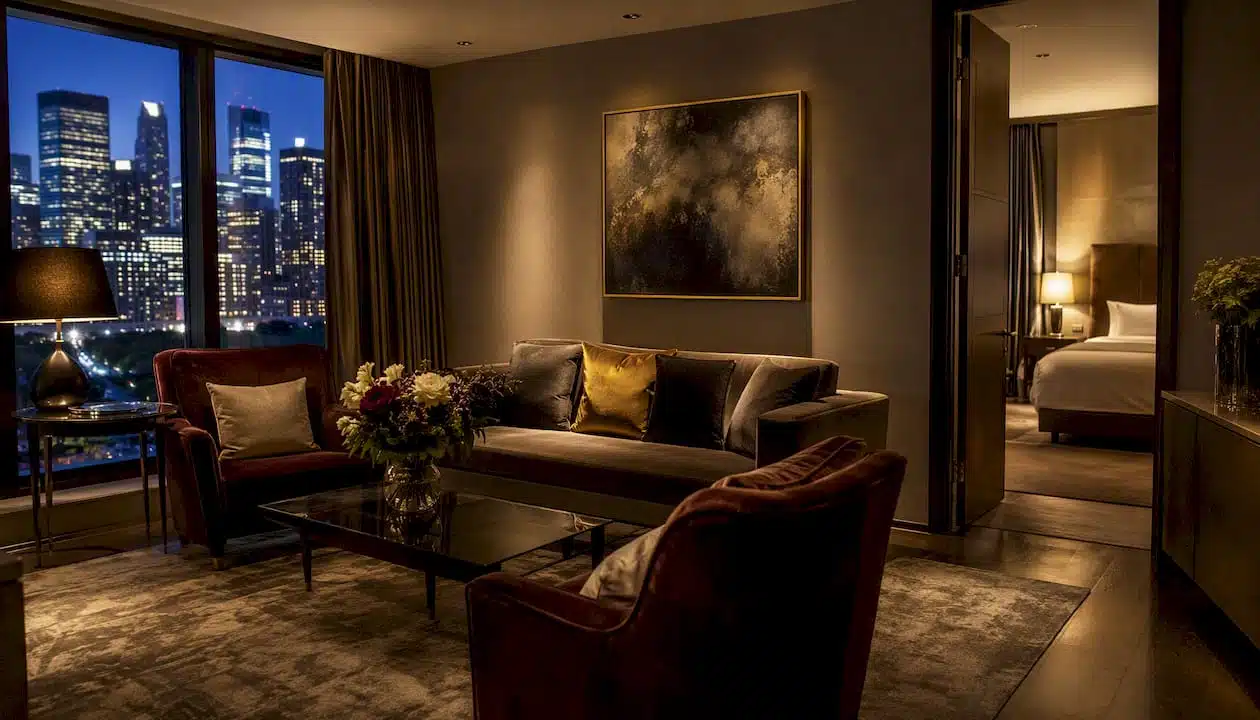
Suite upgrades are worth pursuing for discerning travelers when the stay involves a celebration, an extended business trip, or a high-stakes occasion where guaranteed space and service matter. For a weekend getaway with flexible expectations, a complimentary upgrade at check-in can be a pleasant surprise. But when the outcome of your stay depends on it, leaving a suite to chance is a gamble most advisors would not recommend.
Three quick decisions to make before your next luxury stay:
- Pay for a confirmed suite when the occasion is non-negotiable: an anniversary, a honeymoon, a client-facing business trip, or any stay of four or more nights where suite inclusions (lounge access, butler service, included dining) will be used daily.
- Accept the check-in gamble when the stay is short, the property has a strong upgrade culture, and you hold top-tier status with Hilton Honors, World of Hyatt, or Marriott Bonvoy.
- Use a certificate or advisor booking to lock a suite in advance for high-stakes stays. Marriott Bonvoy Suite Night Awards, World of Hyatt suite upgrade certificates, and advisor-negotiated confirmed suites through preferred-partner programs are the most reliable methods available.
Key Takeaways
Confirmed suite upgrades, secured through certificates or preferred-partner advisor bookings, deliver more reliable outcomes than space-available upgrades for high-stakes luxury stays.
| Point | Details |
|---|---|
| Confirmed beats complimentary | Certificates and advisor bookings guarantee a suite category; check-in upgrades depend entirely on occupancy. |
| Certificate value grows with stay length | Suite upgrade certificates are most valuable across four to seven nights, spreading the confirmation benefit across more days. |
| Preferred-partner bookings add priority at no extra cost | Advisor-negotiated preferred-partner reservations carry upgrade priority, breakfast, and credits at the same public nightly rate. |
| Peak periods reduce spontaneous upgrade odds | Hotels time suite renovations before peak season to maximize revenue, limiting complimentary upgrade availability when demand is highest. |
| Grandglobetrotting secures confirmed suites | Through preferred-partner programs and direct advisor relationships, Grandglobetrotting confirms specific suites and inclusions before departure. |
Table of Contents
- What “suite upgrade” actually means in practice
- The role of suite upgrades in luxury stays: when the benefits justify the cost
- How major U.S. loyalty programs handle suite upgrades
- Tactical strategies that reliably improve your odds of securing a suite
- What to confirm before accepting a suite upgrade
- Common trade-offs and limitations that can reduce suite value
- How to ask for a suite upgrade without overstepping
- Why hotels treat suites as distinct revenue products
- A travel advisor’s perspective on confirmed suites versus check-in upgrades
- How Grandglobetrotting secures confirmed suites for clients
- Sources
What “suite upgrade” actually means in practice
The phrase “suite upgrade” covers four distinct categories, and the differences in guarantee level, timing, and cost are significant.
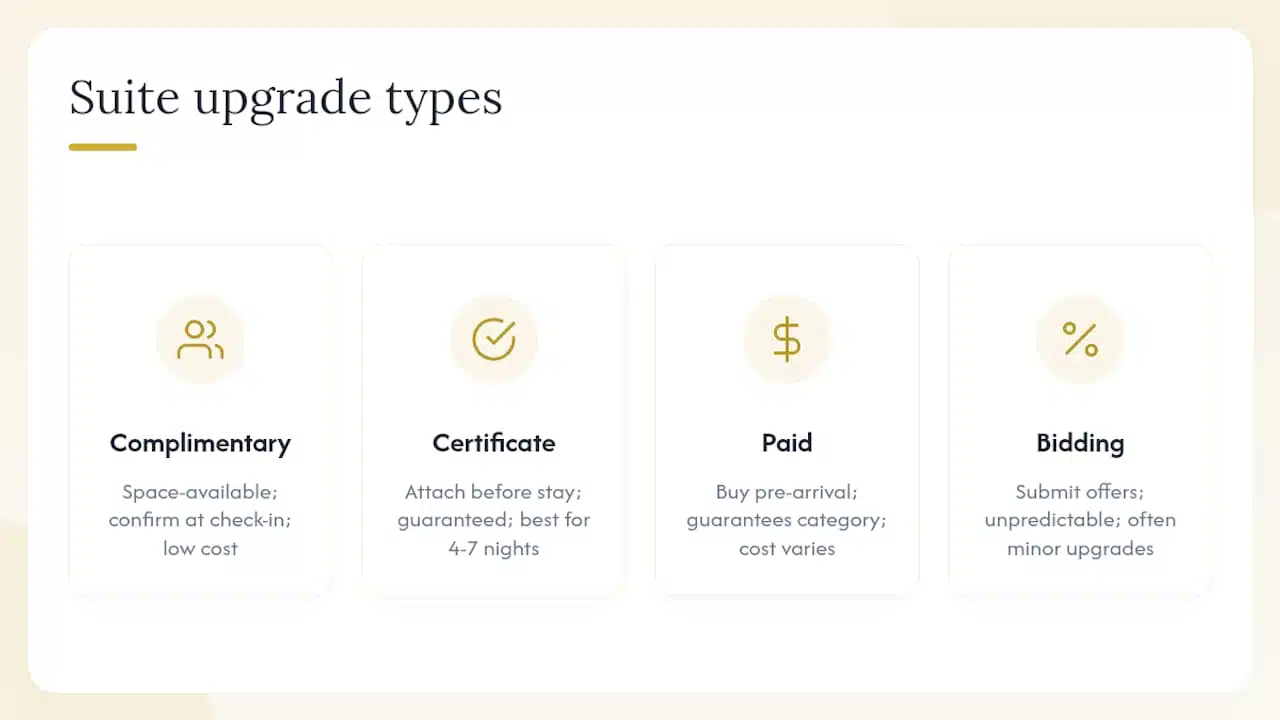
Complimentary (space-available) upgrade. This is the most common form and the least reliable. Elite members of programs like Hilton Honors Diamond or World of Hyatt Globalist may receive a suite at check-in when one is unoccupied. You typically learn the outcome at the front desk, and availability depends entirely on occupancy that night.
Confirmed or certificate upgrade. Programs including World of Hyatt and Marriott Bonvoy issue suite upgrade certificates that members can attach to a qualifying reservation in advance. Suite upgrade certificates let members confirm a standard suite for eligible stays and are most valuable when used across multiple nights, commonly four to seven, removing the uncertainty of a space-available outcome.
Paid pre-arrival upgrade. Many luxury properties now offer the option to purchase a suite upgrade before arrival, either at a fixed rate or through a bidding platform. This guarantees the category but not always the specific room or view.
Upgrade bidding. Technology-driven bidding platforms allow guests to submit offers for higher room categories. These are unpredictable and often deliver minor jumps, such as a junior suite, rather than a full two-room layout. For guaranteed configuration and service, booking the suite category directly or using a certificate is the more dependable path.
Suite labels and what they mean
Suite terminology varies by property, but these categories appear consistently across major U.S. luxury brands:
- Junior suite: A single room with a defined sitting area. No separate living space. Common as an entry-level upgrade.
- One-bedroom suite: A true two-room configuration with a separate living area and bedroom. The standard for most certificate redemptions.
- Standard or classic suite: A property’s base suite tier, often equivalent to a one-bedroom suite.
- Presidential or royal suite: The property’s flagship accommodation. At this level, top-end signature suites are curated, one-off products commanding extraordinary rates and are booked directly, not gambled for at check-in.
The role of suite upgrades in luxury stays: when the benefits justify the cost
The role of suite upgrades in luxury stays extends well beyond square footage. The most tangible benefits are the ones that change how a trip actually feels day to day.
Space for work and entertaining. A separate living area allows a business traveler to hold a client meeting without sitting on the bed. For families, it means children can sleep while adults remain in a different room.
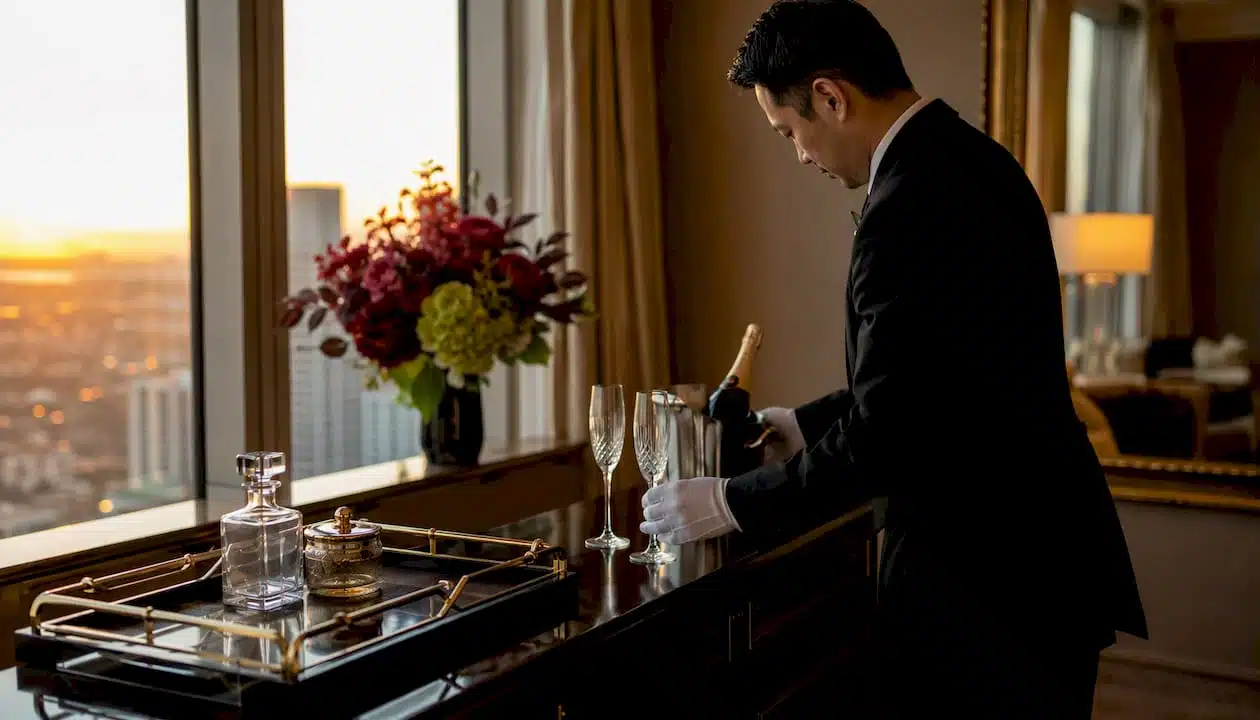
Butler and concierge access. Many suite tiers at properties like Four Seasons and Ritz-Carlton include dedicated butler service, which handles everything from unpacking to private dining arrangements. This level of exclusive access changes the pace of a stay entirely.
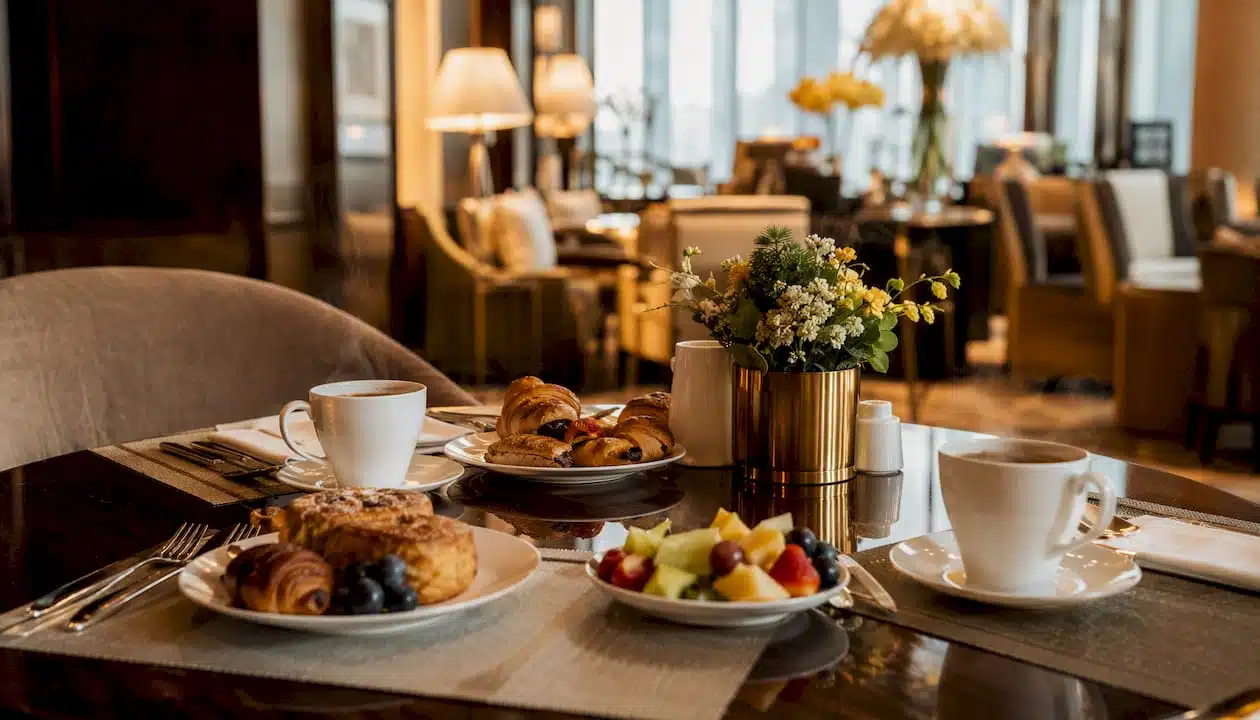
Lounge and included dining. Club lounge access, included breakfast, and evening cocktails can offset a meaningful portion of the suite premium. On a multi-night stay, daily breakfast for two at a luxury property can represent a considerable portion of the included value.
Priority service and faster check-in. Suite guests at most luxury brands receive priority check-in and, in cruise contexts, priority embarkation and dedicated lounges that materially change the arrival experience. The same principle applies at hotels where suite guests bypass standard queues.
When the upgrade is worth it: a use-case guide
- Celebrations (anniversaries, honeymoons, milestone birthdays): The experiential value of a dedicated living space, champagne service, and personalized attention far exceeds the premium. Confirm the suite in advance.
- Extended business stays (four or more nights): Spread the suite premium across multiple nights and compare it to the daily value of included breakfast, lounge access, and workspace. The math often favors the suite.
- Family travel: Separate sleeping areas reduce friction and improve rest for everyone. A one-bedroom suite is frequently more practical than two standard rooms.
- Short leisure stays (one to two nights): The premium is harder to justify unless inclusions are substantial or the occasion demands it. A complimentary upgrade at check-in is a reasonable hope here.
- Privacy-driven stays: Guests who value a separate entrance, a private terrace, or a dedicated butler will find that suite perks beyond space materially change the experience in ways a standard room cannot replicate.
For a simple cost-benefit check: take the nightly suite premium, subtract the daily value of included perks (breakfast, lounge credits, spa access), and divide the remainder across the number of nights. If the net premium per night is below what you would spend on those services à la carte, the suite pays for itself.
How major U.S. loyalty programs handle suite upgrades
Program mechanics differ significantly across the four major U.S. hotel loyalty programs. Understanding the rules before booking determines whether a certificate is useful or wasted.
World of Hyatt
Globalist members (the program’s top tier) receive confirmed suite upgrades at check-in when available, plus four suite upgrade certificates annually that can be attached to qualifying reservations in advance. Certificates apply to standard suites, not premium or specialty suites, and require a direct booking on an eligible rate. The confirmed certificate path removes the space-available gamble entirely.
Hilton Honors
Diamond members receive complimentary space-available upgrades, including suites, but Hilton does not issue attachable suite certificates in the same way Hyatt does. The upgrade is confirmed at check-in, making it less predictable for high-stakes stays. Booking through a preferred-partner channel can add upgrade priority and property credits without increasing the nightly rate.
Marriott Bonvoy
Titanium and Ambassador elites receive suite night awards (SNAs) that can be requested for stays of five or more nights. SNAs are confirmed 48 hours before arrival if a suite is available, which is better than check-in uncertainty but still not a guaranteed confirmation at booking. Major hotel brands offer variety in upgrade mechanics, and Marriott’s SNA system sits between a certificate and a space-available upgrade in terms of certainty.
IHG One Rewards
IHG’s Ambassador and Royal Ambassador tiers include room upgrade guarantees, but suite-level upgrades depend on the property and rate type. IHG One Rewards does not issue suite-specific certificates comparable to Hyatt’s program. Upgrades at IHG luxury properties (InterContinental, Regent, Six Senses) are more reliably secured through direct booking with a preferred-partner advisor.
Eligibility rules that affect every program
- Rate type matters: Certificates and confirmed upgrades almost universally require a direct booking at a qualifying rate. Third-party portal bookings (Expedia, Hotels.com) typically disqualify a reservation from upgrade priority entirely.
- Length of stay: Certificate value increases with stay length. A one-night certificate redemption delivers far less value than a five-night redemption where the suite premium is spread across multiple days.
- Blackout dates and exclusions: Peak periods, sold-out nights, and certain rate codes (advance purchase, promotional) often exclude certificate attachment.
Pro Tip: Attach a suite certificate at the earliest eligible window, not the night before. Inventory for confirmed suite categories is allocated in advance, and waiting reduces the chance of a match.
Tactical strategies that reliably improve your odds of securing a suite
Securing a suite with confidence requires more than hoping for a kind front-desk agent. These steps, in priority order, reflect how upgrade decisions actually work at luxury properties.
-
Choose the right rate. Book directly with the hotel on a flexible, qualifying rate. This is the single most important step because it determines eligibility for every other lever.
-
Book through a preferred-partner advisor. Preferred-partner bookings often carry upgrade priority and extras at no additional nightly cost. Programs like Four Seasons Preferred Partner and Virtuoso add breakfast, property credits, and upgrade priority to the same rate you would pay booking directly. This is the most cost-efficient path to upgrade priority for travelers without top-tier status.
-
Attach a certificate or purchase a confirmable upgrade. If you hold Hyatt suite certificates or Marriott SNAs, attach them at booking or at the earliest eligible window. For properties without program coverage, a paid pre-arrival upgrade at a fixed rate delivers more certainty than a bidding platform.
-
Time your pre-arrival request. Contact the hotel 48 to 72 hours before arrival. Occupancy patterns are clearer at this point, and revenue managers have a better picture of which suites will remain unoccupied. A polite, specific request at this window is more effective than one sent weeks in advance.
-
Optimize check-in timing. Late-afternoon arrivals, typically after 3:00 PM, often coincide with a clearer picture of the day’s occupancy. Early-morning arrivals compete with the previous night’s departures and are less predictable.
-
Mention the occasion on the reservation. Anniversaries, honeymoons, and milestone birthdays are noted by property teams and can influence upgrade decisions. This is not a guarantee, but it is a signal that costs nothing to include.
Pro Tip: At independent ultra-luxury properties where loyalty programs don’t apply, advisor relationships are the primary lever. Advisors with direct lines to property management can negotiate confirmed suite allotments that no loyalty certificate can access. For a stay at a Relais & Châteaux property or a boutique ultra-luxury hotel, an advisor booking is the only reliable path to a guaranteed suite.
Sample pre-arrival email
Keep it brief, specific, and warm. Avoid listing your status tier or implying entitlement; properties respond better to genuine context than to demands.
What to confirm before accepting a suite upgrade
Whether the upgrade is complimentary, certificate-based, or paid, these are the details worth verifying before you commit.
- Suite layout and room count. Confirm whether the suite has a separate bedroom and living area, or whether it is a junior suite (single room with a sitting area). This distinction matters for families and business travelers.
- Lounge and club access. Not all suite categories include club lounge access. Confirm whether lounge entry is included and what it covers (breakfast, evening cocktails, concierge services).
- Butler service. At properties offering butler service, confirm whether it is included with the suite tier or available at an additional charge.
- Complimentary amenities. Ask which services are included: minibar, breakfast, airport transfers, spa credits. Included breakfast alone can shift the cost-benefit calculation significantly.
- View and location within the property. A suite on a lower floor facing a service entrance is not the same product as one with panoramic views. Confirm the floor, orientation, and any obstructions.
- Bedding configuration. Confirm the bed size and whether connecting rooms are included if traveling with children.
- Separate entrance. Some suites at ultra-luxury properties have private elevator access or a dedicated entrance. If privacy is a priority, confirm this detail.
A short confirmation message to the property before arrival covers most of these points. Something like: “Could you confirm the suite layout, whether club lounge access is included, and the floor/view for our reservation?” takes thirty seconds to send and prevents surprises at check-in.
Inclusions affect value more than square footage in most cases. A suite with included breakfast, evening cocktails, and lounge access at a property like the Four Seasons or Ritz-Carlton can offset $150 to $250 per day in services that would otherwise be charged separately.
Common trade-offs and limitations that can reduce suite value
A suite is not always the best allocation of a travel budget. These are the trade-offs worth weighing honestly.
- Higher nightly premium. Suite rates at luxury U.S. properties can run two to four times the standard room rate. On a short stay, the premium rarely pays back through inclusions alone.
- Resort fees and service charges. Many U.S. luxury properties charge resort fees that apply regardless of room category. A suite guest pays the same resort fee as a standard room guest, which dilutes the relative value of suite inclusions.
- Distance from core hotel areas. Suites are often positioned on upper floors or in separate wings, which can mean longer walks to the pool, spa, or lobby. At large resort properties, this is worth considering.
- Higher incidental spending. Suite guests tend to spend more on in-room dining, minibar, and ancillary services, partly because the space encourages it. Budget accordingly.
- Opportunity cost. The premium spent on a suite upgrade could fund a private excursion, a Michelin-starred dinner, or a customized luxury experience that creates a more lasting memory than extra square footage. For some travelers, the experience outside the room matters more than the room itself.
Hotels are repositioning suites as dedicated revenue-driving products rather than occasional VIP giveaways, which means suite inventory is priced and managed with greater precision than it was a decade ago. Complimentary upgrades are becoming less frequent at peak periods, and suite renovations at properties like the Ritz-Carlton Chicago are timed before peak season to capture higher rates, further reducing spontaneous upgrade availability when demand is highest.
There is also a phenomenon worth naming: upgrade fatigue. Frequent luxury travelers who stay in suites regularly sometimes find that the novelty diminishes, and they begin to prefer other perks, such as a specific view, a preferred floor, or a property credit toward an experience, over additional space. If you find yourself in this category, redirecting the suite premium toward exclusive excursions or curated dining often delivers stronger satisfaction.
How to ask for a suite upgrade without overstepping
Etiquette around upgrade requests is straightforward: be specific, be polite, and give the property a reason to say yes. Entitlement rarely works; context almost always helps.
Three scripts for three moments
Pre-arrival email (48–72 hours before check-in):
Arrival-day message (morning of check-in):
Front-desk check-in request:
Timing and tone guidance
- Best window: 48 to 72 hours before arrival for email; late afternoon for in-person requests when the day’s occupancy picture is clear.
- When not to ask: On sold-out nights, during peak holiday periods, or when the property has just completed a suite renovation and demand is at its highest.
- What to include on the reservation: Occasion, loyalty number, and advisor name if applicable. These three details together signal a guest worth accommodating.
Pro Tip: Mentioning your advisor’s name at check-in, when the booking was made through a preferred-partner program, often carries more weight than citing your loyalty tier. The advisor relationship represents future business for the property, which is a tangible incentive.
Why hotels treat suites as distinct revenue products
The industry’s approach to suites has shifted materially over the past several years. Hotels are repositioning suites as dedicated revenue-driving products rather than occasional perks for loyal guests, which has direct implications for how upgrades are allocated and priced.
Revenue managers now track suite occupancy and average daily rate separately from standard inventory. A suite left unoccupied for a complimentary upgrade represents a revenue loss against a category that was budgeted to sell. This is why spontaneous upgrades are increasingly rare at well-managed luxury properties, particularly during high-demand periods.
Major luxury properties continue investing in suite renovations and signature inventory, including Four Seasons London at Park Lane, which increases both demand and the strategic importance of confirmed bookings on peak dates. When a property refreshes its suite product, it prices that inventory at a premium and often limits complimentary allocations.
The operational logic is clear: confirmed certificates and preferred-partner bookings change the hotel’s allocation decisions because they represent committed revenue. A certificate redemption is a confirmed booking in a suite category; a preferred-partner reservation carries relationship value and future business. Both move a guest higher on the upgrade priority list than a status-based space-available request.
At ultra-premium independent properties, this dynamic is even more pronounced. Loyalty points carry little weight at a Relais & Châteaux property or a boutique ultra-luxury hotel. Advisor relationships, maintained through consistent bookings and direct communication with property management, are the primary lever for securing confirmed suites at these addresses.
| Booking Channel | Upgrade Priority | Suite Guarantee | Best For |
|---|---|---|---|
| Preferred-partner advisor | High | Negotiable/confirmed | Ultra-luxury, independents, high-stakes stays |
| Direct booking with certificate | High | Confirmed (category) | Program members with Hyatt/Marriott certificates |
| Direct elite booking (status) | Medium | Space-available | Short stays, flexible travelers |
| Card portal booking | Low | Space-available | Points redemptions, no status |
| Third-party portal | None | None | Not recommended for upgrade seekers |
Pro Tip: For a high-stakes stay at an independent ultra-luxury property, ask your advisor to request a specific suite by name or number, not just a category. Properties respond differently to a named request, and advisors with existing relationships can often secure a specific room that would never appear in a standard upgrade pool.
A travel advisor’s perspective on confirmed suites versus check-in upgrades
The conventional wisdom says to book a standard room, hold elite status, and hope for the best at check-in. For a casual stay at a familiar property, that approach is reasonable. For anything that matters, it is a strategy built on hope rather than planning.
The stays that generate the most client satisfaction at Grandglobetrotting are almost always the ones where the suite was confirmed before departure. Not because the suite itself is always dramatically better than a premium room, but because the certainty changes how a traveler arrives. There is no negotiation at the front desk, no waiting to see what is available, no quiet disappointment when the upgrade does not materialize. The experience begins the moment the reservation is confirmed.
The cases where a check-in gamble makes sense are narrower than most travelers assume. A top-tier Hilton Honors Diamond member staying two nights at a property with historically generous upgrade culture, on a low-occupancy weeknight, has reasonable odds. That same traveler on a Saturday in December at a resort that just completed a suite renovation has almost none.
The advisor’s role is not simply to book a room. It is to read the property, the timing, and the occasion, and then choose the channel that delivers the outcome the client actually needs. For celebrations, extended stays, and any trip where the room is central to the experience, a confirmed suite secured through a preferred-partner booking or certificate is the only answer worth giving a client.
How Grandglobetrotting secures confirmed suites for clients
Booking a suite through a loyalty program certificate or a public hotel website gives you a category. Booking through Grandglobetrotting gives you a confirmed outcome, a specific room, and the inclusions that make the premium worthwhile.
Grandglobetrotting’s luxury hotel booking service operates through preferred-partner programs including Four Seasons Preferred Partner and Virtuoso, which carry upgrade priority, included breakfast, and property credits at the same nightly rate available directly. For independent ultra-luxury properties where loyalty programs carry no weight, direct advisor relationships with property management secure confirmed suite allotments that no certificate can access. The process is straightforward: a consultation to understand the occasion and priorities, a preferred-partner or advisor-negotiated booking, and a confirmed suite with verified inclusions before departure. To secure a confirmed suite for your next high-stakes stay, start with a travel planning consultation and let the advisor relationship do the work that status alone cannot.
Sources
These sources informed the analysis in this article and are worth consulting directly for program details, industry context, and property-specific information.
- How luxury suites are evolving as revenue drivers | Hotel Dive
- Hotel suite upgrades guide: why certificates matter | The Miles Academy
- Are suites worth it on a cruise? 8 reasons to try one out | Royal Caribbean Blog
- Inside Le Bristol Paris’ Newly Revamped $46,000-A-Night Impériale Suite | Forbes
- Four Seasons Hotel London at Park Lane renovated suites press release
- Ritz-Carlton Chicago completes Lakeside Suite renovation | Luxury Travel Advisor
- Cruise ship suites: what to expect | Cruise Critic
Recommended
At Grand Globetrotting, we don't just plan vacations; we craft extraordinary adventures that leave you with cherished memories. Let us bring your dream vacation to life, perfectly tailored to your style, and immerse yourself in a world of luxury, exploration, and unforgettable moments. Your journey begins with us.
Itinerary planning services require a separate charge outside of cost to book travel accommodations. Depending upon the complexity of the itinerary and the level of effort required to acquire unique experiences, cost may vary. Speak with our team to learn more.
Book your consultation