

TL;DR:
- Dining recommendations significantly influence travelers’ destination choices and cultural immersion.
- In 2026, multi-channel discovery, including reviews, AI, and local advice, shapes dining decisions, emphasizing trustworthiness.
Dining recommendations are a primary driver of how travelers choose destinations, plan meals, and connect with local culture. According to a 2026 survey of 750 U.S. travelers, 92.1% say a city’s food scene influences their destination choice, and 85% feel more confident trying unfamiliar foods when they have insider tips. The role of dining recommendations in travel extends far beyond simply knowing where to eat. Trusted food guidance shapes cultural immersion, reduces the anxiety of unfamiliar cuisines, and turns an ordinary meal into a defining travel memory. This guide covers how travelers find and trust restaurant tips in 2026, why local dining advice matters for authentic experiences, and how to use food recommendations for travelers to get the most from every trip.
How do travelers find and trust dining recommendations today?
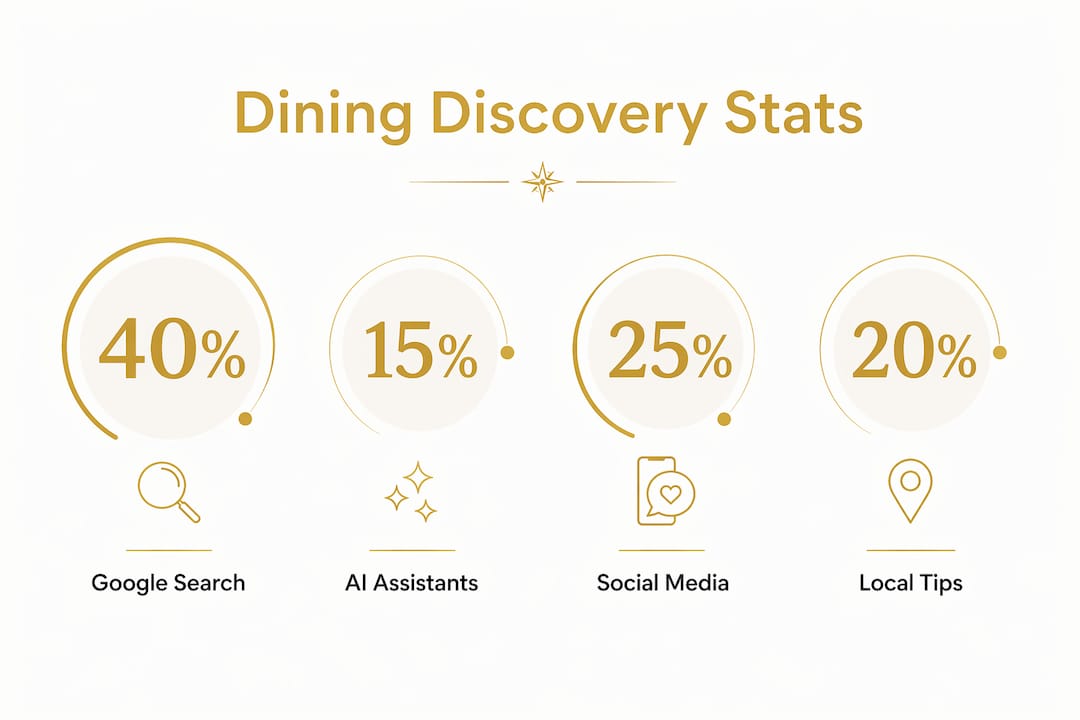
Restaurant discovery in 2026 is a multi-channel process, and understanding it changes how you plan every meal abroad. Google Maps and Search account for roughly 40% of restaurant choices among tourists. That figure alone confirms that a strong digital presence is the baseline for any restaurant hoping to attract international visitors.
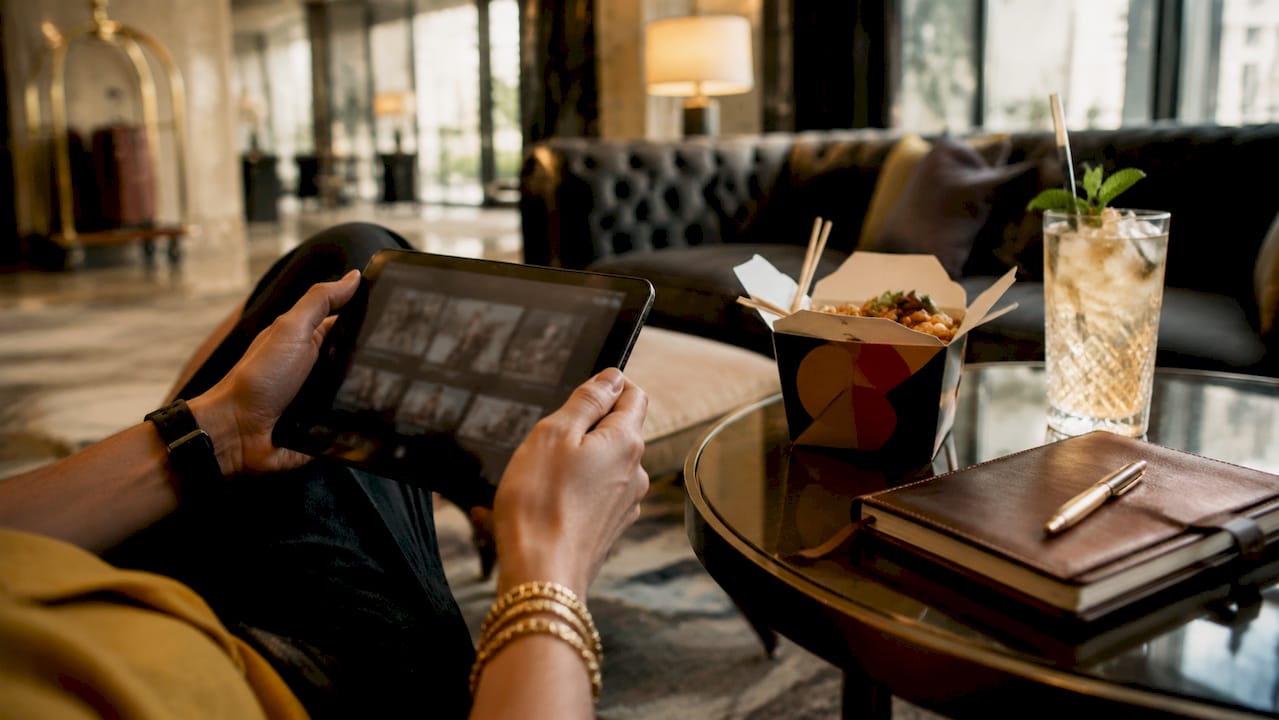
AI assistants such as ChatGPT and Perplexity now account for approximately 15% of restaurant discovery, and that share is tripling year over year. This rapid growth demands that travelers and travel planners pay attention to how AI surfaces dining options, since the results often differ from traditional search rankings. Platforms optimized for generative engine results are increasingly the first stop for travelers who want curated, conversational suggestions rather than a list of links.
Social media plays a distinct role. Food influencers on Instagram and TikTok generate strong visual appeal, but influencer recommendations drive visits only when the audience perceives genuine credibility and trust. Parasocial connection alone is not enough. Travelers who follow a food creator they genuinely trust are far more likely to act on a restaurant suggestion than those who simply see a sponsored post.
Hotel concierges remain one of the most underused resources in travel dining. A knowledgeable concierge at a luxury property in Tokyo or Lisbon carries relationships with local restaurateurs that no algorithm can replicate. Their recommendations often include timing, reservation strategy, and cultural context that travel dining guides simply cannot provide.
Here is how discovery typically breaks down by time of day, based on traveler search behavior research:
- Morning planning: Google Maps and travel apps for structured itinerary building
- Afternoon inspiration: Instagram and TikTok for visual browsing and spontaneous ideas
- Evening decisions: Local cues, hotel staff, and word of mouth for real-time choices
- Cross-channel verification: Travelers often confirm a recommendation on two or three platforms before committing
Pro Tip: Cross-reference any restaurant recommendation on at least two platforms before booking. A spot that appears on Google Maps, earns praise from a trusted food influencer, and gets a nod from your hotel concierge is far more likely to deliver a memorable meal than one found on a single source.
Why are dining recommendations key to authentic cultural experiences?
Food is not a secondary feature of travel. It is one of the primary reasons people choose a destination at all. When 85% of travelers report greater confidence trying unfamiliar foods with local insider tips, that statistic reveals something important: the confidence gap is real, and good recommendations close it.
“Dining recommendations serve as a vital risk-reduction mechanism because travel decisions are largely irreversible, making trusted reviews essential.” — Unfolded Stars Research
A traveler who books a disappointing restaurant in Paris cannot reclaim that evening. This irreversibility is precisely why trusted reviews and local advice carry such weight in the dining decision process. The stakes are higher than a bad lunch. A poor dining experience can color an entire day of travel.
Authentic dining also connects travelers to living cultural traditions in ways that museums and monuments cannot. Eating at a family-run trattoria in Bologna, guided there by a local food expert, delivers a direct encounter with regional identity, seasonal ingredients, and generational recipes. That experience is qualitatively different from eating at a hotel restaurant with an international menu.
Here is how food recommendations for travelers translate into richer cultural immersion:
- Reduce uncertainty by calibrating expectations before arrival, so travelers approach unfamiliar dishes with curiosity rather than hesitation.
- Connect to local heritage by pointing travelers toward dishes and venues that reflect genuine regional tradition rather than tourist-facing approximations.
- Create memorable anchors in the travel experience, since meals are among the most emotionally vivid memories people carry home.
- Encourage spontaneous discovery within a framework of trusted guidance, rather than rigid pre-booking that removes flexibility.
Notably, 75.4% of travelers dislike seeing reservations required months in advance, preferring the freedom to discover dining options as their trip unfolds. This preference for spontaneity does not mean traveling without guidance. It means having enough trusted knowledge to make confident, unplanned choices.
Pro Tip: Ask your hotel concierge or a local contact for one restaurant that does not appear in any guidebook. These off-list recommendations consistently produce the most memorable meals and the strongest sense of genuine local connection.
What travelers need to know about tipping culture and dining etiquette
Tipping norms represent one of the most confusing and underappreciated aspects of dining while traveling, particularly in the United States. Nearly 1 in 3 travelers are unaware that U.S. tipping norms sit at 15 to 20%, despite these standards being in place since the 1950s. This knowledge gap creates real discomfort at the point of payment and can affect how travelers perceive the entire dining experience.
The phenomenon known as “tipflation” has added another layer of complexity. Digital payment terminals now prompt diners with suggested tip amounts that often start at 20% and climb to 30% or higher. Economic research warns that obligatory tipping trends may reduce incentives for superior service and push the hospitality industry toward upfront pricing models instead.
| Tipping scenario | Recommended approach |
|---|---|
| Sit-down restaurant in the U.S. | 18 to 20% of the pre-tax bill is standard |
| Counter service or café | 10 to 15% is appreciated but not obligatory |
| International destinations | Research local norms before arrival; tipping is not universal |
| Group dining (6 or more) | Many U.S. restaurants automatically add an 18% gratuity |
| Luxury or fine dining | 20% or above is customary; cash tips are often preferred |
Tipping behavior is shaped by social factors well beyond service quality, including group size, payment method, and cultural expectations. Cornell University research frames tipping as a form of social participation rather than a pure performance incentive. For travelers, this reframing is useful. Tipping is not just a transaction. It is a cultural gesture that signals respect for local norms and the people who serve you.
Quality travel dining guides increasingly include tipping guidance alongside restaurant recommendations. Grandglobetrotting integrates this kind of contextual advice into its curated itineraries, so clients arrive at the table informed rather than uncertain.
How to use dining recommendations to maximize your food experience
Getting the most from food recommendations for travelers requires more than collecting a list of restaurant names. It requires a strategy that balances research, flexibility, and local knowledge.
- Layer your sources. Combine a travel dining guide with AI assistant suggestions, one or two trusted influencer accounts, and direct input from hotel staff. Each source fills a different gap in your knowledge.
- Respect local dining rhythms. In culinary-dense cities like Tokyo, many of the most authentic spots operate on local schedules and no-reservation policies that international guidebooks miss entirely. Arriving at the right time matters as much as knowing the right place.
- Plan anchor meals, not every meal. Book one or two special dining experiences in advance and leave the rest open for spontaneous discovery. This approach honors the traveler preference for flexibility while protecting the meals that matter most.
- Manage group dynamics deliberately. Group dining decisions are complex, and the goal should be meeting core requirements rather than finding a single perfect option. Tools like Google Maps’ collaborative list feature or a concierge briefed on the group’s dietary needs make this process far smoother.
- Account for dietary restrictions early. Communicating restrictions to a concierge or local contact before arrival opens doors that last-minute requests cannot. Many high-end restaurants will customize menus with advance notice but cannot do so on the spot.
Pro Tip: When traveling in a group, assign one person to gather dining preferences and restrictions before the trip begins. Share that profile with your concierge or travel planner. This single step eliminates the most common source of group dining frustration and unlocks better recommendations from the start.
The best dining experiences while traveling come from combining structured guidance with the willingness to follow a local’s suggestion down an unmarked street. That combination is what separates a good trip from an extraordinary one.
Key takeaways
Trusted dining recommendations are the single most effective tool for turning meals into meaningful cultural experiences while traveling.
| Point | Details |
|---|---|
| Food drives destination choice | 92.1% of travelers say a city’s food scene influences where they travel. |
| Multi-channel discovery is standard | Google Maps, AI assistants, and social media each serve different discovery moments. |
| Recommendations reduce dining risk | Trusted tips help travelers avoid costly mistakes in irreversible travel experiences. |
| Tipping norms require preparation | Nearly 1 in 3 travelers are unaware of U.S. tipping standards; research before you arrive. |
| Flexibility outperforms rigid planning | 75.4% of travelers prefer spontaneous dining over pre-booked fixed schedules. |
Why dining recommendations have become the heart of travel planning
I have planned and experienced enough trips to say this with confidence: the meals people remember most are almost never the ones they found in a mainstream guidebook. They are the ones a local pointed them toward, or that a trusted concierge quietly suggested after learning what the traveler actually cared about.
What has changed in 2026 is the speed and volume of information available. AI assistants now surface restaurant suggestions in seconds, and social media creates the illusion that every great meal is already documented and discoverable. But volume is not the same as quality. The traveler who spends an hour on Instagram researching restaurants in Kyoto is not necessarily better informed than the one who spends five minutes with a knowledgeable local contact.
The most significant shift I observe is that travelers increasingly want authenticity but are not always sure how to find it. They want the family-run spot, the market stall with the 40-year history, the chef who sources everything within 20 kilometers. Those places rarely rank on the first page of Google. They live in the knowledge of people who know the destination deeply.
Tipping culture is another area where I see travelers underserved by generic advice. Understanding that tipping is a social ritual, not just a financial transaction, changes how you approach the end of every meal. It reduces anxiety and increases the warmth of the interaction.
My honest recommendation: invest in one trusted human source for dining advice at every destination. Whether that is a concierge, a local contact, or a specialist travel planner, that relationship will consistently outperform any algorithm.
— Sandon
Discover curated dining experiences with Grandglobetrotting
Grandglobetrotting builds personalized dining recommendations directly into every bespoke itinerary, connecting clients with authentic local restaurants, private dining experiences, and culinary traditions that standard travel guides overlook. Every recommendation is matched to your tastes, dietary needs, and travel style.
Whether you are planning a luxury honeymoon, a solo food-focused adventure, or a high-end group trip, Grandglobetrotting’s concierge team handles the research so you arrive at every table informed and excited. Explore the personalized luxury travel guide to see how curated culinary planning fits into a fully tailored travel experience. Your next great meal is already waiting.
FAQ
How do dining recommendations influence travel decisions?
92.1% of travelers say a destination’s food scene directly influences where they choose to travel, making dining recommendations one of the strongest factors in trip planning.
Where do most travelers find restaurant recommendations?
Google Maps and Search account for roughly 40% of restaurant discovery, followed by AI assistants at approximately 15% and social media platforms like Instagram and TikTok for visual inspiration.
How much should you tip at restaurants in the U.S.?
The standard U.S. tipping range is 18 to 20% of the pre-tax bill at sit-down restaurants, though digital payment prompts increasingly suggest 20 to 30% due to the growing tipflation trend.
Why do local dining tips matter more than guidebook recommendations?
Local dining advice for tourists surfaces authentic spots that operate on local schedules and no-reservation policies, which international guidebooks frequently miss. A trusted local source consistently delivers more accurate and culturally rich recommendations.
How should travelers handle group dining decisions?
Focus on meeting core dietary requirements rather than finding a universally perfect option. Using collaborative tools like Google Maps lists or briefing a concierge in advance significantly reduces friction in group dining decisions.
Recommended
At Grand Globetrotting, we don't just plan vacations; we craft extraordinary adventures that leave you with cherished memories. Let us bring your dream vacation to life, perfectly tailored to your style, and immerse yourself in a world of luxury, exploration, and unforgettable moments. Your journey begins with us.
Itinerary planning services require a separate charge outside of cost to book travel accommodations. Depending upon the complexity of the itinerary and the level of effort required to acquire unique experiences, cost may vary. Speak with our team to learn more.
Book your consultation