

TL;DR:
- Multigenerational trips bring three or more generations together to share experiences beyond a typical family gathering. Planning such trips requires early decision-making on dates, destinations, budgets, and logistics to ensure everyone’s needs are met and memories are made.
A multi-generational family trip is a planned vacation that brings three or more generations together — grandparents, parents, and children — to share activities, meals, and lodging under a coordinated itinerary. The defining elements are simple: multiple households, at least three generations traveling simultaneously, and a shared experience that goes beyond a standard family weekend. Picture a three-generation beach house on the Gulf Coast where grandparents enjoy morning coffee on the deck while parents kayak and kids build sandcastles, then everyone gathers for a sunset dinner. That is the essence of multigenerational travel.
These trips require more planning than a typical family vacation, but the rewards — deeper bonds, shared memories, and the rare gift of unhurried time across generations — make the effort worthwhile. This guide covers everything from choosing a destination to splitting costs, managing group dynamics, and deciding when to bring in a professional advisor.
Table of Contents
- Why families choose multi-generational trips
- Who counts as “multi-generational” and how group size shapes logistics
- How to choose a destination that works across all ages
- Which accommodation model fits your group?
- Transportation and ground logistics to arrange early
- How to plan activities that work for every generation
- How to talk about money before the trip
- Health, mobility, and safety planning for mixed-age groups
- When to start planning and what to do first
- When should you hire a travel advisor?
- Key Takeaways
- The case for slowing down and planning smarter
- How Grandglobetrotting handles multi-generational trip planning
- Useful sources and further reading
Why families choose multi-generational trips
The appeal goes well beyond nostalgia. Shared travel experiences trigger bonding neurochemicals like oxytocin and dopamine, producing measurable improvements in emotional wellbeing and life satisfaction. Children gain particular advantages: family vacations provide enriched environments that support social, cognitive, and emotional development in ways that everyday routines simply cannot replicate.
The benefits of family trips extend to every generation at the table:
- Deeper bonding. Uninterrupted time away from work schedules and screens creates the conditions for genuine connection between grandparents and grandchildren who may live hours apart.
- Memory-making. Shared adventures become emotional anchors that families reference for decades.
- Emotional resilience. Navigating new environments together builds patience, cooperation, and adaptability across age groups.
- Shared caregiving. Grandparents can step in with childcare, giving parents genuine downtime; parents can assist older relatives with mobility or logistics.
- Intergenerational learning. Kids absorb history, values, and life perspective directly from grandparents in a relaxed setting.
Statistic: AARP reports that more than 40% of grandparents are likely to take a multi-generational trip in the next three years — a figure that signals just how strong the demand for these reunions has become.
Pro Tip: Invest in one shared group activity — a cooking class, a sunset boat ride, a guided nature walk — that every generation can participate in together. That single moment tends to become the trip’s defining memory and gives the whole group a shared reference point for years afterward.

Who counts as “multi-generational” and how group size shapes logistics
The typical multi-generational group includes grandparents, parents, and children. Some trips extend to great-grandparents or incorporate adult children with their own partners and infants. The key qualifier is three or more distinct generations traveling together, not simply a large family gathering.
Group size changes everything about how you plan:
- Small groups (up to 12 people). One or two households, manageable by a single organized family member. A large vacation rental or a cluster of hotel suites works well. Self-coordination is realistic.
- Mid-size groups (12–30 people). Three to six households, multiple origin cities, and competing schedules. Lodging contracts, group transfers, and a shared budget spreadsheet become necessary. A travel advisor adds real value at this tier.
- Large groups (30+ people). Full-scale event logistics: multi-unit villa compounds, chartered transfers, group meal contracts, and dedicated activity coordination. Professional help is strongly recommended.
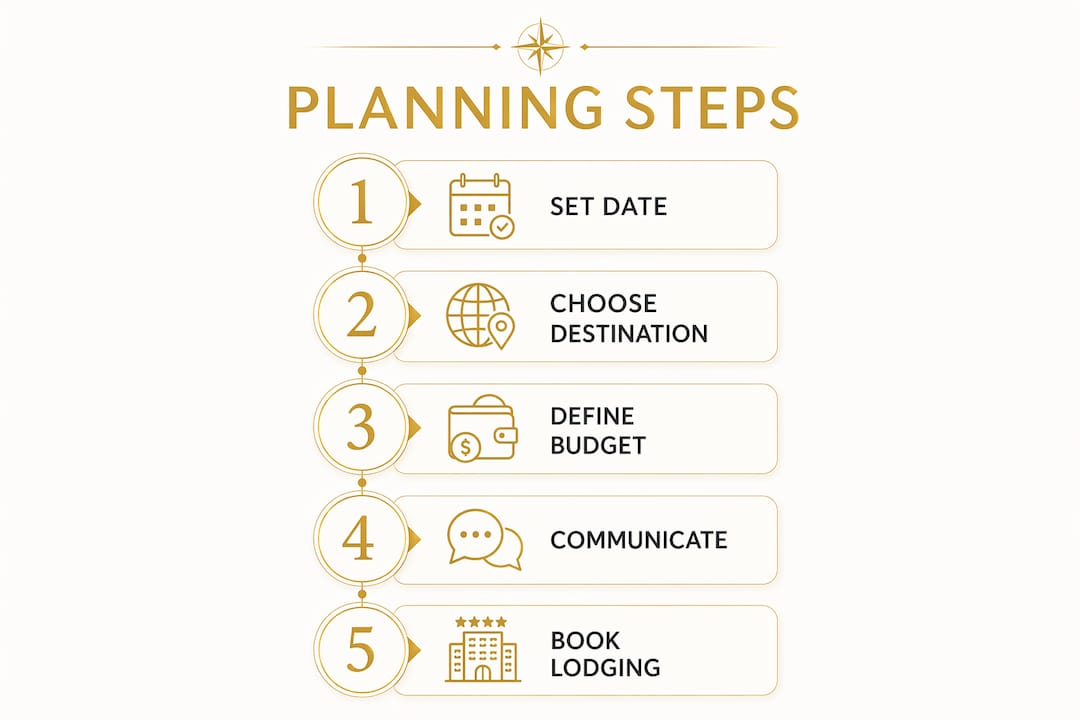
Treating the planning process as four sequential decisions — date, destination, budget, and communication — keeps large groups from spiraling into endless debate. Lock in the first two with a small core team before polling the wider family.
How to choose a destination that works across all ages
The best destinations for family travel are not necessarily the most glamorous. AARP’s guidance is clear: the right destination offers flexibility across a wide spectrum of mobility, interests, and energy levels. Prioritize these criteria:
- Airport access. Multiple direct flight options from different origin cities reduce the coordination burden for multi-household groups.
- Healthcare proximity. A destination with a reputable hospital or urgent-care clinic within 30 minutes matters when the group spans toddlers and 80-year-olds.
- Clustered activity variety. Short transfers between beach, pool, dining, and excursions mean older travelers are not exhausted before the day begins.
- ADA-friendly lodging and attractions. Accessible rooms, ramps, and mobility-friendly pathways are non-negotiable when grandparents or any traveler uses a mobility aid.
Destination archetypes that consistently work well for multigenerational groups include coastal rental clusters (Gulf Coast, Outer Banks), all-inclusive resorts with on-site programming, large-ship cruises with dedicated kids’ clubs and adult spaces, working ranches with guided activities, and national parks lodge complexes with accessible trails. Each offers the parallel programming that keeps different generations happy without requiring everyone to move as one unit.
Pro Tip: For Gulf Coast reunion rentals, look for properties with multiple bedrooms across adjacent or connected units — this preserves privacy for each household while keeping the group within walking distance of each other.
Which accommodation model fits your group?
Lodging is often the single most consequential booking decision. The right choice depends on your group’s privacy needs, budget structure, and appetite for shared meals.
| Accommodation type | Privacy | Cost splitability | Accessibility | On-site services | Meal logistics |
|---|---|---|---|---|---|
| Large vacation rental | High | Easy per-household | Varies by property | Minimal | Shared kitchen, full control |
| Multi-room hotel suites | Medium | Per-room billing | Usually strong | Full hotel services | Restaurant or in-room dining |
| All-inclusive resort | Low–medium | Per-person packages | Generally strong | Extensive | All meals included |
| Cruise staterooms | Medium | Per-cabin billing | Varies by ship | Extensive | Multiple dining venues |
A few booking essentials to keep in mind:
- Request contiguous or connecting rooms when booking hotel suites so families with young children can move between rooms without using hallways at night.
- Negotiate group-friendly cancellation terms upfront. Large deposits are standard for multi-unit rentals; ask for a phased deposit schedule tied to your RSVP deadline.
- For luxury hotel bookings, confirm that accessible rooms are available in the same wing or floor as the rest of the group.
- All-inclusives and cruises simplify meal logistics dramatically but reduce flexibility for dietary restrictions — verify menu options before committing.
Transportation and ground logistics to arrange early
Multi-origin groups are where logistics most often break down. Families flying in from four different cities, arriving at different times, and needing ground transport to the same property require coordination that goes well beyond a group text thread.
- Coordinate flights early. For groups of 12 or more, start flight coordination 9–12 months out. Large multi-household gatherings benefit from booking well in advance to align arrival windows and reduce transfer complexity.
- Book group transfers in advance. A 15-passenger van or a pair of SUVs booked through a local ground operator is almost always more reliable and cost-effective than coordinating individual rideshares.
- Confirm accessibility vehicles. If any traveler uses a wheelchair or mobility scooter, book an accessible vehicle explicitly — do not assume a standard van will accommodate it.
- Plan luggage logistics. Large groups accumulate strollers, car seats, and mobility aids quickly. Assign one person per household to confirm what they are bringing so the transfer vehicle is sized correctly.
- Designate a logistics lead. One person (or a small two-person team) should own all confirmations, day-of changes, and communication with drivers and property managers.
Pro Tip: Build a single shared travel itinerary document — a Google Doc or shared PDF — that lists every flight number, transfer time, driver contact, and property address. Share it with every household at least two weeks before departure. This one document eliminates 80% of the “what time does everyone arrive?” messages.

How to plan activities that work for every generation
The most effective approach is parallel programming: structured group moments anchored by breakout activities that let different generations pursue what suits them, then reconvene. AARP notes that intentional breakout groups let family members who rarely interact one-on-one build deeper connections while preserving energy for the whole group.
Mixed-age activities that reliably create shared memories:
- Cooking or baking classes with hands-on participation for all ages
- Boat tours, sunset cruises, or whale-watching excursions
- Board game or trivia nights at the rental property
- Guided cultural or historical tours with accessible pacing
- Beach or pool time with flexible participation
Breakout programming by generation:
- Kids: supervised kids’ club, scavenger hunts, junior ranger programs at national parks
- Teens and young adults: hiking, water sports, or adventure excursions
- Parents: spa treatments, adult-only dining, wine tastings
- Grandparents: morning excursions at a relaxed pace, cultural visits, or simply quiet time at the property
Sample one-day schedule:
- 7:00–9:00 AM: Flexible breakfast at the property (grandparents and early risers)
- 9:00–11:30 AM: Breakout activities (kids’ beach program, adult hike, grandparent cultural tour)
- 12:00–1:30 PM: Group lunch together
- 1:30–4:00 PM: Free time and downtime (naps, pool, reading)
- 4:30–6:00 PM: Shared group activity (cooking class or boat tour)
- 7:00 PM: Group dinner
Building in substantial free time is not a planning failure. It is the feature that keeps diverse energy levels from creating friction.
How to talk about money before the trip
Money conversations are the most avoided and most consequential part of planning a family reunion trip. Discussing finances early and transparently is the single most effective way to prevent resentment and keep the trip enjoyable for everyone.
Common cost models:
- Per-household split. Total shared costs divided equally by household. Simple, but can feel unfair when household sizes differ significantly.
- Per-capita split. Costs divided by the number of adults (or adults plus a fraction for children). More equitable for mixed-size households.
- Shared pool for group items. Each household contributes to a central fund that covers lodging, group transfers, and shared meals. Individuals pay their own extras.
- Grandparent-funded model. Grandparents cover lodging as a gift; other households cover their own flights and personal expenses. Common for milestone celebrations.
| Budget line item | Typically shared | Typically individual |
|---|---|---|
| Vacation rental or resort rooms | Yes (per household or per capita) | No |
| Group transfers (airport, excursions) | Yes | No |
| One big shared group activity | Yes | No |
| Group dinners at the property | Yes | No |
| Personal excursions and spa | No | Yes |
| Flights | No | Yes (unless grandparent-funded) |
Conversation starters to use early in planning:
- “What budget range works for your household for the full trip?”
- “Are there any expenses you’d like to contribute to as a gift to the group?”
- “Would you prefer a shared pool for group costs, or should we split line by line?”
Raise these questions at the first planning call, not after the deposit is paid. For group travel coordination, a shared spreadsheet with each household’s confirmed contribution prevents confusion as costs accumulate.
Health, mobility, and safety planning for mixed-age groups
A group that spans toddlers through grandparents carries a wide range of health and mobility needs. Addressing them before departure is far easier than managing them on the ground.
- Medications and prescriptions. Confirm every traveler has enough supply for the full trip plus a few extra days. Keep a copy of critical prescriptions in the group’s shared folder.
- Mobility aids. If any traveler uses a wheelchair, walker, or cane, confirm the rental property and all planned venues are accessible before booking.
- Local healthcare access. Identify the nearest urgent-care clinic and emergency room at the destination. Save the address and phone number in the shared itinerary document.
- Travel insurance. Multi-age groups benefit from policies that cover trip cancellation, medical evacuation, and pre-existing conditions. Confirm coverage for every traveler, including the oldest members.
- Room placement. Place grandparents and families with young children on the ground floor or near bathrooms to reduce nighttime navigation risks.
- Childproofing rental spaces. Walk through the rental on arrival and secure cabinet locks, pool gates, and stair barriers before children settle in.
Pro Tip: Ask each household to submit a one-page medical summary before the trip — medications, allergies, emergency contacts, and insurance information. Store it in a shared cloud folder (Google Drive works well) that at least two adults can access. For packing essentials, include a small first-aid kit per household and a central group kit with items like antacids, bandages, and a thermometer.
When to start planning and what to do first
The timeline for a multigenerational trip scales directly with group size. Starting too late is the most common planning mistake, and it tends to cascade: missed lodging availability leads to compromised destinations, which leads to lower buy-in from the group.
Recommended lead times:
- Small groups (up to 12): Begin 6–9 months before the trip.
- Mid-size groups (12–30): Begin 9–12 months before the trip. Groups of this size need early coordination to align dates, budgets, and lodging across multiple households.
- Large or international groups (30+): Begin at least 12 months before the trip. International logistics, visa requirements, and multi-unit lodging contracts require maximum lead time.
Pre-trip planning checklist:
- Lock in dates with a core decision-making team before polling the wider family
- Confirm destination and accommodation type; collect deposits
- Set an RSVP deadline (at least 8 weeks before the deposit deadline)
- Collect dietary restrictions and accessibility needs from every household
- Book group transfers and any high-demand activities
- Share the consolidated travel itinerary document with all households
- Confirm travel insurance for every traveler
- Distribute the medical summary request to each household
A firm RSVP deadline protects the group’s deposit. If a household misses it, their spot is released — communicate this policy clearly at the outset.
When should you hire a travel advisor?
For small, straightforward trips, a capable family organizer can manage the logistics. But certain scenarios tip the balance decisively toward professional help.
Scenarios that benefit most from an advisor:
- Groups of 15 or more traveling from multiple origin cities
- International destinations with visa, health, or entry requirements
- Any traveler with significant mobility or medical needs requiring special accommodations
- Trips that include a mix of lodging types (villa plus hotel block, for example)
- Families who want group-rate negotiations and supplier relationships they cannot access independently
Travel advisors coordinate group flights, secure multi-unit accommodations under single contracts, negotiate group perks, and provide day-of support that families simply cannot replicate on their own. Delegating vendor coordination early also reduces planning stress and produces smoother negotiations for group bookings.
Questions to ask a prospective advisor:
- How many multi-generational groups have you planned in the last two years?
- Do you have preferred supplier relationships for group lodging and transfers?
- How do you handle payment collection across multiple households?
- What does your day-of support look like if something goes wrong?
- What is your fee structure, and what does it include?
A strong advisor answers these questions with specifics, not generalities. If they cannot describe a concrete process for multi-unit bookings or group-rate negotiation, keep looking.
Key Takeaways
A multi-generational family trip succeeds when planning starts early, costs are discussed openly, and the itinerary balances one shared group moment with parallel programming that respects every generation’s energy level.
| Point | Details |
|---|---|
| Start planning early | Small groups need 6–9 months; mid-size groups need 9–12 months; large or international groups need at least 12 months. |
| Anchor the trip with one shared activity | A single group experience — a cooking class, boat tour, or guided excursion — becomes the defining memory for everyone. |
| Use parallel programming | Breakout activities by age group preserve energy and let generations bond in smaller, more natural settings. |
| Have the money conversation first | Agreeing on a cost model before booking prevents resentment and keeps every household genuinely invested. |
| Hire an advisor for complex trips | Groups of 15 or more, international logistics, or special mobility needs benefit significantly from professional coordination. |
| Grandglobetrotting for luxury planning | Grandglobetrotting offers bespoke multi-generational itinerary planning, group lodging coordination, and concierge support for families who want the trip done right. |
The case for slowing down and planning smarter
There is a tendency in multi-generational travel planning to prioritize the destination above everything else. Families spend weeks debating between Tuscany and the Caribbean while the real decisions — dates, budget, who is actually coming — go unresolved until it is too late to secure the best properties.
The families who pull off genuinely memorable multigenerational trips tend to share one habit: they make the hard decisions first and let the destination follow. They agree on a budget range before anyone books a flight. They set an RSVP deadline with real consequences. They designate one person to own logistics rather than managing by committee. And they build in more downtime than feels comfortable, because a group spanning 70-year-olds and 7-year-olds will always need more recovery time than the optimistic planner imagines.
Luxury travel adds another layer of opportunity here. When the lodging is genuinely comfortable, the transfers are handled, and the activities are pre-arranged, the group stops managing logistics and starts actually being together. That shift — from coordination mode to presence mode — is what separates a stressful reunion from one people talk about for years. A well-chosen villa with a private chef, a concierge who handles the day’s excursion bookings, and a travel advisor who fielded the group-rate negotiation months earlier: these are not indulgences. They are the infrastructure that makes the experience possible.
How Grandglobetrotting handles multi-generational trip planning
Planning a multi-generational trip across multiple households, origin cities, and age groups is genuinely complex. Grandglobetrotting specializes in exactly this: bespoke itinerary planning that handles every logistical layer so families can focus on being present rather than managing details.

The services most relevant to multigenerational groups include group flight coordination, multi-unit lodging contracts with preferred supplier rates, activity and excursion booking for parallel programming, private ground transportation, and on-the-ground concierge support. An initial consultation covers destination selection, group size logistics, budget modeling, and a preliminary itinerary framework. From there, Grandglobetrotting manages supplier relationships, payment logistics, and day-of coordination so no single family member carries the full planning burden.
For families who want the reunion done beautifully and without the stress, request a consultation to discuss your group’s dates, size, and vision.
Useful sources and further reading
The following resources informed this guide and offer deeper reading on specific planning topics:
- AARP: Tips to create a harmonious multigenerational trip — Practical destination and activity guidance from a trusted source for older travelers; particularly useful for breakout programming and destination flexibility.
- USTOA: 5 reasons why multi-generational travel is good for families — Industry perspective on the value of professional travel advisors for complex group logistics.
- Vacation Planner Blog: How to plan a family reunion trip — Step-by-step logistics framework covering timelines, group sizes, and sequential planning decisions.
- Parents Canada: Considering multigenerational travel? — Honest guidance on money conversations and managing group dynamics.
- Motherly: The psychological benefits of family vacations — Research-backed overview of developmental and emotional benefits for children.
- Journal of Tourism and Cultural Change (DOI) — Academic research linking shared travel experiences to measurable wellbeing improvements across family members.
- InteleTravel Blog: How to plan a memorable family reunion — Practical advisor-perspective guide on delegation, vendor coordination, and reducing planning stress.
Recommended
At Grand Globetrotting, we don't just plan vacations; we craft extraordinary adventures that leave you with cherished memories. Let us bring your dream vacation to life, perfectly tailored to your style, and immerse yourself in a world of luxury, exploration, and unforgettable moments. Your journey begins with us.
Itinerary planning services require a separate charge outside of cost to book travel accommodations. Depending upon the complexity of the itinerary and the level of effort required to acquire unique experiences, cost may vary. Speak with our team to learn more.
Book your consultation