

Luxury travel isn’t about flaunting wealth or booking the most expensive hotel suite. That outdated notion misses the heart of what modern luxury truly means. Today’s discerning travelers seek personalized experiences, privacy, and meaningful moments that money alone can’t buy. Whether you’re planning a honeymoon in the Maldives, a cultural immersion in Kyoto, or a wellness retreat in the Swiss Alps, understanding what defines luxury travel helps you craft journeys that resonate with your values and desires. This guide explores the evolving definition of luxury travel, the different traveler types, current trends reshaping the industry, and how personalized planning creates unforgettable experiences tailored specifically to you.
Table of Contents
- Key takeaways
- Defining luxury travel: more than opulence
- Three key types of luxury travelers
- Trends shaping luxury travel today
- How personalized luxury travel works: the role of advisors and experiences
- Discover personalized luxury travel planning
- Frequently asked questions
Key Takeaways
| Point | Details |
|---|---|
| Modern luxury defined | Today luxury centers on personalization, privacy, and meaningful moments rather than opulence alone. |
| Three traveler types | Three traveler types are Absolute, Selective, and Ethical Eco Luxury, each with distinct priorities. |
| Experience driven growth | The market is expanding as luxury shifts toward experiences, sustainability, and personalized journeys. |
| Personalized planning matters | Tailored itineraries that align with individual values create more meaningful and memorable trips. |
| Exclusivity and privacy | Access to unique experiences and unhurried schedules deliver genuine connection with destinations. |
Defining luxury travel: more than opulence
For decades, luxury travel conjured images of champagne on private jets, butler service, and five-star hotels dripping with gold fixtures. While these elements still exist, they represent only a sliver of what luxury travel means today. Modern luxury centers on creating priceless moments through personalization, privacy, and unhurried pacing rather than simply accumulating expensive experiences.
The shift reflects a deeper cultural change. Travelers now prioritize meaningful engagement over status display. A private cooking class with a Michelin-starred chef in their home kitchen holds more value than dining at an exclusive restaurant surrounded by strangers. An early morning safari with just your guide beats a crowded game drive, even if both cost the same.
Luxury travel is defined by personalization, exclusivity, privacy, unhurried pacing, high budgets, and priceless moments rather than just opulence.
This evolution transforms how you should approach planning. Instead of asking what’s most expensive, ask what’s most meaningful to you. Key attributes of modern luxury include:
- Exclusivity through access to experiences unavailable to general travelers
- Customization matching your exact preferences and pace
- Privacy allowing genuine connection with destinations
- Unhurried schedules respecting your rhythm
- Expert curation eliminating research burden
Understanding these pillars helps you personalize luxury travel effectively. You might spend less on accommodations but invest heavily in a private guide who unlocks local culture. Or choose a boutique property over a famous chain because it offers the intimacy you crave. Luxury isn’t a fixed price point but a personalized approach to travel that delivers fulfillment aligned with your values.
Three key types of luxury travelers
Not all luxury travelers want the same things. Recognizing which category resonates with you clarifies what elements deserve your budget and attention. The industry identifies three distinct traveler types, each with unique motivations and priorities that shape their ideal journeys.
-
Absolute travelers seek traditional ultra-luxury experiences with no compromises. They prefer iconic properties, first-class flights, and white-glove service throughout their journey. Brand recognition matters. These travelers want the Peninsula in Hong Kong, not a hidden boutique hotel. They value consistency, refinement, and the assurance that every detail meets exacting standards. Their itineraries emphasize comfort, prestige, and seamless logistics.
-
Selective travelers maintain an affluent mindset but splurge strategically on specific elements while economizing elsewhere. They might fly economy to save for a once-in-a-lifetime hot air balloon safari or stay in modest accommodations to afford extended travel time. Quality matters more than labels. These travelers research extensively, seeking authentic experiences that deliver genuine value. They’re comfortable mixing luxury moments with simpler choices that align with their priorities.
-
Ethical and eco-luxury travelers prioritize sustainability, community impact, and environmental responsibility alongside comfort and quality. They seek properties with strong conservation programs, support local economies, and minimize their carbon footprint. Luxury for this group means traveling responsibly without sacrificing comfort. They’ll pay premium prices for eco-lodges that protect wildlife habitats or tour operators employing local guides at fair wages.
| Traveler type | Primary motivation | Typical priorities |
|---|---|---|
| Absolute | Prestige and refinement | Brand-name properties, first-class service, iconic experiences |
| Selective | Strategic value | High-impact experiences, authentic moments, flexible budgets |
| Ethical/Eco-Luxury | Sustainable impact | Conservation, community support, responsible travel |
Recognizing your type transforms personalized travel planning. An Absolute traveler needs different supplier connections than an Eco-Luxury traveler. A Selective traveler benefits from advisors who identify where to splurge versus save. Your type influences accommodation choices, activity selection, transportation preferences, and even dining reservations. Most travelers blend elements from multiple categories, creating unique luxury definitions that evolve over time.
Trends shaping luxury travel today
The luxury travel landscape is experiencing dramatic growth and transformation. The global market reached valuations between $1.3 trillion and $2.5 trillion, with average US luxury trips costing $10,000 to $25,000 for under seven days. This expansion isn’t just about spending more but reflects fundamental shifts in who travels luxuriously and what they seek.

Younger generations, particularly Millennials and Gen Z, are reshaping luxury travel priorities. They emphasize experiences over status symbols, seeking meaningful engagement rather than flashy displays of wealth. A private street food tour with a local chef holds more appeal than a formal tasting menu at an exclusive restaurant. These travelers share their journeys on social media not to boast but to inspire and connect.
Several key trends define the current landscape:
- Experience-driven travel replacing material luxury as the primary goal
- Sustainability integration making eco-consciousness a luxury standard, not an add-on
- Wellness tourism growing as travelers prioritize mental and physical health
- Regional diversification opening fresh destinations beyond traditional European and Caribbean hotspots
- Technology integration enabling seamless personalization while maintaining human touch
The wellness tourism sector alone reached $893.9 billion in 2024, with projected 9.1% annual growth. This reflects luxury’s premiumization trend where travelers invest in transformative experiences that enhance wellbeing. Yoga retreats in Bali, meditation programs in Thailand, and spa-focused itineraries in Iceland represent this shift.
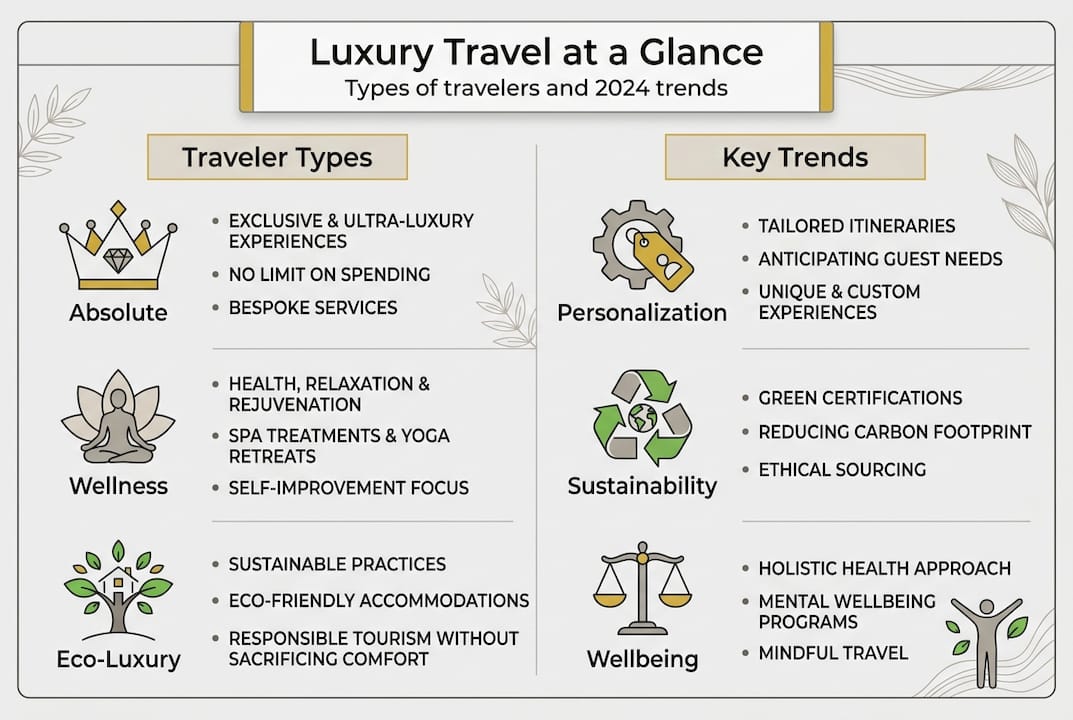
Sustainability has moved from niche concern to mainstream expectation. Luxury travelers now demand transparency about environmental impact, carbon offsetting options, and community benefits. Properties promoting conservation efforts, renewable energy, and local employment attract premium bookings. This shift toward experience-driven, sustainable luxury attracts broader demographics who previously viewed luxury travel as wasteful or ostentatious.
Pro Tip: Align your wellness and sustainability interests with luxury travel for deeper satisfaction. Seek properties and experiences that deliver both comfort and positive impact, creating journeys that feel good emotionally and ethically.
Exploring these luxury travel trends helps you anticipate what’s available and how to position your preferences. Understanding Gen Z’s influence on the market reveals emerging opportunities and evolving service standards that benefit all travelers.
How personalized luxury travel works: the role of advisors and experiences
Creating truly personalized luxury experiences requires specialized knowledge, supplier relationships, and deep understanding of how different elements combine to deliver your ideal journey. This is where professional travel advisors and bespoke curation become invaluable, transforming generic itineraries into tailored experiences that reflect your unique preferences.
Luxury travel advisors function as architects of experience. They interview you extensively to understand your traveler type, budget parameters, pace preferences, and what luxury means personally to you. An advisor working with an Absolute traveler focuses on prestigious properties and seamless logistics. For Selective travelers, they identify strategic splurges and value opportunities. Eco-Luxury clients receive vetted sustainable options that don’t compromise comfort.
The mechanics of bespoke curation involve matching your profile to appropriate suppliers and experiences. Surprisingly, non-luxury suppliers can deliver luxurious experiences through careful pacing and privacy management. A modest family-run restaurant becomes luxury when you enjoy a private cooking demonstration with the owner. A standard hotel transforms when you’re upgraded to a suite with personalized amenities and flexible check-out.
Key elements advisors orchestrate include:
- Exclusive access to experiences unavailable through public booking channels
- Timing optimization avoiding crowds and maximizing ideal conditions
- Seamless logistics eliminating stress and decision fatigue
- Insider knowledge about seasonal variations, local customs, and hidden gems
- Problem resolution handling issues immediately with supplier relationships
The contrast between traditional opulence and modern experiential luxury matters significantly in planning. Traditional luxury emphasizes visible displays of wealth: designer brands, famous properties, and conspicuous consumption. Modern luxury, often called quiet luxury, focuses on understated excellence, authentic experiences, and personal meaning. Your advisor should understand which approach resonates with you.
| Traditional luxury | Modern experiential luxury |
|---|---|
| Brand-name properties and services | Unique, often lesser-known experiences |
| Visible status markers | Understated quality and authenticity |
| Standardized excellence | Personalized, flexible experiences |
| Formal, structured itineraries | Unhurried, spontaneous opportunities |
Bespoke planning maximizes exclusivity and meaningful engagement while optimizing your budget. An experienced advisor knows when to splurge and where to economize without sacrificing your luxury experience. They access preferential rates, room upgrades, and complimentary amenities through supplier partnerships, often offsetting their fees.
Pro Tip: Engage a luxury travel advisor early in your planning process to access unique suppliers and avoid overspending on elements that don’t align with your priorities. Their expertise saves time, money, and potential disappointment.
Understanding the benefits of travel advisors helps you decide when professional curation adds value versus when self-planning suffices. For complex international itineraries, milestone celebrations, or unfamiliar destinations, advisors provide irreplaceable expertise and peace of mind.
Discover personalized luxury travel planning
Now that you understand what defines luxury travel and how personalization creates meaningful experiences, it’s time to apply these insights to your own journeys. Whether you’re planning your first luxury trip or refining your approach, professional resources and expert guidance help you craft itineraries that truly resonate.
Explore comprehensive guides on personalized travel planning for luxury journeys that walk you through identifying your traveler type, setting priorities, and selecting experiences aligned with your values. Learn to create step-by-step luxury itineraries that balance structure with flexibility, ensuring every moment delivers value. Discover practical strategies to personalize your luxury travel through expert curation, exclusive access, and thoughtful customization that transforms ordinary trips into extraordinary memories.
Frequently asked questions
What is the difference between luxury and premium travel?
Luxury travel emphasizes exclusivity, personalization, and unique experiences unavailable to general travelers, while premium travel offers higher-quality services without extensive customization. Luxury travelers prioritize privacy, unhurried pacing, and meaningful moments that transcend status symbols. Sustainable and ethical practices increasingly define luxury experiences, whereas premium travel focuses primarily on comfort and quality without necessarily emphasizing environmental or social impact.
How do younger generations influence luxury travel?
Younger travelers favor experiential, meaningful trips over flashy displays of wealth, seeking authentic engagement with destinations and cultures. Their tech-savviness drives demand for personalized, seamless service delivered through digital platforms while maintaining human connection. They contribute significantly to market expansion and diversification, pushing the industry toward sustainability, wellness integration, and Gen Z’s unique influence on luxury travel standards and expectations.
What role do travel advisors play in luxury travel?
Advisors provide access to exclusive suppliers, insider knowledge, and experiences unavailable through public booking channels. They customize trips by deeply understanding your personal preferences, traveler type, and what luxury means to you specifically. Professional advisors help avoid common pitfalls, optimize budgets for maximum value, and handle problems immediately through established supplier relationships, making the benefits of travel advisors particularly valuable for complex or high-stakes journeys.
Can luxury travel be sustainable and ethical?
Absolutely. The Ethical and Eco-Luxury traveler segment demonstrates that sustainability and luxury complement rather than contradict each other. Modern luxury increasingly demands environmental responsibility, community impact, and conservation efforts alongside comfort and quality. Properties with strong sustainability programs, carbon offset options, and fair labor practices attract premium bookings from travelers who view responsible travel as essential to genuine luxury experiences.
How much does luxury travel typically cost?
Average luxury trips in the US range from $10,000 to $25,000 for under seven days, though costs vary dramatically based on destination, season, and personalization level. Luxury isn’t defined by a fixed price point but by the quality, exclusivity, and personalization of experiences. Selective travelers might spend less overall while strategically splurging on high-impact elements, while Absolute travelers maintain premium standards throughout their journey regardless of cost.
Recommended
At Grand Globetrotting, we don't just plan vacations; we craft extraordinary adventures that leave you with cherished memories. Let us bring your dream vacation to life, perfectly tailored to your style, and immerse yourself in a world of luxury, exploration, and unforgettable moments. Your journey begins with us.
Itinerary planning services require a separate charge outside of cost to book travel accommodations. Depending upon the complexity of the itinerary and the level of effort required to acquire unique experiences, cost may vary. Speak with our team to learn more.
Book your consultation