
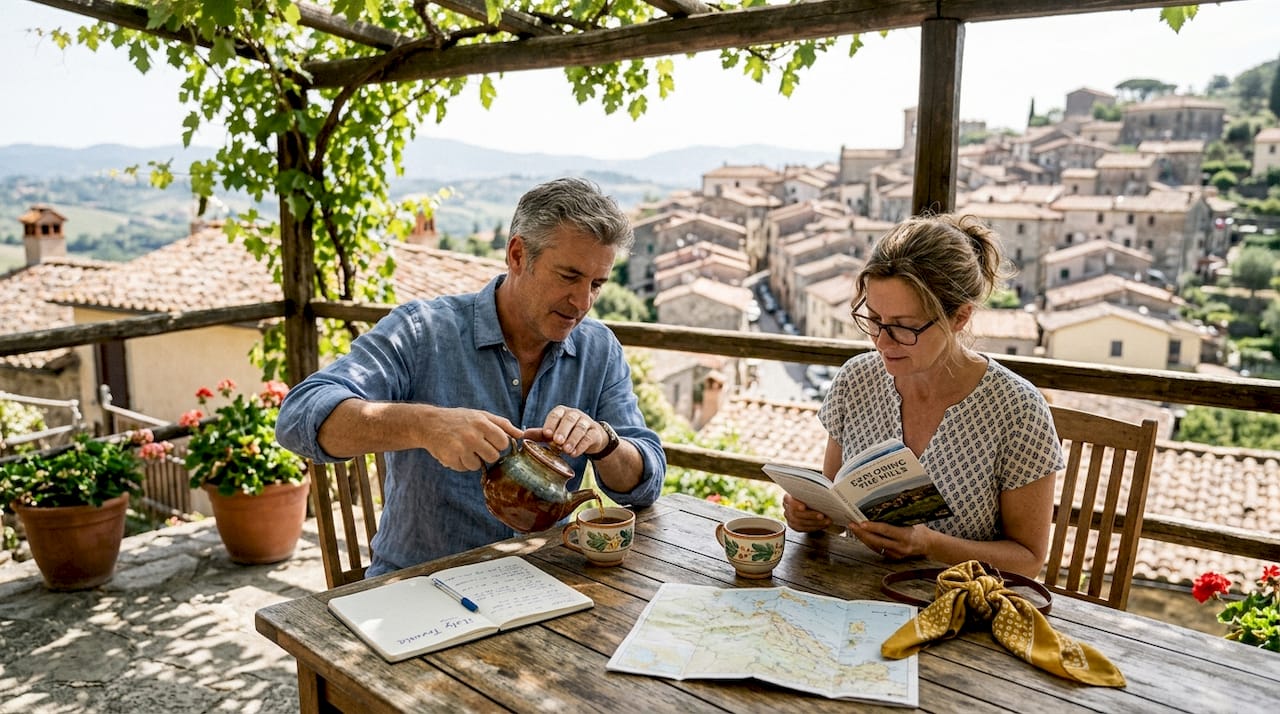
Most people think luxury travel means racing through bucket-list destinations, staying in the fanciest hotels, and snapping photos at every landmark. But there’s a growing movement redefining what true luxury means. Slow luxury travel flips the script entirely, prioritizing depth over speed, authentic connections over Instagram moments, and sustainable practices over excessive consumption. This approach transforms travel from a checklist into a transformative journey. If you’re an affluent traveler seeking experiences that resonate long after you return home, understanding slow luxury travel will change how you explore the world forever.
Table of Contents
- Key takeaways
- Defining slow luxury travel: what sets it apart
- The pillars of slow luxury travel: sustainability, culture, and connection
- How slow luxury travel compares with traditional luxury and slow travel
- Planning your slow luxury travel experience: tips and considerations
- Discover tailored slow luxury travel with Grand Globetrotting
- FAQ
Key Takeaways
| Point | Details |
|---|---|
| Time as luxury | Slow luxury reframes luxury as time and purposeful pacing rather than speed or extravagance. |
| Authentic connections | It prioritizes extended stays, relationships with local communities, and engagement with artisans and guides. |
| Sustainable travel | The approach integrates eco conscious accommodations and low impact transportation to minimize environmental footprint. |
| Cultural immersion | Extended stays and interactions with local communities deepen understanding beyond tourist photographs. |
| Bespoke itineraries | Travel plans are tailored to values and allow learning, creating, and connecting rather than ticking boxes. |
Defining slow luxury travel: what sets it apart
Slow luxury travel merges the comfort and refinement of high-end travel with the intentionality and sustainability of slow travel. At its core, this approach asks you to reconsider what luxury actually means. Instead of viewing luxury as speed, exclusivity, or extravagance, slow luxury reframes it as time, the ultimate modern commodity.
The foundation rests on three interconnected principles. First, you deliberately slow your pace to fully absorb each destination’s essence. Second, you prioritize experiences that create lasting memories over those designed for social media. Third, you make choices that respect local cultures and minimize environmental impact. Trend analysis in luxury travel shows this approach resonates deeply with travelers seeking purpose alongside pleasure.
Consider the difference between traditional and slow luxury approaches. A conventional luxury trip might involve visiting five European cities in ten days, staying at renowned chain hotels, and dining at Michelin-starred restaurants. A slow luxury version would spend those ten days in one region, perhaps Tuscany, staying at a beautifully restored farmhouse, learning traditional pasta-making from a local nonna, and exploring hidden villages tourists rarely see.
Key characteristics that define slow luxury travel include:
- Extended stays in single locations allowing deeper cultural absorption
- Engagement with local artisans, guides, and community members as equals
- Eco-conscious accommodations that blend luxury with environmental stewardship
- Transportation choices that minimize carbon footprint while maximizing comfort
- Activities focused on learning, creating, and connecting rather than consuming
The contrast with checklist tourism becomes obvious. Where traditional luxury might photograph the Colosseum and move on, slow luxury would spend an afternoon with an archaeologist learning restoration techniques, understanding the monument’s cultural significance beyond its Instagram appeal. This shift from transactional to transformational travel defines the movement.
“True luxury isn’t about having everything immediately. It’s about having the time and space to appreciate what truly matters.”
This philosophy extends to every travel decision. Accommodations aren’t chosen solely for thread count or amenities, but for their integration with local communities and environmental practices. Dining becomes an exploration of regional food systems rather than a parade of famous restaurants. Even downtime gains purpose, whether that’s journaling in a garden, conversing with fellow travelers, or simply observing daily life unfold in a village square.
The pillars of slow luxury travel: sustainability, culture, and connection
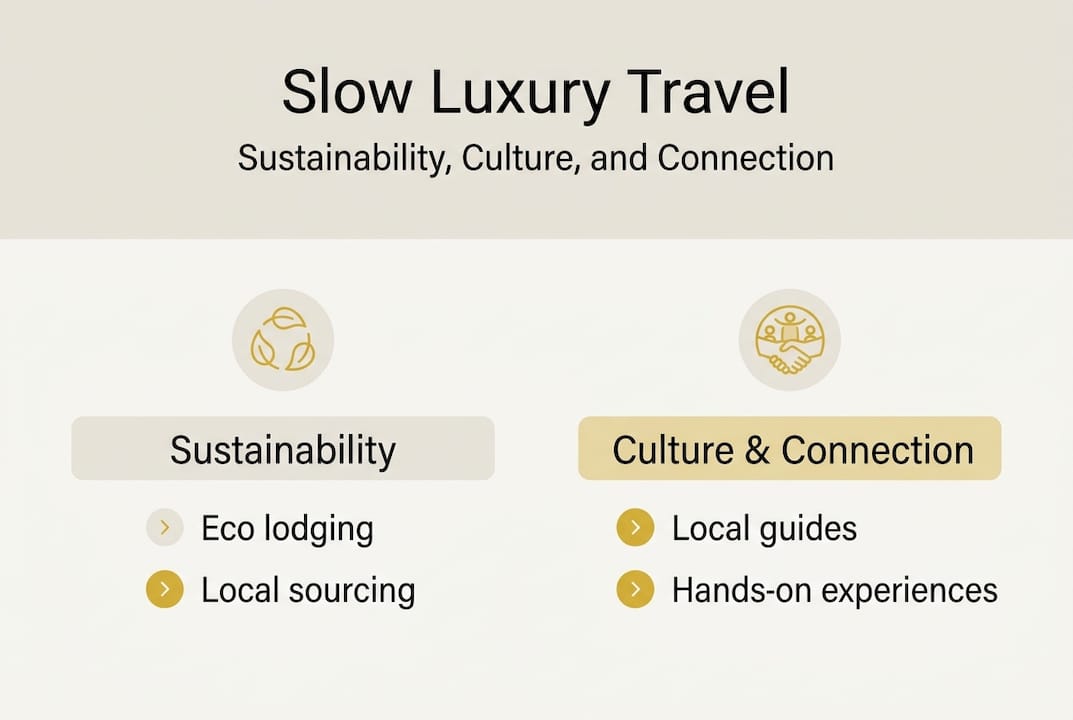
Three foundational pillars support every slow luxury travel experience, each reinforcing the others to create journeys that satisfy both your desire for comfort and your values around responsible travel.
Sustainability forms the environmental pillar. This goes far beyond choosing hotels with recycling programs. Sustainable practices minimize environmental footprint while enhancing your experience through authentic engagement with place. You might stay at a solar-powered lodge that sources ingredients from its own farm, take electric vehicle transfers instead of helicopters, or choose rail travel over flights when practical. These decisions don’t diminish luxury, they enhance it by aligning your travel with your values.
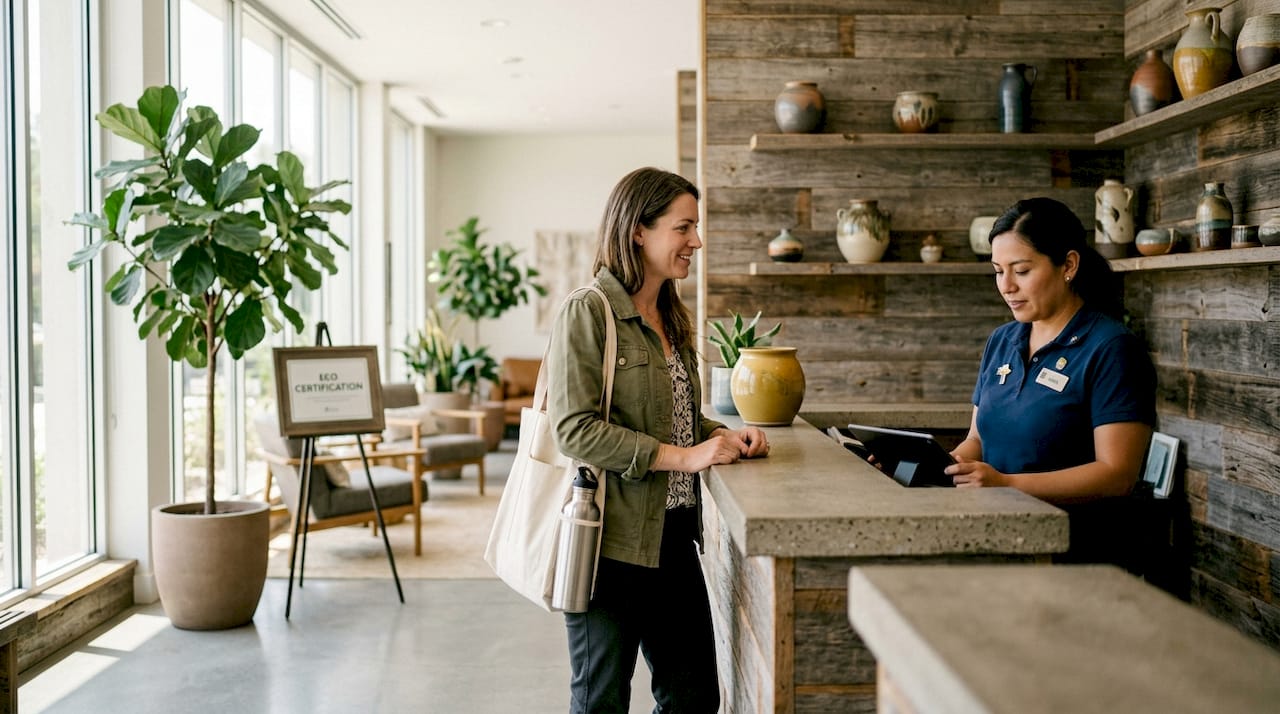
The cultural pillar emphasizes deep, respectful engagement with local traditions and communities. Rather than observing culture through bus windows or staged performances, you participate directly. This might mean spending a day with a weaver learning traditional techniques, joining a family for a home-cooked meal, or attending a local festival as a welcomed guest rather than a spectator. Personalizing luxury travel around cultural immersion creates experiences that transform your understanding of a place.
Connection, the third pillar, focuses on building genuine relationships. This applies to interactions with local people, fellow travelers, the natural environment, and even yourself. Slow luxury travel creates space for conversations that extend beyond pleasantries, for friendships that continue long after your trip ends, and for self-reflection that busy itineraries rarely allow.
These pillars manifest in practical ways:
- Choosing boutique properties owned by local families over international chains
- Hiring private guides who share personal stories alongside historical facts
- Participating in conservation projects during your stay
- Shopping directly from artisans rather than souvenir shops
- Eating at restaurants that showcase regional ingredients and traditional recipes
Pro Tip: When booking experiences, prioritize those led by local guides and artisans. Their insider perspectives and personal connections transform standard activities into unforgettable encounters. A cooking class taught by a grandmother in her home kitchen offers infinitely more value than a generic culinary tour.
The intersection of these pillars creates something greater than their sum. A stay at an eco-lodge run by an indigenous community simultaneously addresses sustainability through low-impact design, culture through authentic traditions, and connection through meaningful interactions with hosts. This holistic approach defines slow luxury travel’s unique appeal.
Your role shifts from consumer to participant. Instead of purchasing experiences, you co-create them with local communities. This partnership approach ensures your travel dollars support local economies directly while providing you with insights and access impossible to achieve through conventional tourism channels.
How slow luxury travel compares with traditional luxury and slow travel
Understanding slow luxury travel’s unique position requires examining how it differs from both traditional luxury travel and budget-focused slow travel. Each approach has merits, but slow luxury occupies a distinctive middle ground that appeals to travelers seeking both comfort and meaning.
Traditional luxury travel prioritizes status, speed, and extravagance. It’s characterized by five-star hotels, first-class flights, exclusive access to famous sites, and packed itineraries designed to maximize experiences per day. The focus remains on what you can afford and accomplish rather than what you can learn or feel. While comfortable and impressive, this approach often creates distance between you and authentic local experiences.
Slow travel, popularized by budget-conscious nomads and gap-year adventurers, emphasizes extended stays and cultural immersion but often sacrifices comfort. Hostels, local buses, and street food define this approach. While it excels at authentic experiences and sustainability, it may lack the privacy, comfort, and personalized service affluent travelers expect.
Slow luxury travel uniquely combines comfort with meaningfulness, creating a third path that doesn’t compromise on either dimension. You enjoy beautiful accommodations and excellent service while maintaining the pace and cultural engagement of slow travel.
| Aspect | Traditional luxury | Slow travel | Slow luxury travel |
|---|---|---|---|
| Pace | Fast, packed itineraries | Slow, extended stays | Slow, intentional rhythm |
| Comfort level | Maximum luxury, five-star | Budget-friendly, basic | High-end, thoughtfully curated |
| Sustainability focus | Low priority | High priority | Integrated priority |
| Cultural immersion | Surface-level, curated | Deep, organic | Deep, facilitated |
| Cost | Very high | Low to moderate | High, value-focused |
| Service style | Formal, transactional | Self-service | Personalized, relational |
The distinctions become clearer through examples. Imagine planning a trip to Japan. Traditional luxury might include stays at Park Hyatt Tokyo, private car transfers, and VIP access to popular temples during off-hours. Slow travel might involve hostel stays, public transportation, and long-term apartment rentals in residential neighborhoods. Slow luxury would combine a boutique ryokan stay with a local family, private tea ceremony lessons with a master, and rail passes for unhurried exploration of rural regions.
Key differentiators of slow luxury include:
- Accommodations selected for character and local ownership, not just amenities
- Transportation chosen for experience quality and sustainability, not just speed
- Activities designed for learning and connection, not just entertainment
- Itineraries with built-in flexibility and rest, not rigid schedules
- Service that facilitates authentic experiences rather than insulating you from them
The cost structure also differs significantly. Traditional luxury often involves paying premium prices for brand names and status symbols. Slow luxury invests in experiences, expertise, and sustainability. You might spend similar amounts overall, but the allocation shifts toward meaningful engagement and away from unnecessary extravagance.
This approach particularly appeals to travelers who’ve already experienced traditional luxury and found it somewhat hollow. Once you’ve stayed at enough five-star hotels and eaten at enough celebrity chef restaurants, the sameness becomes apparent. Slow luxury offers something genuinely different, creating step-by-step itineraries that prioritize novelty through depth rather than breadth.
Planning your slow luxury travel experience: tips and considerations
Translating slow luxury travel philosophy into actual trips requires thoughtful planning that balances spontaneity with intentionality. These practical steps help you design journeys that embody slow luxury principles while matching your personal interests and values.
-
Choose destinations known for authentic culture and environmental stewardship. Research places where tourism supports rather than exploits local communities. Look for regions with strong craft traditions, protected natural areas, and community-based tourism initiatives. Consider lesser-known alternatives to overcrowded hotspots.
-
Book boutique or eco-certified luxury hotels that align with slow luxury values. Seek properties with genuine local ownership, sustainable operations, and integration with surrounding communities. Read beyond marketing materials to understand their actual practices and community relationships.
-
Allow ample time in each location to develop meaningful connections. Plan for at least four to five nights in each place, preferably longer. This duration lets you move beyond tourist activities into daily rhythms, discover hidden spots, and build relationships with locals and fellow travelers.
-
Engage local guides and cultural experiences that offer insider perspectives. Prioritize small group or private experiences led by community members. Look for activities that teach skills, share traditions, or support local enterprises. Avoid staged performances designed solely for tourist consumption.
-
Opt for sustainable transport options that balance comfort with environmental responsibility. Choose rail over air when practical, electric vehicles over gas, and slower routes that let you observe landscapes. Build travel days into your itinerary as experiences rather than necessary evils.
Pro Tip: Collaborate with expert planners who specialize in slow luxury travel to create truly personalized itineraries. Their destination knowledge, vendor relationships, and planning expertise save you research time while ensuring your trip reflects your specific values and interests.
Personalized itineraries enhance slow luxury by aligning every element with your preferences. A skilled planner asks about your interests, values, travel style, and goals before suggesting destinations or experiences. They connect you with vetted local guides, arrange unique access, and build flexibility into schedules.
Additional planning considerations include timing your visit to avoid peak crowds, learning basic local language phrases, researching cultural norms and etiquette, and packing thoughtfully for varied experiences. Slow luxury travel rewards preparation while remaining open to serendipity.
Budgeting for slow luxury differs from traditional luxury. You’ll likely spend less on brand-name hotels and more on unique experiences, expert guides, and quality local products. Allocate funds for unexpected opportunities, whether that’s an impromptu cooking lesson or a handcrafted item from an artisan you meet.
Document your journey in ways that deepen rather than distract from experiences. Instead of constant photography, take time to write detailed journal entries, collect meaningful souvenirs like recipes or techniques learned, and have deep conversations that you’ll remember long after photos fade.
Consider extending trips beyond typical vacation lengths when possible. Two weeks allows much deeper immersion than one, and a month transforms travel from tourism into temporary residency. The longer you stay, the more authentic your experiences become.
Finally, approach planning as an iterative process. Your first slow luxury trip teaches you what works for your style. Subsequent journeys can refine the approach, going deeper into specific interests or exploring new dimensions of meaningful travel. Browse inspiration resources to discover possibilities you might not have considered.
Discover tailored slow luxury travel with Grand Globetrotting
Transforming slow luxury travel philosophy into reality requires expertise, connections, and time you might not have. That’s where specialized planning services become invaluable.
Grand Globetrotting specializes in creating bespoke itineraries that embody slow luxury principles while reflecting your unique preferences and values. Rather than offering packaged tours, we design completely personalized journeys built around your interests, pace, and travel philosophy. Our approach combines destination expertise with carefully cultivated relationships with local guides, artisans, and property owners who share our commitment to authentic, sustainable travel.
Our curated selection of luxury hotels emphasizes properties that balance exceptional comfort with environmental responsibility and cultural authenticity. We personally vet each accommodation to ensure it meets slow luxury standards, from sustainable operations to genuine community integration. Whether you prefer intimate boutique properties or exclusive eco-lodges, we match you with places that enhance rather than insulate you from your destination.
Explore our inspiration gallery to discover slow luxury possibilities across diverse destinations. From extended cultural immersions in Southeast Asia to sustainable safari experiences in Africa, we showcase journeys that prioritize meaning alongside luxury. Each featured experience demonstrates how slowing down and choosing carefully creates travel that transforms both you and the places you visit.
FAQ
What is slow luxury travel?
Slow luxury travel combines high-end accommodations and services with the intentional pace and cultural immersion of slow travel. It prioritizes meaningful experiences, authentic connections with local communities, and sustainable practices over rushed itineraries and superficial tourist activities. This approach views time as the ultimate luxury, allowing travelers to deeply engage with destinations rather than simply checking them off lists.
How is slow luxury travel more sustainable than traditional luxury travel?
Slow luxury emphasizes eco-friendly lodging, locally sourced experiences, and reduced transportation frequency, minimizing environmental impact through mindful choices. By staying longer in fewer places, you reduce carbon emissions from frequent flights while supporting local economies more substantially. Properties and experiences are selected based on genuine sustainability practices, not just green marketing, ensuring your travel dollars support environmental stewardship.
What types of experiences define slow luxury travel?
Defining experiences include extended stays that allow rhythm and routine to develop, hands-on cultural activities like traditional craft workshops or cooking classes with local families, exclusive visits with artisans in their studios, and personal interactions with knowledgeable local guides. These experiences prioritize learning, creating, and connecting over passive observation. You might spend a week learning traditional weaving techniques, foraging with a chef, or documenting oral histories with community elders.
Can slow luxury travel be customized to personal interests?
Absolutely. Personalized planning is fundamental to slow luxury travel, tailoring every aspect to your specific interests, values, and travel style. Whether you’re passionate about culinary traditions, textile arts, wildlife conservation, or architectural history, itineraries can be designed around your focus areas. Expert planners work with you to identify what makes travel meaningful for you, then create journeys that deliver those specific experiences at a pace that allows genuine engagement and reflection.
Recommended
At Grand Globetrotting, we don't just plan vacations; we craft extraordinary adventures that leave you with cherished memories. Let us bring your dream vacation to life, perfectly tailored to your style, and immerse yourself in a world of luxury, exploration, and unforgettable moments. Your journey begins with us.
Itinerary planning services require a separate charge outside of cost to book travel accommodations. Depending upon the complexity of the itinerary and the level of effort required to acquire unique experiences, cost may vary. Speak with our team to learn more.
Book your consultation