
TL;DR:
- Inclusive travel extends beyond physical infrastructure to encompass cultural, sensory, and social accessibility throughout the entire trip experience. It benefits diverse traveler groups, boosts business revenue by up to 28%, and fosters community resilience, loyalty, and health equity. Travelers can advocate for genuine inclusion by choosing intentional providers, requesting detailed information, and sharing honest feedback to support meaningful industry change.
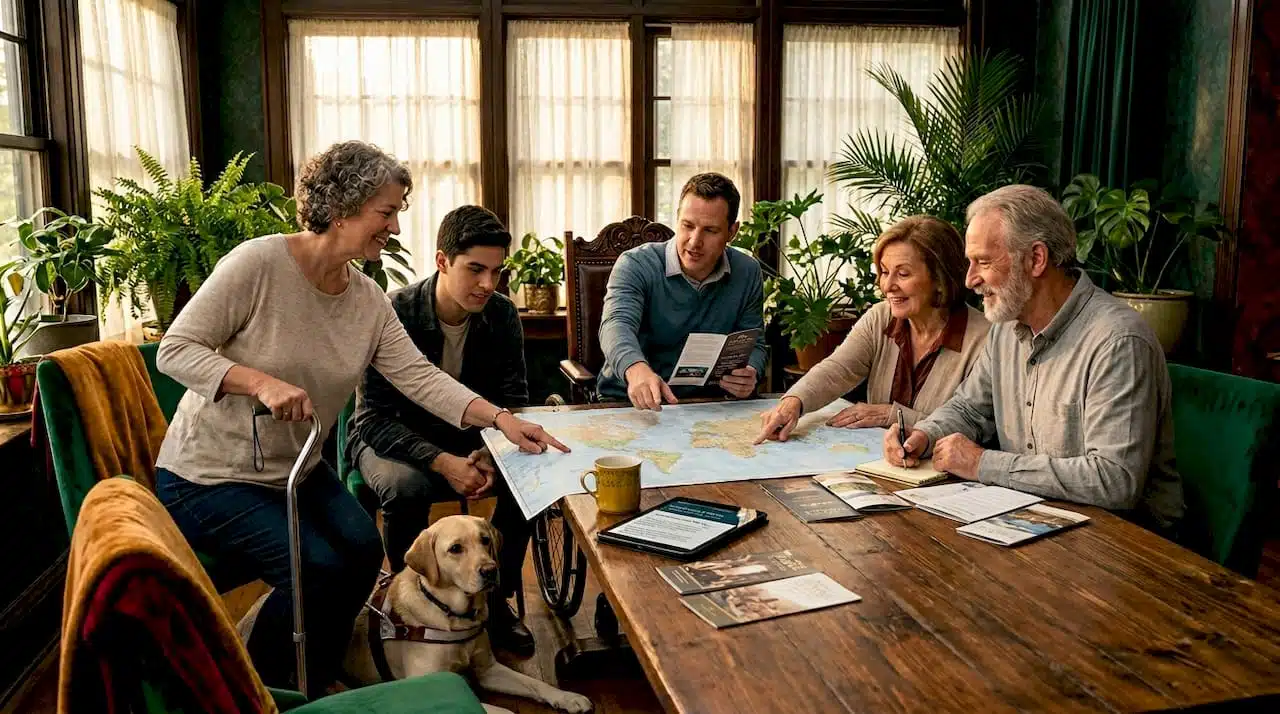
Inclusive travel is not simply about installing a ramp at the hotel entrance. It shapes who gets to experience the world and who gets left behind. Understanding why inclusive travel matters means recognizing its reach across economic growth, social equity, traveler loyalty, and community health. When destinations and travel providers get inclusion right, everyone benefits. Trips become more satisfying. Businesses grow stronger. Communities thrive. This guide breaks down what inclusive travel actually means, why it carries measurable weight, and how you can put these insights to work on your next trip.
Table of Contents
- Key takeaways
- Why inclusive travel matters: a broader definition
- The economic and social case for inclusion
- What real inclusion looks and feels like
- Frameworks and strategies for inclusive destinations
- How travelers can champion inclusive travel
- My perspective on what travelers still get wrong
- Plan your next trip with inclusion at the center
- FAQ
Key takeaways
| Point | Details |
|---|---|
| Inclusion goes beyond ramps | True inclusive travel addresses physical, sensory, cultural, and social barriers throughout the entire trip. |
| Economic case is clear | Disability-inclusive companies see up to 28% higher revenue, proving inclusion is good business strategy. |
| LGBTQ+ travelers reward welcoming destinations | Research shows LGBTQ+ travelers show higher trust and spending where they feel genuinely represented. |
| Hidden disabilities are often overlooked | Staff training and sensory-friendly environments matter as much as physical infrastructure for many travelers. |
| Travelers can actively drive change | Choosing inclusive providers and advocating during booking sends signals that shape industry standards. |
Why inclusive travel matters: a broader definition
Most people, when they hear “inclusive travel,” picture a wheelchair ramp or an elevator. That framing is too narrow. The importance of inclusive travel stretches across physical, sensory, cultural, and social dimensions. It touches every stage of a trip, from the moment someone searches for a destination online to the experience of checking out at the end.
Inclusive travel covers a wide range of traveler groups:
- People with physical disabilities who need accessible facilities and transportation
- Travelers with sensory processing differences who require quieter or lower-stimulation environments
- LGBTQ+ individuals seeking destinations where they can travel safely and openly
- Older travelers who benefit from thoughtful design and pace-friendly itineraries
- Indigenous and minority cultural groups whose presence and stories deserve authentic representation
- Solo travelers, families, and travelers from different economic backgrounds
The distinction between accessibility and inclusivity is worth understanding clearly. Accessibility refers to the removal of physical and technical barriers. Inclusivity goes further. It means creating environments where every traveler feels welcome, respected, and genuinely seen. A hotel can be technically accessible and still feel unwelcoming if staff are poorly trained or if marketing imagery never reflects diverse guests.
Pro Tip: When researching a destination or hotel, look beyond the “accessibility features” checklist. Read guest reviews from travelers with disabilities or from LGBTQ+ visitors to get a more honest picture of the actual experience.
Inclusive travel spans the entire trip timeline. At the booking stage, this means having accessible websites and clear information. During travel, it means transportation and accommodations that accommodate different needs. At the destination, it means experiences that welcome all bodies, identities, and backgrounds without assumption or friction.
The economic and social case for inclusion
The importance of accessible tourism to economies and communities is backed by hard data. This is not an idealistic vision. It is a business reality with measurable returns.
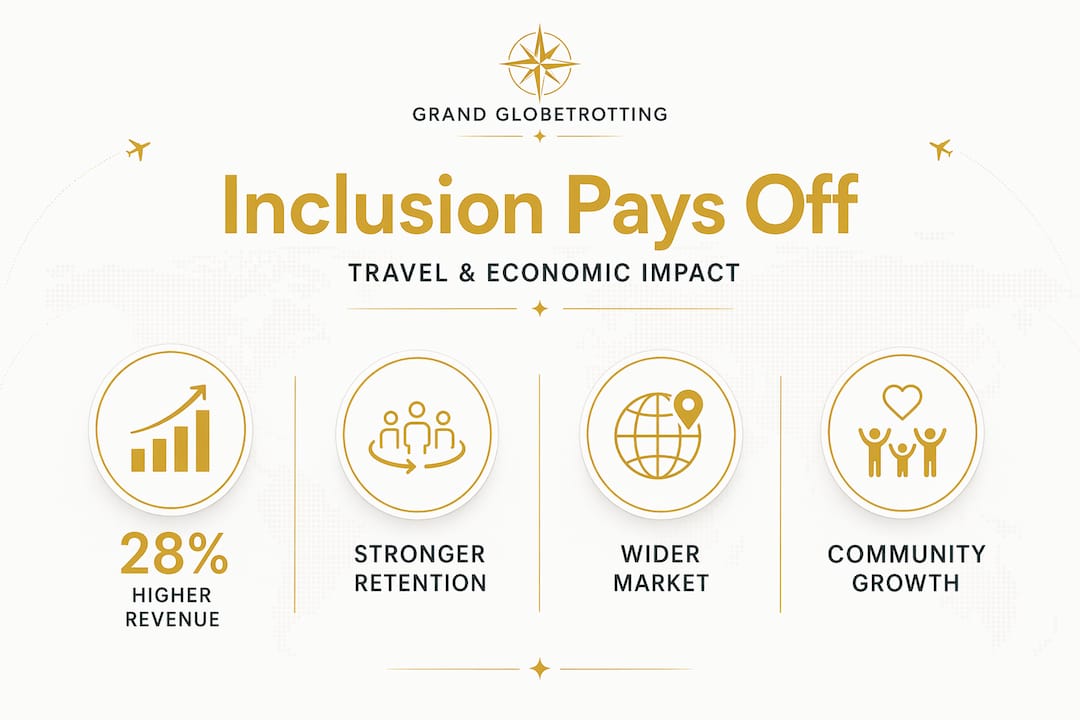
Disability-inclusive companies outperform competitors with up to 28% higher revenue and stronger employee retention. When travel businesses embed inclusion into their model, they attract a broader audience, improve staff performance, and build the kind of brand reputation that earns long-term loyalty. Since June 2025, the European Accessibility Act requires travel booking platforms in the EU to meet digital accessibility standards, making inclusion a legal obligation rather than just a preference.
| Impact Area | What Inclusion Delivers |
|---|---|
| Revenue growth | Up to 28% higher revenue for disability-inclusive businesses |
| Visitor spending | LGBTQ+ travelers increase spending and loyalty in welcoming destinations |
| Job creation | Inclusive tourism investments generate more and higher-quality local jobs |
| Community health | Removing barriers supports health equity and community resilience |
| Destination reputation | Inclusive programs improve trust, reviews, and repeat visitation rates |
Beyond the financials, the social benefits are equally significant. WHO Europe frames tourism as a health and equity strategy, noting that removing travel barriers for women, Indigenous peoples, and persons with disabilities builds more resilient communities. Travel that excludes any group creates ripple effects: reduced spending in local economies, diminished representation in cultural spaces, and weakened public health outcomes for those left out.
“Inclusive travel is measurable in its effect through trust, loyalty, and spending, demonstrating a tangible return on investment for destinations.” — Destinations International and IGLTA research
Pro Tip: If you are planning a group trip or corporate retreat, asking your travel provider directly about their inclusion policies can help filter out businesses that treat accessibility as an afterthought.
The World Bank reports that inclusive tourism investments, including a $225 million MIGA guarantee in the hospitality sector, directly support job creation and local economic development. That connection between inclusion and prosperity is not coincidental. Destinations that invest in traveling for everyone build economies that are more stable and more competitive over the long term.
What real inclusion looks and feels like
Here is where the conversation becomes practical. Understanding why diversity in travel matters means recognizing that inclusive travel is an experience, not just a policy.

The most overlooked element is staff. Physical infrastructure matters, but staff training and supportive service shape the traveler experience more than any ramp or elevator. A front desk team that assumes a wheelchair user needs help without asking, or a tour guide who speaks only to the non-disabled companion, undermines every accessible feature the property has invested in.
Hidden disabilities add another layer of complexity. Many travelers with autism, anxiety disorders, chronic pain, or PTSD have needs that are not visible. They require:
- Predictability in schedules and environments so they can prepare mentally and physically
- Sensory-friendly spaces with reduced noise, softer lighting, or quieter service options
- Clear, plain-language communication that avoids ambiguity or sudden changes
- Staff who respond without judgment when needs are communicated mid-trip
Detailed accessibility information is one of the single most powerful tools for reducing traveler stress. Knowing the exact path terrain from parking to the hotel entrance, the dimensions of a restroom, or the availability of a quiet room allows travelers to plan with confidence instead of anxiety. Generic descriptions like “accessible rooms available” provide little real value.
The inclusive travel impact on LGBTQ+ travelers reveals something important about belonging. A survey of 1,800+ LGBTQ+ travelers found that destinations where travelers feel welcomed and represented earn significantly greater trust and engagement. Representation in marketing, visible LGBTQ+ community involvement, and staff training on respectful communication all contribute to this sense of belonging.
Pro Tip: Look for destinations and accommodations that explicitly feature LGBTQ+ travel resources or partner with community organizations. This signals genuine commitment rather than surface-level branding.
Frameworks and strategies for inclusive destinations
Organizations leading the way on inclusive travel draw from several well-established frameworks. Understanding these gives travelers better tools for evaluating destinations and helps businesses understand where to focus.
The WHO, UN Tourism, and organizations like Destinations International offer clear guidance on how to promote inclusive travel at scale. Their shared principles center on a few core areas:
- Community collaboration: Authentic representation requires involving local communities, including Indigenous groups and minority populations, in destination programming and storytelling. Case studies from Discover Puerto Rico and Jaipur show that community-based culture programs improve both inclusion and economic outcomes.
- Staff training: Consistent, ongoing education on disability awareness, LGBTQ+ inclusion, cultural sensitivity, and mental health support is more impactful than one-time policy updates.
- Universal design: Building environments that work for the widest possible range of needs from the start, rather than retrofitting accommodations later, saves cost and creates better experiences.
- Inclusive marketing: Featuring authentic images of diverse travelers across age, ability, ethnicity, and identity in all promotional materials signals welcome before a traveler ever arrives.
How local guides elevate the traveler experience is one underused tool for inclusive destination strategy. Local guides who share the lived experience of a place can provide authentic cultural access that benefits all travelers, while directly supporting the communities being visited.
The link between inclusive tourism and sustainability is direct. Destinations that prioritize equity distribute economic benefits more broadly, reduce overtourism pressure, and build the community trust needed for long-term tourism health.
How travelers can champion inclusive travel
Inclusion does not depend only on what destinations do. Travelers hold real influence in shaping industry standards through their choices and their voices.
- Choose providers with explicit inclusion policies. When booking accommodations, tours, or transportation, ask directly about accessibility features and staff training rather than assuming from a checkbox on the booking form.
- Use and request detailed accessibility information. If a provider’s website lacks specifics, contact them before booking. Your request signals demand and helps businesses understand what information matters.
- Advocate during the booking process. Mentioning your specific needs, or the needs of someone in your group, gives providers the opportunity to prepare. It also creates accountability if the experience falls short.
- Support local inclusive businesses. Seek out tour operators, guides, and accommodations that are locally owned and that actively engage their communities, especially those serving underrepresented groups.
- Share honest feedback. Post reviews that specifically address inclusion, whether positive or negative. Future travelers rely on this information, and businesses respond to public feedback far faster than internal complaints.
Understanding why use itinerary management for complex trips also connects here. Having every accessible detail documented, confirmed, and tracked across a multi-stop itinerary protects travelers from last-minute surprises that can derail an otherwise well-planned trip.
My perspective on what travelers still get wrong
I have spent years working with travelers across a broad spectrum of needs and backgrounds, and the pattern I keep seeing is this: people assume that because a destination checks a few accessibility boxes, inclusion has been handled. It has not.
Genuine inclusion requires cultural change at every level of a travel business, from the way a reservations agent speaks on the phone to the images on a homepage. I have personally seen travelers with hidden disabilities turn around at hotel entrances because the environment felt unpredictable and unwelcoming, even when every physical feature was technically in place.
What I have learned is that the travelers who plan with inclusion in mind, whether for themselves or for companions, have more satisfying trips. They ask better questions. They choose providers who have genuinely thought through the experience. And they come back.
The inclusive travel impact is not abstract. It shows up in the quality of a single afternoon at a museum where sensory accommodations allowed a child with autism to engage fully. It shows up in the confidence of an LGBTQ+ couple walking through a destination where they do not have to calculate risk with every step. That is worth planning for.
— Sandon
Plan your next trip with inclusion at the center
Grandglobetrotting was built on the belief that the best travel experiences come from thoughtful, personalized planning. That means understanding not just where you want to go, but what you need to feel truly at ease when you get there. Whether you are planning a luxury honeymoon, an LGBTQIA+ friendly getaway, a multigenerational family trip, or a solo adventure, the team at Grandglobetrotting brings expert knowledge and exclusive industry connections to every itinerary.
From identifying accessible accommodations that genuinely deliver on their promises to crafting bespoke itineraries that reflect your full identity and preferences, the planning process is built around you. Explore the personalized luxury travel guide to see how a high-touch, fully tailored approach can make your next trip both extraordinary and effortless.
FAQ
What does inclusive travel actually mean?
Inclusive travel refers to tourism that removes physical, sensory, cultural, and social barriers for all travelers, including people with disabilities, LGBTQ+ individuals, seniors, and underrepresented groups. It goes beyond technical accessibility to include staff training, communication, and authentic representation.
Why does inclusive travel matter for business?
Companies that prioritize disability inclusion see up to 28% higher revenue and stronger employee retention. LGBTQ+ travelers also show measurably higher spending and loyalty in destinations where they feel welcomed and represented.
What are hidden disabilities in travel?
Hidden disabilities include conditions like autism, chronic pain, anxiety, and PTSD that are not visually apparent. These travelers require predictability, sensory-friendly environments, and clear communication, needs that standard accessibility checklists often miss entirely.
How can I find truly inclusive destinations?
Read verified guest reviews from diverse travelers, look for destinations that partner with community organizations, and ask providers directly about staff training and accessibility specifics before booking. Detailed, honest information before arrival is a reliable signal of genuine inclusion.
Is inclusive travel required by law?
In the European Union, the European Accessibility Act has required digital accessibility compliance for travel booking platforms since June 2025. Legal requirements vary by country, but the direction globally is toward greater regulatory accountability for accessibility in travel services.
Recommended
At Grand Globetrotting, we don't just plan vacations; we craft extraordinary adventures that leave you with cherished memories. Let us bring your dream vacation to life, perfectly tailored to your style, and immerse yourself in a world of luxury, exploration, and unforgettable moments. Your journey begins with us.
Itinerary planning services require a separate charge outside of cost to book travel accommodations. Depending upon the complexity of the itinerary and the level of effort required to acquire unique experiences, cost may vary. Speak with our team to learn more.
Book your consultation