

TL;DR:
- Selecting truly exclusive hotels requires evaluating operational excellence, unique character, and value beyond star ratings.
- Booking through trusted networks like Virtuoso enhances perks, certainty, and personalized service for high-net-worth travelers.
Knowing how to select exclusive hotels is one of the most underestimated skills in luxury travel. Star ratings tell you almost nothing meaningful. A five-star property in one city can feel entirely different from one in another, and the gap between a well-marketed hotel and a genuinely exceptional one is wider than most travelers expect. For high-net-worth travelers, the stakes are higher because you are not just booking a room. You are investing in an experience that should feel personal, polished, and worth every cent from the moment you arrive to the moment you leave.
Table of Contents
- Understanding what defines exclusivity in hotels
- Preparing to select the perfect exclusive hotel for your trip
- Executing your hotel booking strategy to secure exclusivity and value
- Verifying your exclusive hotel experience before and during your stay
- Comparing common exclusive hotel types and their suitability for high-net-worth travelers
- Our perspective: why the best hotel is rarely the most obvious choice
- Plan your stay with Grand Globetrotting
- Frequently asked questions
Key Takeaways
| Point | Details |
|---|---|
| Exclusivity criteria | Select hotels based on unique location, design, service quality, character, and value alignment. |
| Trip-specific needs | Match hotel features and timing to your trip purpose to ensure effortless luxury. |
| Booking strategies | Use networks like Virtuoso for perks and value without paying premium prices. |
| Verify inclusions | Confirm amenities and special requests post-booking to avoid unexpected limitations. |
| Hotel type fit | Choose hotel size and style that best suit your exclusivity and comfort preferences. |
Understanding what defines exclusivity in hotels
Exclusivity in hotels is not about a famous name on the facade or an Instagram-worthy lobby. It is something you feel in how a property operates, how staff anticipate your needs, and how every detail fits together without effort on your part. Understanding high-end travel concepts is a strong first step before you begin evaluating individual properties.
The most reliable framework for evaluating genuine exclusivity comes from MICHELIN Guide inspectors, who assess hotels on five specific criteria:
- A destination unto itself. The property adds real value to your experience of a place, either through its cultural significance, architectural drama, or location within a neighborhood worth exploring.
- Excellence in architecture and interior design. Not just beautiful rooms, but a coherent vision that holds up across every space, from the lobby to the smallest suite bathroom.
- Quality and regularity of service, plus comfort and maintenance. This is the most telling criterion. One excellent stay is easy to achieve. Consistent excellence across every guest interaction, every visit, is the genuine standard.
- Singleness of character. A hotel that feels distinct and irreplaceable. Not a template that could exist in any city, but a property with a point of view.
- Consistency between quality and price. Value in luxury is not about cheapness. It is about whether the experience justifies what you paid, without question.
Applying these five criteria when you research and evaluate properties gives you an honest, structured lens beyond aesthetic appeal or brand prestige.
Pro Tip: When screening a property for the first time, look at guest reviews specifically mentioning service during problems or disruptions. How a hotel handles a complaint or an unexpected issue tells you far more about operational quality than glowing reviews about a great view.
Preparing to select the perfect exclusive hotel for your trip
The best hotel for a spa retreat in Napa Valley is not the best hotel for a high-powered business trip in Tokyo. Selecting premium hotels means aligning your choice with the specific purpose and rhythm of your trip. Before you search, clarify a few essential questions about what this particular stay needs to deliver.
Here are the primary factors to define before you begin comparing properties:
- Trip purpose. Are you traveling for relaxation, cultural immersion, business, a romantic occasion, or a multi-generational family experience? Each calls for a different property type.
- Service intensity. A retreat for two may call for a smaller, more intimate property. A family trip with children and a personal assistant in tow may need a large resort with expansive amenities.
- Location within the destination. City-center properties offer walkability and energy. Rural or coastal properties offer privacy and space. Neither is superior; both serve different goals.
- Timing details. Confirm check-out times, whether breakfast is served throughout the morning, and whether late check-out is available at your preferred time.
- Spa and wellness specifics. If the spa is central to your stay, verify what spa amenities are included in your rate. Many properties charge separately for wet-area access, thermal circuits, or specific treatments.
Once you have clarity on these points, the criteria for luxury stays narrows naturally. You stop comparing dozens of properties and start evaluating a shortlist of genuinely relevant options.
A few additional details worth verifying before you commit to a booking:
- Whether parking or valet is included or charged separately
- Restaurant hours and whether in-room dining is available around the clock
- Pool and facility hours, especially for rooftop or adults-only areas
- Whether the property has accessible hotel spa and amenity options included in room packages
- The cancellation and modification policy, which at this level should be genuinely flexible
Pro Tip: When making your reservation, communicate your preferences in writing directly with the property. Requesting a high floor, a specific room orientation, or a quiet location away from elevators is standard for experienced travelers. Hotels take these notes seriously when they arrive before check-in.
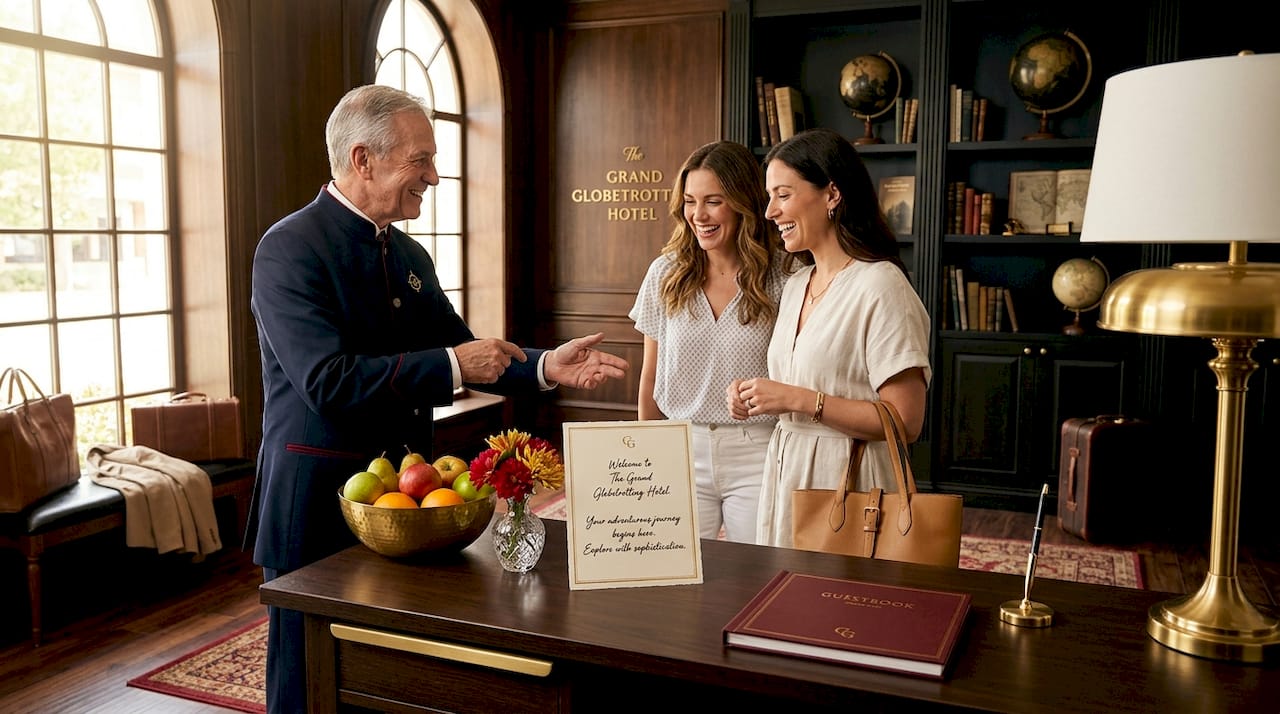
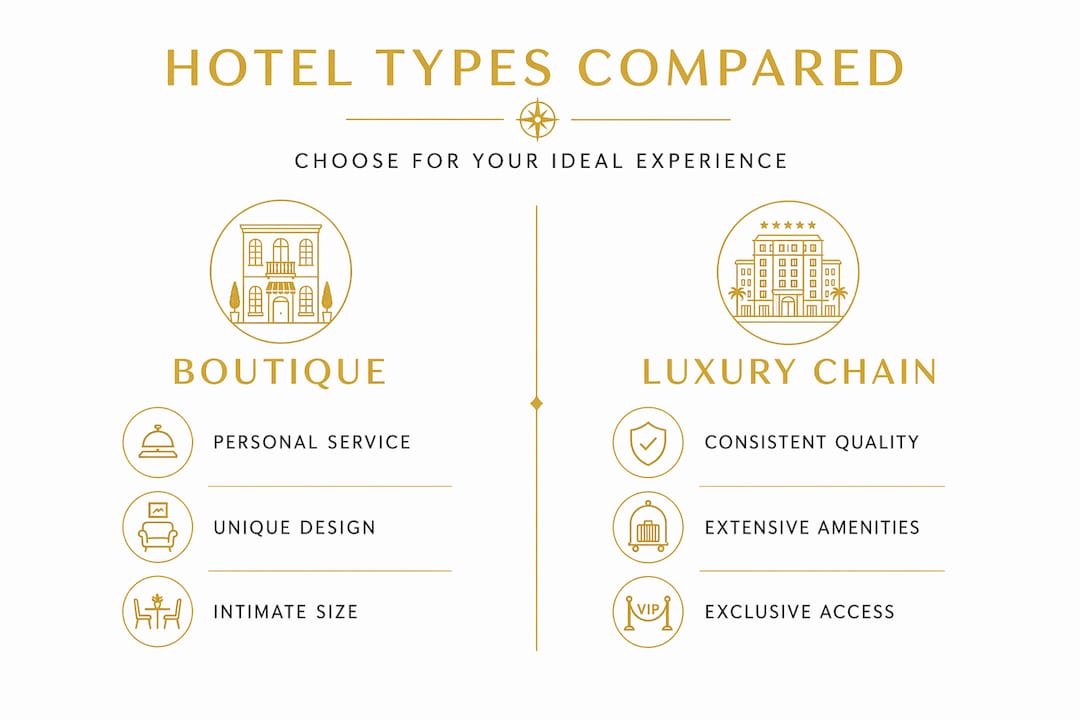
Smaller boutique hotels generally offer more face time with senior staff and a more personal atmosphere for leisure trips. Larger luxury resorts make sense when you need robust facilities, space for a group, or business-grade meeting and connectivity support. This is covered in more depth in the luxury travel booking guide if you want a structured approach before your next trip.
Executing your hotel booking strategy to secure exclusivity and value
Knowing which hotel you want is only half the equation. How you book determines the additional value you capture on top of the room rate itself. For travelers focused on choosing luxury accommodations at the highest level, booking through a recognized luxury travel network changes the equation considerably.
Booking through a network like Virtuoso is one of the most effective strategies available. As a Virtuoso booking guide outlines for 2025 and 2026, these bookings typically include:
- Daily breakfast for two, covered as part of the booking arrangement
- Priority room upgrade consideration, subject to availability at check-in
- Early check-in and late check-out, whenever the property can accommodate it
- A hotel or resort credit, often $100 per stay, to apply toward dining, spa, or ancillary services
- Rates aligned to the hotel’s best flexible public rate, meaning you pay no premium for these additions
That last point matters more than it might seem. Many travelers assume that perks come at a higher rate. In practice, Virtuoso rates typically match what you would pay booking directly, which means these benefits cost you nothing beyond the booking channel choice.
A personalized luxury travel planning advisor with Virtuoso access adds another layer of value: they know which properties genuinely deliver on their promises, and which ones look exceptional on paper but disappoint in practice. That institutional knowledge is difficult to replicate through independent research alone.
Verifying your exclusive hotel experience before and during your stay
Booking is a commitment, not a finished process. The gap between what a luxury hotel advertises and what it actually delivers to your room can be significant if you do not close that gap yourself before arrival. This is where the real discipline of bespoke hotel selection separates experienced travelers from those who leave disappointed.
After confirming your reservation, take these steps:
- Contact the hotel directly to confirm all inclusions tied to your rate, specifically spa access, breakfast details, and any package elements
- Verify special requests have been recorded and are actionable, not just noted
- Confirm concierge availability for pre-arrival planning, including restaurant reservations, transport, or in-room arrangements
- Ask about amenity timing, including pool hours, spa booking windows, and any facility closures during your stay
- Check that your luxury travel guide or advisor has a direct contact at the property for rapid issue resolution if needed
The MICHELIN guidance on inclusions makes a valuable point here: detailed inclusions like pillow menus, valet access, and specific dining arrangements are frequently delivered only after booking, or need to be actively requested. Assuming the luxury package is automatic is a mistake. Confirming it is not.
Pro Tip: Ask the concierge about experiences or access that is not advertised publicly. Many exclusive properties hold back a small number of reservations for experiences like private cellar dinners, rooftop access at specific hours, or behind-the-scenes tours. These are almost never listed on the website, and a well-placed question to the right person will unlock them.
Comparing common exclusive hotel types and their suitability for high-net-worth travelers
Choosing the right category of exclusive property matters as much as choosing the right specific hotel. The MICHELIN framework for exclusivity applies across all hotel types, but each category delivers that exclusivity differently. Understanding the tradeoffs helps you match your selection to your specific travel intent and exclusive destination criteria.
| Hotel type | Best for | Key strengths | Key limitations |
|---|---|---|---|
| Boutique hotel | Couples, solo travelers, cultural trips | Intimacy, personalized service, local character | Fewer amenities, limited space for groups |
| Large luxury resort | Families, business travel, extended stays | Full facilities, multiple dining options, event capacity | Can feel less personal, service consistency varies |
| Remote exclusive property | Privacy seekers, nature immersion, honeymoons | Complete seclusion, immersive experiences, privacy | Logistics-intensive, limited dining variety |
| Urban grand hotel | Business travel, city exploration, galas | Prime location, brand recognition, elite facilities | High foot traffic, can feel impersonal |
When evaluating any property type, look for these operational excellence signals early in your research:
- Staff tenure and turnover rates, which are sometimes disclosed in hospitality press or travel advisor briefings
- Whether the general manager is known and accessible, which is a consistent feature of the best upscale hotels
- The property’s reputation for handling complaints, not just praise
- Physical maintenance signals in recent photos, including the condition of public spaces, gardens, and room fixtures
- Whether the property has received recognition from credible sources with rigorous selection standards
A hotel that looks extraordinary in its own photography but receives consistent comments about service gaps or maintenance inconsistencies is telling you something important. Visual appeal is easy to manufacture. Operational excellence over time is not.
Our perspective: why the best hotel is rarely the most obvious choice
The hotels that deliver the most memorable experiences are rarely the ones dominating travel headlines in a given year. They tend to be properties with deeply committed leadership, staff who have been with the hotel for years, and a physical space that was designed with genuine intention rather than trend-chasing.
The traveler who selects an exclusive hotel based on recognition alone is frequently disappointed. A property might carry enormous prestige and still deliver an impersonal, transactional stay if its operating model has scaled beyond its service capacity. Meanwhile, a lesser-known property in a remarkable location, with a passionate general manager and a staff-to-guest ratio that allows genuine attention, will outperform it on every dimension that actually matters.
The most useful filter is not “what is the most famous hotel in this destination?” It is “which property in this destination has the strongest culture of genuine hospitality?” That answer requires research, trusted sources, and ideally an advisor who has visited firsthand. It is not found in aggregate review scores, but in the specific language people use when they describe what made a stay exceptional. Pay close attention to details: when a guest mentions that a staff member remembered their coffee preference on day two, or that their room was restocked with something specific they had mentioned in passing, that is the signal you are looking for.
Plan your stay with Grand Globetrotting
Finding the right exclusive hotel is a process that rewards preparation, knowledge, and the right connections. At Grand Globetrotting, we bring all three to every client engagement. Whether you are planning a private honeymoon in the Maldives, a multi-city business trip through Europe, or a family escape that demands genuine luxury at every stop, our concierge team works directly with the world’s finest properties to secure the experience you expect.
Our access to Virtuoso and other premium travel networks means you receive the best available rates alongside meaningful perks, without the research burden falling on you. From the first consultation to post-trip support, we handle every detail. Start planning your bespoke journey and let us match you with the exclusive properties that fit your travel goals precisely.
Frequently asked questions
What criteria should I use to select an exclusive hotel?
The MICHELIN Guide framework offers a reliable checklist: look for a distinctive location, exceptional design, consistent service quality, a unique character, and a clear relationship between price and what you actually receive.
How can I verify what amenities and services an exclusive hotel includes?
After booking, contact the property directly or through your travel advisor to confirm specific inclusions. As MICHELIN inspectors note, detailed inclusions like spa access and dining hours often need to be actively confirmed rather than assumed.
What benefits do Virtuoso bookings provide for luxury hotels?
Virtuoso bookings commonly include daily breakfast for two, priority upgrade consideration, early check-in and late check-out options, and a property credit, all at rates that match the hotel’s best flexible pricing.
Should I prioritize hotel size when selecting for exclusivity?
Size matters based on your trip’s purpose. Smaller hotels offer genuine intimacy and more personalized service, while larger resorts provide the breadth of facilities that families or business travelers often require. Match the scale to your actual needs.
Recommended
At Grand Globetrotting, we don't just plan vacations; we craft extraordinary adventures that leave you with cherished memories. Let us bring your dream vacation to life, perfectly tailored to your style, and immerse yourself in a world of luxury, exploration, and unforgettable moments. Your journey begins with us.
Itinerary planning services require a separate charge outside of cost to book travel accommodations. Depending upon the complexity of the itinerary and the level of effort required to acquire unique experiences, cost may vary. Speak with our team to learn more.
Book your consultation